

MEMORY
THE MULTI STORE MODEL
Atkinson + Shiffrin (1988) created the MSM
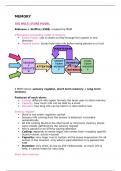
Information processing model of memory
Linear model: info is shown to flow through the system in one
direction
Passive stores: stores hold onto info before being passed on or lost
MAINTENANC
E
SHORT LONG
SENSOR TERM REHERSAL TERM
Y ATTENTION MEMOR MEMOR
REGISTE Y Y
RETRIEVAL
R
3 MSM stores: sensory register, short term memory + long term
memory
Features of each store:
Coding: different info types/ formats the brain uses to store memory
Capacity: how much info can be held by a store
Duration: how long info can be held in a store before loss
Sensory register
Store is not under cognitive control
Sensory info coming from the senses is detected +recorded
automatically
All info coming found in the short term or long term memory stores
were initially gathered by the sensory register
Info is passed on to STM by paying attention
Coding: depends on sense organ info comes from- modality specific
(iconic=vision, echoic=sound)
Capacity: very large, has to contain all the sense impressions for all
senses in the moment- only what is paid attention to is passed into
STM
Duration: very short, as low as 250 milliseconds- so much info is
held, it cannot retain for very long
Short term memory
, Receives info from sensory register by paying attention
STM passes to LTM through rehearsal
Is either maintenance (repeating info) or elaborative rehearsal
(linking to info already in LTM)
Info is passed back from LTM with retrieval
Info can be lost via displacement (new info) or decay (lost over time)
Coding: info is stored acoustically (in form of sound/spoken words)
Capacity: approx. 7 items plus/minus 2- improved by chunking:
making small sets of items
Duration: short, 18-30 secs- however duration can be extended by
verbal rehearsal (rehearsal loop)
Long term memory
Info stored may last permanently + LTM may be unlimited in
amount of info it can contain
Info comes into LTM from STM via rehearsal
In order to use info in LTM it needs to be passed back to STM via
retrieval
Coding: info is stored semantically- in the form of meaning
Capacity: no limit- info can be lost but may still be in the LTM but
not accessible
Duration: potentially unlimited as recall of childhood events is
normal even for oldest people
Coding Capacity Duration
Sensory Modality specific Unlimited 250 ms
register
STM Acoustic 7 +/- 2 items 18-30 secs
LTM Semantic Unlimited Forever
Evaluation of MSM
STRENGTH
Evidence that STM + LTM stores are separate processes
Glazner + Cunitz (1966): asked ppts to free recall word lists
Was found that recall was much stronger for words at the end of the
list
Results suggest there are separate short + long term memory
stores
Words first heard entering the LTM + being recalled and most
recent words held by STM + being recalled
Middle words were in STM but were displaced
STRENGTH
Research support for coding in STM
, Baddeley (1966): gave four 10 word lists to four ppt groups
Group A: acoustically similar words
Group B: acoustically dissimilar words
Group C: semantically similar words
Group D: semantically dissimilar words
Found that immediate recall was worst for A, recall after 20 mins
was worse with list D
Suggests that coding in STM is acoustic- list A was most difficult as
recalling similar sounds caused confusion in recall
STRENGTH
Research support for capacity in STM
Jacobs (1987): ppts presented w lists of letters or numbers
Ppts had to recall the list
Found that capacity for letters was on average 7 items for letters +
9 for jumbers
Suggests that capacity for STM is limited
Miller: this can be improved by chunking- making small sets/groups
of items
Reduced total number of items overall
STRENGTH
Research support for duration in STM
Peterson + Peterson (1959): sowed ppts three letter trigrams
Ppts had to count backwards for a few seconds to stop maintenance
rehearsal (interference task)
Found that after 18 seconds recall was less than 10%
Suggests unless maintained info is held in STM for only 18-30 secs
before it disappears
STRENGTH
Research support for coding in LTM
Baddeley (1966): gave four 10 word lists to four ppt groups
Group A: acoustically similar words
Group B: acoustically dissimilar words
Group C: semantically similar words
Group D: semantically dissimilar words
Found that immediate recall was worst for A, recall after 20 mins
was worse with list D
Suggests that coding in LTM is semantic- recalling list C was most
difficult as recalling similar meaning words caused confusion in
recall
STRENGTH
Research support for capacity in LTM
Wagenaar (1986): created a diary of over 2400 events during
course of 6 years including recording who, what, when + where
Found that when tested using these cues he had 75% recall of one
particular critical detail after 1 year + 45% after 5 years
THE MULTI STORE MODEL
Atkinson + Shiffrin (1988) created the MSM
Information processing model of memory
Linear model: info is shown to flow through the system in one
direction
Passive stores: stores hold onto info before being passed on or lost
MAINTENANC
E
SHORT LONG
SENSOR TERM REHERSAL TERM
Y ATTENTION MEMOR MEMOR
REGISTE Y Y
RETRIEVAL
R
3 MSM stores: sensory register, short term memory + long term
memory
Features of each store:
Coding: different info types/ formats the brain uses to store memory
Capacity: how much info can be held by a store
Duration: how long info can be held in a store before loss
Sensory register
Store is not under cognitive control
Sensory info coming from the senses is detected +recorded
automatically
All info coming found in the short term or long term memory stores
were initially gathered by the sensory register
Info is passed on to STM by paying attention
Coding: depends on sense organ info comes from- modality specific
(iconic=vision, echoic=sound)
Capacity: very large, has to contain all the sense impressions for all
senses in the moment- only what is paid attention to is passed into
STM
Duration: very short, as low as 250 milliseconds- so much info is
held, it cannot retain for very long
Short term memory
, Receives info from sensory register by paying attention
STM passes to LTM through rehearsal
Is either maintenance (repeating info) or elaborative rehearsal
(linking to info already in LTM)
Info is passed back from LTM with retrieval
Info can be lost via displacement (new info) or decay (lost over time)
Coding: info is stored acoustically (in form of sound/spoken words)
Capacity: approx. 7 items plus/minus 2- improved by chunking:
making small sets of items
Duration: short, 18-30 secs- however duration can be extended by
verbal rehearsal (rehearsal loop)
Long term memory
Info stored may last permanently + LTM may be unlimited in
amount of info it can contain
Info comes into LTM from STM via rehearsal
In order to use info in LTM it needs to be passed back to STM via
retrieval
Coding: info is stored semantically- in the form of meaning
Capacity: no limit- info can be lost but may still be in the LTM but
not accessible
Duration: potentially unlimited as recall of childhood events is
normal even for oldest people
Coding Capacity Duration
Sensory Modality specific Unlimited 250 ms
register
STM Acoustic 7 +/- 2 items 18-30 secs
LTM Semantic Unlimited Forever
Evaluation of MSM
STRENGTH
Evidence that STM + LTM stores are separate processes
Glazner + Cunitz (1966): asked ppts to free recall word lists
Was found that recall was much stronger for words at the end of the
list
Results suggest there are separate short + long term memory
stores
Words first heard entering the LTM + being recalled and most
recent words held by STM + being recalled
Middle words were in STM but were displaced
STRENGTH
Research support for coding in STM
, Baddeley (1966): gave four 10 word lists to four ppt groups
Group A: acoustically similar words
Group B: acoustically dissimilar words
Group C: semantically similar words
Group D: semantically dissimilar words
Found that immediate recall was worst for A, recall after 20 mins
was worse with list D
Suggests that coding in STM is acoustic- list A was most difficult as
recalling similar sounds caused confusion in recall
STRENGTH
Research support for capacity in STM
Jacobs (1987): ppts presented w lists of letters or numbers
Ppts had to recall the list
Found that capacity for letters was on average 7 items for letters +
9 for jumbers
Suggests that capacity for STM is limited
Miller: this can be improved by chunking- making small sets/groups
of items
Reduced total number of items overall
STRENGTH
Research support for duration in STM
Peterson + Peterson (1959): sowed ppts three letter trigrams
Ppts had to count backwards for a few seconds to stop maintenance
rehearsal (interference task)
Found that after 18 seconds recall was less than 10%
Suggests unless maintained info is held in STM for only 18-30 secs
before it disappears
STRENGTH
Research support for coding in LTM
Baddeley (1966): gave four 10 word lists to four ppt groups
Group A: acoustically similar words
Group B: acoustically dissimilar words
Group C: semantically similar words
Group D: semantically dissimilar words
Found that immediate recall was worst for A, recall after 20 mins
was worse with list D
Suggests that coding in LTM is semantic- recalling list C was most
difficult as recalling similar meaning words caused confusion in
recall
STRENGTH
Research support for capacity in LTM
Wagenaar (1986): created a diary of over 2400 events during
course of 6 years including recording who, what, when + where
Found that when tested using these cues he had 75% recall of one
particular critical detail after 1 year + 45% after 5 years


