SAUNDERS NCLEX-RN ACID BASE QUESTIONS WITH CORRECT ANSWERS & RATIONALES 2023 UPDATE A+
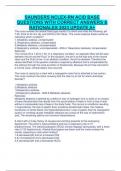
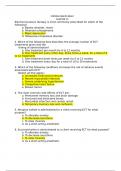
SAUNDERS NCLEX-RN ACID BASE QUESTIONS WITH CORRECT ANSWERS & RATIONALES 2023 UPDATE A+ The nurse reviews the arterial blood gas results of a client and notes the following: pH 7.45, Pco2 of 30 mm Hg, and HCO3 of 20 mEq/L. The nurse analyzes these results as indicating which condition? 1. Metabolic acidosis, compensated 2. Respiratory alkalosis, compensated 3.Metabolic alkalosis, uncompensated 4.Respiratory acidosis, uncompensated - ANS-2. Respiratory alkalosis, compensated Rationale: The normal pH is 7.35 to 7.45. In a respiratory condition, an opposite effect will be seen between the pH and the Pco2. In this situation, the pH is at the high end of the normal value and the Pco2 is low. In an alkalotic condition, the pH is elevated. Therefore the values identified in the question indicate a respiratory alkalosis that is compensated by the kidneys through the renal excretion of bicarbonate. Because the pH has returned to a normal value, compensation has occurred. The nurse is caring for a client with a nasogastric tube that is attached to low suction. The nurse monitors the client, knowing that the client is at risk for which acid-base disorder? 1.Metabolic acidosis 2.Metabolic alkalosis 3.Respiratory acidosis 4.Respiratory alkalosis - ANS-2.Metabolic alkalosis Rationale: Metabolic alkalosis is defined as a deficit or loss of hydrogen ions or acids or an excess of base (bicarbonate) that results from the accumulation of base or from a loss of acid without a comparable loss of base in the body fluids. This occurs in conditions resulting in hypovolemia, the loss of gastric fluid, excessive bicarbonate intake, the massive transfusion of whole blood, and hyperaldosteronism. Loss of gastric fluid via nasogastric suction or vomiting causes metabolic alkalosis as a result of the loss of hydrochloric acid. The remaining options are incorrect interpretations. A client with a 3-day history of nausea and vomiting presents to the emergency department. The client is hypoventilating and has a respiratory rate of 10 breaths/minute. The electrocardiogram (ECG) monitor displays tachycardia, with a heart rate of 120 beats/minute. Arterial blood gases are drawn and the nurse reviews the results, expecting to note which finding? 1.A decreased pH and an increased CO2 2.An increased pH and a decreased CO2 3.A decreased pH and a decreased HCO3 4.An increased pH with an increased HCO3 - ANS-4.An increased pH with an increased HCO3 Rationale: Clients experiencing nausea and vomiting would most likely present with metabolic alkalosis resulting from loss of gastric acid, thus causing the pH and HCO3 to increase. Symptoms experienced by the client would include hypoventilation and tachycardia. Option 1 reflects a respiratory acidotic condition. Option 2 reflects a respiratory alkalotic condition, and option 3 reflects a metabolic acidotic condition. A client who is found unresponsive has arterial blood gases drawn and the results indicate the following: pH is 7.12, Pco2 is 90 mm Hg, and HCO3 is 22 mEq/L. The nurse interprets the results as indicating which condition? 1.Metabolic acidosis with compensation 2.Respiratory acidosis with compensation 3.Metabolic acidosis without compensation 4.Respiratory acidosis without compensation - ANS-4.Respiratory acidosis without compensation Rationale: The acid-base disturbance is respiratory acidosis without compensation. The normal pH is 7.35 to 7.45. The normal Pco2 is 35 to 45 mm Hg. In respiratory acidosis the pH is decreased and the Pco2 is elevated. The normal bicarbonate (HCO3) level is 22 to 27 mEq/L. Because the bicarbonate is still within normal limits, the kidneys have not had time to adjust for this acid-base disturbance. In addition, the pH is not within normal limits. Therefore the condition is without compensation. The remaining options are incorrect interpretations. The nurse notes that a client's arterial blood gas results reveal a pH of 7.50 and a Pco2 of 30 mm Hg. The nurse monitors the client for which clinical manifestations associated with these arterial blood gas results? Select all that apply. 1.Nausea 2.Confusion 3.Bradypnea 4.Tachycardia 5.Hyperkalemia 6.Lightheadedness - ANS-1.Nausea 2.Confusion 4.Tachycardia 6.Lightheadedness Rationale: Respiratory alkalosis is defined as a deficit of carbonic acid or a decrease in hydrogen ion concentration that results from the accumulation of base or from a loss of acid without a comparable loss of base in the body fluids. This occurs in conditions that cause overstimulation of the respiratory system. Clinical manifestations of respiratory alkalosis include lethargy, lightheadedness, confusion, tachycardia, dysrhythmias related to hypokalemia, nausea, vomiting, epigastric pain, and numbness and tingling of the extremities. Hyperventilation (tachypnea) occurs. The nurse reviews the blood gas results of a client with atelectasis. The nurse analyzes the results and determines that the client is experiencing respiratory acidosis. Which result validates the nurse's findings? 1.pH 7.25, Pco2 50 mm Hg 2.pH 7.35, Pco2 40 mm Hg 3.pH 7.50, Pco2 52 mm Hg 4.pH 7.52, Pco2 28 mm Hg - ANS-1.pH 7.25, Pco2 50 mm Hg Rationale: Atelectasis is a condition characterized by the collapse of alveoli, preventing the respiratory exchange of oxygen and carbon dioxide in a part of the lungs. The normal pH is 7.35 to 7.45. The normal Pco2 is 35 to 45 mm Hg. In respiratory acidosis, the pH is decreased and the Pco2 is elevated. Option 2 identifies normal values. Option 3 identifies an alkalotic condition, and option 4 identifies respiratory alkalosis. The nurse is caring for a client who is on a mechanical ventilator. Blood gas results indicate a pH of 7.50 and a Pco2 of 30 mm Hg. The nurse has determined that the client is experiencing respiratory alkalosis. Which laboratory value would most likely be noted in this condition? 1.Sodium level of 145 mEq/L 2.Potassium level of 3.0 mEq/L 3.Magnesium level of 2.0 mg/dL 4.Phosphorus level of 4.0 mg/dL - ANS-2.Potassium level of 3.0 mEq/L Rationale: Respiratory alkalosis is defined as a deficit of carbonic acid or a decrease in hydrogen ion concentration that results from the accumulation of base or from a loss of acid without a comparable loss of base in the body fluids. This occurs in conditions that cause overstimulation of the respiratory system. Clinical manifestations of respiratory alkalosis include lethargy, lightheadedness, confusion, tachycardia, dysrhythmias related to hypokalemia, nausea, vomiting, epigastric pain, and numbness and tingling of the extremities. All three incorrect options identify normal laboratory values. The correct option identifies the presence of hypokalemia. The nurse plans care for a client with chronic obstructive pulmonary disease (COPD), understanding that the client is most likely to experience what type of acid-base imbalance? 1.Metabolic acidosis 2.Metabolic alkalosis 3.Respiratory acidosis 4.Respiratory alkalosis - ANS-3.Respiratory acidosis Rationale: Respiratory acidosis is most often caused by hypoventilation in a client with COPD. Other acid-base disturbances can occur in a client with COPD during exacerbation of the disease, but the most likely imbalance is respiratory acidosis. The remaining options are incorrect. COPD is a respiratory condition, not a metabolic one. Respiratory alkalosis is associated with hyperventilation. The nurse reviews the arterial blood gas results of an assigned client and notes that the laboratory report indicates a pH of 7.30, Pco2 of 58 mm Hg, Po2 of 80 mm Hg, and Hco3 of 27 mEq/L. The nurse interprets that the client has which acid-base disturbance?...
Escuela, estudio y materia
- Institución
- SAUNDERS NCLEX-RN ACID BASE
- Grado
- SAUNDERS NCLEX-RN ACID BASE
Información del documento
- Subido en
- 17 de mayo de 2023
- Número de páginas
- 9
- Escrito en
- 2022/2023
- Tipo
- Examen
- Contiene
- Preguntas y respuestas
Temas
- 2023 update
- pco2 of 30 m
-
saunders nclex rn acid base
-
questions with correct answers amp rationales
-
a
-
the nurse reviews the arterial blood gas results of a client and notes the following ph 745

Documento también disponible en un lote