

Europeans History (Part 1)
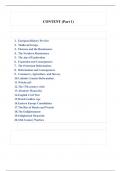
European history is a rich tapestry spanning thousands of years, shaped by diverse cultures, influential leaders, and significant events. It is a tale of empires rising and falling, religious and political revolutions, scientific and cultural advancements, and global exploration. Ancient Greece and Rome laid the foundation for European civilization, with the Greeks contributing to philosophy, democracy, and art, while the Romans brought infrastructure, law, and governance. The Middle Ages witnessed the dominance of feudalism and the power of the Catholic Church, as well as the emergence of iconic figures like Charlemagne. The Renaissance marked a rebirth of learning, art, and humanism, challenging traditional religious authority and encouraging scientific inquiry. This period saw the likes of Leonardo da Vinci, Michelangelo, and Galileo Galilei leaving a lasting impact. The 16th and 17th centuries witnessed the Age of Exploration, as European nations ventured into uncharted territories, establishing colonies and trade networks. This era also brought religious conflicts, most notably the Protestant Reformation led by Martin Luther. The 18th and 19th centuries saw the rise of powerful European empires, colonialism, and the Enlightenment. The French Revolution and Napoleonic era reshaped political and social structures, leading to the spread of revolutionary ideals across Europe. The 20th century brought unprecedented global conflicts with World Wars I and II, profoundly affecting the continent. The aftermath of these wars led to the Cold War division between Eastern and Western Europe, with the Iron Curtain separating the communist and capitalist blocs. The collapse of the Soviet Union in 1991 led to the reunification of Europe, and the European Union was established to promote peace, economic cooperation, and shared governance among member states. European history is a complex narrative of triumphs and tragedies, characterized by innovation, cultural exchange, political upheavals, and periods of relative stability. It continues to shape the present-day Europe, with its rich heritage serving as a constant reminder of the continent's enduring influence on the world.
Document information
- School year
- 3
- Uploaded on
- May 15, 2023
- Number of pages
- 55
- Written in
- 2022/2023
- Type
- Interview
- Company
- Unknown
- Person
- Unknown


