

This source criticises Hitler’s Foreign Policy. How do you know?
4 marks
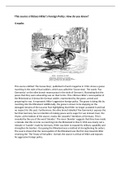
This source entitled ‘The Goose-Step’, published in Punch magazine in 1936, shows a goose
marching in the style of Nazi soldiers, which was called the ‘Goose step’. The words ‘Pax
Germanica’ on the olive branch means peace in the style of German’s, illustrating that the
peace that they were advocating was on their terms. This criticises Hitler’s reoccupation of
the Rhineland as it shows the German soldier, represented by the goose, armed and
preparing for war. It represents Hitler’s aggressive foreign policy. The goose is doing this by
marching into the Rhineland. Additionally, the goose is shown to be stepping on the
damaged remains of the Locarno Pact highlighting that Hitler no longer accepted it and had
no respect for this pact. Furthermore, the olive branch labelled ‘Pax Germanica’ exposes the
fact that Germany has no intention of making peace and is eager for war instead. Even, the
rhyme, at the bottom of the source, mocks the ‘peaceful’ intentions of Germany. This is
revealed by the use of the word ‘blunder’. The noun ‘blunder’ suggests that they have made
a mistake. But this is ironic as marching into the Rhineland in March 1936 was clearly not a
mistake or ‘bunder’ made by Germany. Hitler was keen to expand his military capability and
strengthen his borders. Occupying the Rhineland was a method of strengthening his orders.
The source shows that the reoccupation of the Rhineland was the first step towards Hitler
reversing the ‘The Treaty of Versailles’. Overall, the source is critical of Hitler and exposes
his aggressive foreign policy.
4 marks
This source entitled ‘The Goose-Step’, published in Punch magazine in 1936, shows a goose
marching in the style of Nazi soldiers, which was called the ‘Goose step’. The words ‘Pax
Germanica’ on the olive branch means peace in the style of German’s, illustrating that the
peace that they were advocating was on their terms. This criticises Hitler’s reoccupation of
the Rhineland as it shows the German soldier, represented by the goose, armed and
preparing for war. It represents Hitler’s aggressive foreign policy. The goose is doing this by
marching into the Rhineland. Additionally, the goose is shown to be stepping on the
damaged remains of the Locarno Pact highlighting that Hitler no longer accepted it and had
no respect for this pact. Furthermore, the olive branch labelled ‘Pax Germanica’ exposes the
fact that Germany has no intention of making peace and is eager for war instead. Even, the
rhyme, at the bottom of the source, mocks the ‘peaceful’ intentions of Germany. This is
revealed by the use of the word ‘blunder’. The noun ‘blunder’ suggests that they have made
a mistake. But this is ironic as marching into the Rhineland in March 1936 was clearly not a
mistake or ‘bunder’ made by Germany. Hitler was keen to expand his military capability and
strengthen his borders. Occupying the Rhineland was a method of strengthening his orders.
The source shows that the reoccupation of the Rhineland was the first step towards Hitler
reversing the ‘The Treaty of Versailles’. Overall, the source is critical of Hitler and exposes
his aggressive foreign policy.

