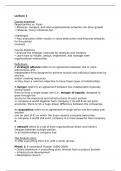
Lecture Notes Block 1: Introduction To Literary & Cultural Analysis
Session 1
The history that brought together comparative literature, philosophy and cultural studies.
epistemology: can I know something? If so, how can I learn?
2 approaches: by basis of parts or relationships between parts (structuralism)
or through history, origin and development (culturalism)
The approach you pick influences the knowledge you obtain.
Timeline of cultural studies
I II III
Germany United States United Kingdom
2nd half of the 18th century after World War II the 1960’s
I: Germany in the 2nd half of the 18th century
romanticism, counter-enlightenment. A different understanding of humanity.
Enlightenment states that reason and logic are universal.
David Hume: (1711-1776) “mankind the same in all times and places.”
Romanticism
Focus on differences of time, place, experience, circumstance and history: “geist.”
It’s not irrational, but interested in individuality. Language, which is unique to every culture, is
important to the Romantics. Especially poetry, which expresses the individual ‘geist.’ Through
Romanticism, the humanities gain importance and status.
Johann Herder (1744-1803)
“language is change” (1797) This was an innovative idea at the time.
Romantics in the UK include Coleridge and Wordsworth
The modern is a combination of enlightened and romantic ideas.
Nationalism in Romanticism
Herder on nationality: “a bond of language, thoughts, needs and feelings firmly ties them together.”
Germany is a patchwork of states. They are preoccupied with language because it is all they have
in common.
Cultures should be emancipated from the empire and respected in their national identity. Sharing
of cultural elements is encouraged respectfully, but there is no standard to compare by. Everything
is appreciated individually.
Friedrich von Schlegel: criticism is not to judge works by a general ideal, but to search out the
individual ideal of every work” (1733)
rejection of systematic approach, yet a comparative movement emerged eventually, with a
European focus and standard and nationalist comparisons that emphasized cliche differences.
thus: actual nationalism emerged in the 19th century
II: The United States After World War II
Here, philosophy and comparative literature come together, because philosphers, artists and
scholars flee Germany during the war (a ‘brain drain”) and many of them go to the US.
Leo Spitzer (1887-1960)
Erich Auerbach (1892-1957)
other examples include Bertolt Brecht, Thomas Mann
But US philosophy departments had an approach of analytical philosophy which was very different
from continental philosophy and so many European philosophers found work in literature
departments.
Session 1
The history that brought together comparative literature, philosophy and cultural studies.
epistemology: can I know something? If so, how can I learn?
2 approaches: by basis of parts or relationships between parts (structuralism)
or through history, origin and development (culturalism)
The approach you pick influences the knowledge you obtain.
Timeline of cultural studies
I II III
Germany United States United Kingdom
2nd half of the 18th century after World War II the 1960’s
I: Germany in the 2nd half of the 18th century
romanticism, counter-enlightenment. A different understanding of humanity.
Enlightenment states that reason and logic are universal.
David Hume: (1711-1776) “mankind the same in all times and places.”
Romanticism
Focus on differences of time, place, experience, circumstance and history: “geist.”
It’s not irrational, but interested in individuality. Language, which is unique to every culture, is
important to the Romantics. Especially poetry, which expresses the individual ‘geist.’ Through
Romanticism, the humanities gain importance and status.
Johann Herder (1744-1803)
“language is change” (1797) This was an innovative idea at the time.
Romantics in the UK include Coleridge and Wordsworth
The modern is a combination of enlightened and romantic ideas.
Nationalism in Romanticism
Herder on nationality: “a bond of language, thoughts, needs and feelings firmly ties them together.”
Germany is a patchwork of states. They are preoccupied with language because it is all they have
in common.
Cultures should be emancipated from the empire and respected in their national identity. Sharing
of cultural elements is encouraged respectfully, but there is no standard to compare by. Everything
is appreciated individually.
Friedrich von Schlegel: criticism is not to judge works by a general ideal, but to search out the
individual ideal of every work” (1733)
rejection of systematic approach, yet a comparative movement emerged eventually, with a
European focus and standard and nationalist comparisons that emphasized cliche differences.
thus: actual nationalism emerged in the 19th century
II: The United States After World War II
Here, philosophy and comparative literature come together, because philosphers, artists and
scholars flee Germany during the war (a ‘brain drain”) and many of them go to the US.
Leo Spitzer (1887-1960)
Erich Auerbach (1892-1957)
other examples include Bertolt Brecht, Thomas Mann
But US philosophy departments had an approach of analytical philosophy which was very different
from continental philosophy and so many European philosophers found work in literature
departments.