

ATI MEDSURG EXAM EACH CHAPTER WITH 15 QUESTIONS GRADED A
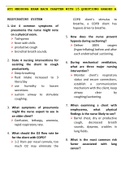
RESPIRATORY SYSTEM 1. List 4 common symptoms of pneumonia the nurse might note on a physical exam. Tachypnea fever with chills productive cough bronchial breath sounds. 2. State 4 nursing interventions for assisting the client to cough productively. Deep breathing fluid intake increased to 3 liters/day use humidity to loosen secretions suction airway to stimulate coughing. 3. What symptoms of pneumonia might the nurse expect to see in an older client? Confusion, lethargy, anorexia, rapid respiratory rate. 4. What should the O2 flow rate be for the client with COPD? 1-2 liters per nasal cannula, too much O2 may eliminate the COPD client’s stimulus to breathe, a COPD client has hypoxic drive to breathe. 5. How does the nurse prevent hypoxia during suctioning? Deliver 100% oxygen (hyperinflating) before and after each endotracheal suctioning. 6. During mechanical ventilation, what are three major nursing intervention? Monitor client’s respiratory status and secure connections, establish a communication mechanism with the client, keep airway clear by coughing/suctioning. 7. When examining a client with emphysema, what physical findings is the nurse likely to see? Barrel chest, dry or productive cough, decreased breath sounds, dyspnea, crackles in lung fields. 8. What is the most common risk factor associated with lung cancer? Smoking 9. Describe the pre-op nursing care for a client undergoing a laryngectomy. Involve family/client in manipulation of tracheostomy equipment before surgery, plan acceptable communication method, refer to speech pathologist, discuss rehabilitation program. 10. List 5 nursing interventions after chest tube insertion. Maintain a dry occlusive dressing to chest tube site at all times. Check all connections every 4 hours. Make sure bottle III or end of chamber is bubbling. Measure chest tube drainage by marking level on outside of drainage unit. Encourage use of incentive spirometry every 2 hours. 11. What immediate action should the nurse take when a chest tube becomes disconnected from a bottle or a suction apparatus? What should the nurse do if a chest tube is accidentally removed from the client? Place end in container of sterile water. Apply an occlusive dressing and notify physician STAT. 12. What instructions should be given to a client following radiation therapy? Do NOT wash off lines; wear soft cotton garments, avoid use of powders/creams on radiation site. 13. What precautions are required for clients with TB when placed on respiratory isolation? Mask for anyone entering room; private room; client must wear mask if leaving room. 14. List 4 components of teaching for the client with tuberculosis. Cough into tissues and dispose immediately into special bags. Long-term need for daily medication. Good handwashing technique. Report symptoms of deterioration, i.e., blood in secretions RENAL SYSTEM 1. Differentiate between acute renal failure and chronic renal failure. Acute renal failure: often reversible, abrupt deterioration of kidney function. Chronic renal failure: irreversible, slow deterioration of kidney function characterized by increasing BUN and creatinine. Eventually dialysis is required. 2. During the oliguric phase of renal failure, protein should be severely restricted. What is the rationale for this restriction? Toxic metabolites that accumulate in the blood (urea, creatinine) are derived mainly from protein catabolism. 3. Identify 2 nursing interventions for the client on hemodialysis. Do NOT take BP or perform venipunctures on the arm with the A-V shunt, fistula, or graft. Assess access site for thrill or bruit. 4. What is the highest priority nursing diagnosis for clients in any type of renal failure? Alteration in fluid and electrolyte balance. 5. A client in renal failure asks why he is being given antacids. How should the nurse reply? Calcium and aluminum antacids bind phosphates and help to keep phosphates from being absorbed into blood stream thereby preventing rising phosphate levels, and must be taken with meals. 6. List 4 essential elements of a teaching plan for clients with frequent urinary tract infections. Fluid intake 3 liters/day; good handwashing; void every 2-3 hours during waking hours; take all prescribed medications; wear cotton undergarments. 7. What are the most important nursing interventions for clients with possible renal calculi? Strain all urine is the MOST IMPORTANT intervention. Other interventions include accurate intake and output documentation and administer analgesics as needed. 8. What discharge instructions should be given to a client who has had urinary calculi? Maintain high fluid intake 3-4 liters per day. Follow-up care (stones tend to recur). Follow prescribed diet based in calculi content. Avoid supine position. 9. Following transurethral resection of the prostate gland (TURP), hematuria should subside by what post-op day? Fourth day 10. After the urinary catheter is removed in the TURP client, what are 3 priority nursing actions? Continued strict I&O; continued observations for hematuria; inform client burning and frequency may last for a week. 11. After kidney surgery, what are the primary assessments the nurse should make? Respiratory status (breathing is guarded because of pain); circulatory status (the kidney is very vascular and excess bleeding can occur); pain assessment; urinary assessment most importantly, assessment of urinary output. CARDIOVASCULAR SYSTEM 1. How do clients experiencing angina describe that pain? Described as squeezing, heavy, burning, radiates to left arm or
Información del documento
- Subido en
- 13 de abril de 2023
- Número de páginas
- 12
- Escrito en
- 2022/2023
- Tipo
- Examen
- Contiene
- Preguntas y respuestas

