BI&A
AA
BUSINESS INTELLIGENCE
&ANALYTICS
2022/2023
VU | AMSTERDAM
,Literature
Week 1
• Hartmann, P. M., Zaki, M., Feldmann, N., & Neely, A. (2014). Big data for big business? A taxonomy of
data-driven business models used by start-up firms.
• LaValle, S., Hopkins, M., Lesser, E., Shockley, R., & Kruschwitz, N. (2010). Analytics: The New Path to
Value
• Parmar, R., Mackenzie, I., Cohn, D., & Gann, D. (2014). The New Patterns of Innovation. Harvard
Business Review, 92(1,2), 86-95.
• Woerner, S. L., & Wixom, B. H. (2015). Big Data: Extending the Business Strategy Toolbox. Journal of
Information Technology
Week 2
• Strong, D. M., Lee, Y. W., & Wang, R. Y. (1997). Data quality in context.
• Tene, O., & Polonetsky, J. (2013). Big data for all: Privacy and user control in the age of analytics.
Northwestern Journal of Technology and Intellectual Property, 11(5), 239-273.
• Weber, K., Otto, B., & Österle, H. (2009). One Size Does Not Fit All---A Contingency Approach to Data
Governance. Journal of Data and Information Quality, 1(1), 1-27. doi:10.1145/1515693.1515696
Week 3
• Chaudhuri, S., Dayal, U., & Narasayya, V. (2011). An overview of business intelligence technology.
Communications of the ACM, 54(8). doi:10.1145/1978542.1978562
• Ferreira, M. C., Santos, F. B. D., Barbosa, C. E., & Souza, J. M. D. 2018. Using knowledge management to
create a Data Hub and leverage the usage of a Data Lake. International Journal of Knowledge
Management Studies, 9(3).
• Kroenke et al. (2017). Chapter 8: Data Warehouses, Business Intelligence Systems, and Big Data. In
Database Concepts (pp. 488–533). New York, NY: Pearson Education.
Week 4
• Raghupathi, W., & Raghupathi, V. 2021. Contemporary Business Analytics: An Overview. Data, 6(8).
• Shmueli, G., Bruce, P. C., & Patel, N. R. (2016). Chapter 14: Association Rules and Collaborative
• Filtering. In Data Mining for Business Analytics: Concepts, Techniques, and Applications (pp. 308-331).
Hoboken, NJ: John Wiley & Sons.
• Wendler, T., & Gröttrup, S. (2016). Data Mining with SPSS Modeler. Switzerland: Springer International
Publishing.
Week 5
• Cosic, R., Shanks, G., & Maynard, S. B. (2015). A business analytics capability framework. Australasian
Journal of Information Systems, 19. doi:10.3127/ajis.v19i0.1150
• Fogarty, D., & Bell, P. C. (2014). Should you outsource analytics? MIT Sloan Management Review, 55(2),
41-45.
• Wixom, B. H., & Watson, H. J. (2001). An Empirical Investigation of the Factors Affecting Data
Warehousing Success. MIS Quarterly, 25(1). doi:10.2307/3250957
Week 6
• Cairo, A. 2020. If Anything on This Graphic Causes Confusion, Discard the Entire Product. IEEE
Computer Graphics and Applications, 40(2): 91-97.
• Chen, C. (2010). Information visualization. Wiley Interdisciplinary Reviews: Computational Statistics,
2(4), 387-403. doi:10.1002/wics.89
• Schwabish, J. A. (2014). An Economist's Guide to Visualizing Data. Journal of Economic Perspectives,
28(1), 209-234. doi:10.1257/jep.28.1.209
• Wong, B. 2010. Gestalt principles (Part 1). Nature Methods, 7(11): 863
• Wong, B. 2010. Gestalt principles (Part 2). Nature Methods, 7(12): 941
,LECTURE 1 – SETTING THE STAGE
CORE DEFINITIONS
WHAT IS BUSINESS INTELLIGENCE?
A broad category of
• Applications, technologies, and processes
That aims at
• Gathering, sorting, accessing, and analyzing data
With the purpose of
• Helping business users make better decisions.
DATA ANALYTICS
FOUR LEVELS
DESCRIPTIVE ANALYTICS
Statistical analysis, standard reporting, Knowledge discovery in databases
• What happened?
DIAGNOSTIC ANALYTICS
• Why did it happen?
• What exactly is the problem?
PREDICTIVE ANALYTICS
Predictive modelling, Forecasting, simulation, Alerts
• What will happen?
• What if these trends continue?
• What could happen?
PRESCRIPTIVE ANALYTICS
(Stochastic) Optimization
• How can we make it happen?
• How can we achieve the best outcome?
• What actions are needed? When? Why?
• Based on results of predictive analytics.
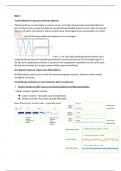
, The further we go in depth, the more difficult it gets and the higher the value of the insights.
THE NEW PATH TO VALUE - LAVALLE ET AL., 2010
WHERE ARE ORGANIZATIONS NOW?
Aspirational
• Focus on efficiency / automation of existing processes.
• Search for new ways to cut costs.
• Few of necessary building blocks (people, processes / tools)
Experienced
• Go beyond cost management.
• Development of better ways to collect, incorporate and act on analytics to optimize organization
Transformed
• Substantial experience in use of analytics for different functions
• Analytics as competitive differentiator
• Skilled at organizing people, processes and tools for optimization & differentiation
• Less focused on cutting costs → already automated operations
• Focus:
• driving customer profitability
• making targeted investments in niche analytics
AA
BUSINESS INTELLIGENCE
&ANALYTICS
2022/2023
VU | AMSTERDAM
,Literature
Week 1
• Hartmann, P. M., Zaki, M., Feldmann, N., & Neely, A. (2014). Big data for big business? A taxonomy of
data-driven business models used by start-up firms.
• LaValle, S., Hopkins, M., Lesser, E., Shockley, R., & Kruschwitz, N. (2010). Analytics: The New Path to
Value
• Parmar, R., Mackenzie, I., Cohn, D., & Gann, D. (2014). The New Patterns of Innovation. Harvard
Business Review, 92(1,2), 86-95.
• Woerner, S. L., & Wixom, B. H. (2015). Big Data: Extending the Business Strategy Toolbox. Journal of
Information Technology
Week 2
• Strong, D. M., Lee, Y. W., & Wang, R. Y. (1997). Data quality in context.
• Tene, O., & Polonetsky, J. (2013). Big data for all: Privacy and user control in the age of analytics.
Northwestern Journal of Technology and Intellectual Property, 11(5), 239-273.
• Weber, K., Otto, B., & Österle, H. (2009). One Size Does Not Fit All---A Contingency Approach to Data
Governance. Journal of Data and Information Quality, 1(1), 1-27. doi:10.1145/1515693.1515696
Week 3
• Chaudhuri, S., Dayal, U., & Narasayya, V. (2011). An overview of business intelligence technology.
Communications of the ACM, 54(8). doi:10.1145/1978542.1978562
• Ferreira, M. C., Santos, F. B. D., Barbosa, C. E., & Souza, J. M. D. 2018. Using knowledge management to
create a Data Hub and leverage the usage of a Data Lake. International Journal of Knowledge
Management Studies, 9(3).
• Kroenke et al. (2017). Chapter 8: Data Warehouses, Business Intelligence Systems, and Big Data. In
Database Concepts (pp. 488–533). New York, NY: Pearson Education.
Week 4
• Raghupathi, W., & Raghupathi, V. 2021. Contemporary Business Analytics: An Overview. Data, 6(8).
• Shmueli, G., Bruce, P. C., & Patel, N. R. (2016). Chapter 14: Association Rules and Collaborative
• Filtering. In Data Mining for Business Analytics: Concepts, Techniques, and Applications (pp. 308-331).
Hoboken, NJ: John Wiley & Sons.
• Wendler, T., & Gröttrup, S. (2016). Data Mining with SPSS Modeler. Switzerland: Springer International
Publishing.
Week 5
• Cosic, R., Shanks, G., & Maynard, S. B. (2015). A business analytics capability framework. Australasian
Journal of Information Systems, 19. doi:10.3127/ajis.v19i0.1150
• Fogarty, D., & Bell, P. C. (2014). Should you outsource analytics? MIT Sloan Management Review, 55(2),
41-45.
• Wixom, B. H., & Watson, H. J. (2001). An Empirical Investigation of the Factors Affecting Data
Warehousing Success. MIS Quarterly, 25(1). doi:10.2307/3250957
Week 6
• Cairo, A. 2020. If Anything on This Graphic Causes Confusion, Discard the Entire Product. IEEE
Computer Graphics and Applications, 40(2): 91-97.
• Chen, C. (2010). Information visualization. Wiley Interdisciplinary Reviews: Computational Statistics,
2(4), 387-403. doi:10.1002/wics.89
• Schwabish, J. A. (2014). An Economist's Guide to Visualizing Data. Journal of Economic Perspectives,
28(1), 209-234. doi:10.1257/jep.28.1.209
• Wong, B. 2010. Gestalt principles (Part 1). Nature Methods, 7(11): 863
• Wong, B. 2010. Gestalt principles (Part 2). Nature Methods, 7(12): 941
,LECTURE 1 – SETTING THE STAGE
CORE DEFINITIONS
WHAT IS BUSINESS INTELLIGENCE?
A broad category of
• Applications, technologies, and processes
That aims at
• Gathering, sorting, accessing, and analyzing data
With the purpose of
• Helping business users make better decisions.
DATA ANALYTICS
FOUR LEVELS
DESCRIPTIVE ANALYTICS
Statistical analysis, standard reporting, Knowledge discovery in databases
• What happened?
DIAGNOSTIC ANALYTICS
• Why did it happen?
• What exactly is the problem?
PREDICTIVE ANALYTICS
Predictive modelling, Forecasting, simulation, Alerts
• What will happen?
• What if these trends continue?
• What could happen?
PRESCRIPTIVE ANALYTICS
(Stochastic) Optimization
• How can we make it happen?
• How can we achieve the best outcome?
• What actions are needed? When? Why?
• Based on results of predictive analytics.
, The further we go in depth, the more difficult it gets and the higher the value of the insights.
THE NEW PATH TO VALUE - LAVALLE ET AL., 2010
WHERE ARE ORGANIZATIONS NOW?
Aspirational
• Focus on efficiency / automation of existing processes.
• Search for new ways to cut costs.
• Few of necessary building blocks (people, processes / tools)
Experienced
• Go beyond cost management.
• Development of better ways to collect, incorporate and act on analytics to optimize organization
Transformed
• Substantial experience in use of analytics for different functions
• Analytics as competitive differentiator
• Skilled at organizing people, processes and tools for optimization & differentiation
• Less focused on cutting costs → already automated operations
• Focus:
• driving customer profitability
• making targeted investments in niche analytics