Pearson BTEC level 3 national extended certificate in applied science
Unit 14 applications of organic chemistry
Understand the structure, reactions and properties of functional group
compounds
Halogenoalkanes
Halogeno-alkanes are alkanes that 1 or more halogens attached to it for e.g
chloropropane
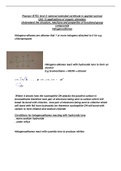
Halogeno-alkanes react with hydroxide ions to form an
alcohol
E.g bromoethane + NAOH = ethanol
Where it shows how the nucleophile OH attacks the positive carbon in
bromoethane therefore lone pair of electrons being sent to carbon which will
break its bond with chlorine, lone pair of electrons being sent to chlorine which
will bond with NA from hydroxide ion therefore nucleophile OH will bond with
carbon to form ethanol and sodium chloride
Conditions for halogenoalkanes reacting with hydroxide ions
. warm sodium hydroxide
. under reflux
Halogenoalkanes react with cyanide ions to produce nitriles
,E.g chloroethane + KCN = propenenitrile
Where the nucleophile CN will attack the positive carbon in chloroethane
therefore lone pair of electrons being sent to the positive carbon which will then
break its bond with bromine therefore lone pair of electrons being transferred to
bromine therefore nucleophilic substitution with bromine by now bonding to the
carbon to form propanenitrile
Conditions for halogeno-alkanes reacting with cyanide ions
. Warm ethanolic potassium cyanide
. under reflux
Halogeno-alkanes react with ammonia
E.g bromoethane + ammonia = ethylammonium bromide
Where it shows how ammonia is a nucleophile which attacks the positive carbon
in bromoethane therefore lone pair of electrons will be sent to carbon which will
then break its bond with bromine therefore lone pair of electrons will be sent to
bromine and ammonia will form a bond with the carbon to form ethyl ammonium
bromide
Conditions
.hot ethanolic ammonia
Elimination reaction between 2-bromopropane and NAOH
E.g bromoethane + NAOH = ethene
,The nucleophile OH will attack the hydrogen adjacent to the positive carbon there
transferring a lone pair of electrons to the carbon which will break its bond with
the hydrogen in which the electrons in the bond will form a double bond between
the 2 carbons. The second carbon will then break its bond with bromine
transferring the lone pair of electrons in the bond to bromine which it will bond
with NA from the hydroxide ion. With the hydrogen and bromine removed it
overall forms ethene
Conditions
.heated under reflux
.Hot ethanolic NAOH
Alcohols
Primary alcohols contain only one alkyl group attached
To carbon e.g butan-1-ol
Secondary alcohols have 2 2 alkyl group attached to carbon
E.g Butan -2-ol
,Tertiary alcohols have 3 alkyl groups attached to carbon
e.g butan-3-ol
Primary alcohols are oxidized to produce an aldehyde which have a C=O and a C-
H at the end of the carbon and then further oxidized to produce carboxylic acids
E.g ethanol + oxidizing agent = ethanal + water
Where it shows how 2 hydrogens is removed from ethanol and bonds with
oxygen from the oxidizing agent to form a water molecule and ethanal
Ethanal is further oxidized to form a carboxylic acid where a oxygen added to
ethanal from the oxidizing agent to form ethanoic acid
,Secondary alcohols are oxidized to make ketones which have C=O in an inner
carbon
E.g propan-2-ol + oxidizing agent = propanone
Where 2 hydrogens in propan 2 ol is removed from the oxidizing agent and bonds
with oxygen from the oxidizing agent to form a water molecule and propanone
Tertiary alcohols cannot be oxidized as they dont have carbon that has a
hydrogen attached to it
Conditions of oxidizing primary alcohols
. reflux
. distillation
Excess Oxidizing agent (potassium dichromate,conc sulfuric acid)
Conditions of oxidizing secondary alcohols
.oxidizing agent (potassium dichromate, conc sulfuric acid
Dehydration of alcohols
Alcohols dehydrate to form alkenes
E.g ethanol + conc H2SO4 = ethene
Where OH bonding with carbon is removed by the H atom produced by the
carbon adjacent to the OH to produce ethene
E.g propan-2-ol + conc H2SO4 = propene
Where the OH bond with carbon is removed by the hydrogen from the sulfuric
acid to form propene and the OH and hydrogen forms a water molecule
, Conditions for dehydration of alcohols
High temperature
Concentrated sulfuric acid
Alcohols react with acyl chlorides to form esters
E.g ethanol + ethanoyl chloride = ethyl ethanoate
When ethanoyl chloride and ethanol are added it demonstrates how an ester is
formed with and a burst of HCL produced as well
Amines
Primary methane contains one methyl group as it shows how it replaces one
hydrogen from ammonia therefore forming the primary methylamine
Secondary methane contains two methyl
groups replacing 2 hydrogens forming
dimethylamine
Unit 14 applications of organic chemistry
Understand the structure, reactions and properties of functional group
compounds
Halogenoalkanes
Halogeno-alkanes are alkanes that 1 or more halogens attached to it for e.g
chloropropane
Halogeno-alkanes react with hydroxide ions to form an
alcohol
E.g bromoethane + NAOH = ethanol
Where it shows how the nucleophile OH attacks the positive carbon in
bromoethane therefore lone pair of electrons being sent to carbon which will
break its bond with chlorine, lone pair of electrons being sent to chlorine which
will bond with NA from hydroxide ion therefore nucleophile OH will bond with
carbon to form ethanol and sodium chloride
Conditions for halogenoalkanes reacting with hydroxide ions
. warm sodium hydroxide
. under reflux
Halogenoalkanes react with cyanide ions to produce nitriles
,E.g chloroethane + KCN = propenenitrile
Where the nucleophile CN will attack the positive carbon in chloroethane
therefore lone pair of electrons being sent to the positive carbon which will then
break its bond with bromine therefore lone pair of electrons being transferred to
bromine therefore nucleophilic substitution with bromine by now bonding to the
carbon to form propanenitrile
Conditions for halogeno-alkanes reacting with cyanide ions
. Warm ethanolic potassium cyanide
. under reflux
Halogeno-alkanes react with ammonia
E.g bromoethane + ammonia = ethylammonium bromide
Where it shows how ammonia is a nucleophile which attacks the positive carbon
in bromoethane therefore lone pair of electrons will be sent to carbon which will
then break its bond with bromine therefore lone pair of electrons will be sent to
bromine and ammonia will form a bond with the carbon to form ethyl ammonium
bromide
Conditions
.hot ethanolic ammonia
Elimination reaction between 2-bromopropane and NAOH
E.g bromoethane + NAOH = ethene
,The nucleophile OH will attack the hydrogen adjacent to the positive carbon there
transferring a lone pair of electrons to the carbon which will break its bond with
the hydrogen in which the electrons in the bond will form a double bond between
the 2 carbons. The second carbon will then break its bond with bromine
transferring the lone pair of electrons in the bond to bromine which it will bond
with NA from the hydroxide ion. With the hydrogen and bromine removed it
overall forms ethene
Conditions
.heated under reflux
.Hot ethanolic NAOH
Alcohols
Primary alcohols contain only one alkyl group attached
To carbon e.g butan-1-ol
Secondary alcohols have 2 2 alkyl group attached to carbon
E.g Butan -2-ol
,Tertiary alcohols have 3 alkyl groups attached to carbon
e.g butan-3-ol
Primary alcohols are oxidized to produce an aldehyde which have a C=O and a C-
H at the end of the carbon and then further oxidized to produce carboxylic acids
E.g ethanol + oxidizing agent = ethanal + water
Where it shows how 2 hydrogens is removed from ethanol and bonds with
oxygen from the oxidizing agent to form a water molecule and ethanal
Ethanal is further oxidized to form a carboxylic acid where a oxygen added to
ethanal from the oxidizing agent to form ethanoic acid
,Secondary alcohols are oxidized to make ketones which have C=O in an inner
carbon
E.g propan-2-ol + oxidizing agent = propanone
Where 2 hydrogens in propan 2 ol is removed from the oxidizing agent and bonds
with oxygen from the oxidizing agent to form a water molecule and propanone
Tertiary alcohols cannot be oxidized as they dont have carbon that has a
hydrogen attached to it
Conditions of oxidizing primary alcohols
. reflux
. distillation
Excess Oxidizing agent (potassium dichromate,conc sulfuric acid)
Conditions of oxidizing secondary alcohols
.oxidizing agent (potassium dichromate, conc sulfuric acid
Dehydration of alcohols
Alcohols dehydrate to form alkenes
E.g ethanol + conc H2SO4 = ethene
Where OH bonding with carbon is removed by the H atom produced by the
carbon adjacent to the OH to produce ethene
E.g propan-2-ol + conc H2SO4 = propene
Where the OH bond with carbon is removed by the hydrogen from the sulfuric
acid to form propene and the OH and hydrogen forms a water molecule
, Conditions for dehydration of alcohols
High temperature
Concentrated sulfuric acid
Alcohols react with acyl chlorides to form esters
E.g ethanol + ethanoyl chloride = ethyl ethanoate
When ethanoyl chloride and ethanol are added it demonstrates how an ester is
formed with and a burst of HCL produced as well
Amines
Primary methane contains one methyl group as it shows how it replaces one
hydrogen from ammonia therefore forming the primary methylamine
Secondary methane contains two methyl
groups replacing 2 hydrogens forming
dimethylamine