Zusammenfassung Linguistik
Wissen: modul, fachsemester, pl/sl, anzahl ects
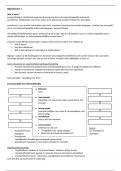
Grobe Übersicht über die Lecture:
- Phonetics and Phonology:
Phonetics: study of how we produce and receive phones (i.e. sounds)
Phonology: study of sound systems in specific language
- Morphology:
Study of internal structure of words (e.g. sing-er-s)
Different to syllables! They carry meaning
Inflectional vs. Derivational
- Syntax and Grammar
Syntax: study of rules of combining words to form sentences
Grammar: study of rules of combining morphemes to form words and
words to form sentences
- Semantics:
Study of meaning out of context what is literally said?
Sense relations synonyms, antonyms, hyponyms, etc.
- Pragmatics:
Study of meaning in context what is meant?
2. Phonetics and phonology – the sounds of speech
Phonetics: precise description of sounds of human languages from 3 perspectives:
- Articulatory (how they´re formed in the mouth, the glottis and the nasal cavity?)
=most useful starting point
- Acoustic (what are they like when measured while travelling through the air?)
- Auditory (how are they perceived by the listener?)
- Meaning & grammar aren´t relevant
Two major classes of speech sounds:
Consonants:
- pronunciation: positioning the speech organs in specific way + block air stream
Vowels:
- not vocal but vowel: the sound of one or more vocals
- people, beat, seed, perceive: same vowel [i:], but spelled in four different ways
- diphthongs: if two vowels are pronounced together, e.g. in pair, pare and pear: [ƐƏ)
is spelled in 3 different ways depending on the meaning
- to produce vowels: we position our speech organs in a specific way but don´t block
the air-stream by causing friction (Reibung) or complete closure
,e.g. [i] = close and front = front of mouth / with front part of tongue close to the palate
(Gaumen)
[ꭤ] = back and open = articulated in back of the mouth, with tongue lowered (open air
stream)
Pulmonic =Air stream from lungs is involved in their production
(Fricative = Reibung, lateral = seitlich)
- bilabial = obstruction by both lips
- palatal = obstruction by the tongue and palate
- plosives = blocking air-stream completely for a brief period
- fricatives = partially obstructing air-stream
- approximants= without audible friction
- mixed manners of articulation: combination of plosive & corresponding fricative [tʃ] or
[dʒ]
, - clear / palatal [l] vs. dark/ velar [ɫ] e.g. clear: deutsch viel vs. dark: feel
- cardinal vowels: e.g. [i] (close to [i:] in beat; seed
- central vowel: [ə] least effort; tongue neutral position; mouth relaxed & open
very frequent e.g. for the painter
- tongue lowered as far as possible: [ꭤ]
- Diphthongs: produced by movement of tongue from starting to end point (see above)
- Monophthongs: consist of only one element
- lip rounding (e.g. earl vs. Öl)
- nasality: if velum is lowered, air-stream escapes through nose nasal vowel
- consonant production factors:
o place of articulation (which parts of mouth involved in obstructing the air-
stream)
o manner of articulation (is the obstruction (Hindernis) total = brief stop; or
partial = kind of friction)
o voicing (do or don´t vocal cords vibrate during articulation (like in voiced
vowels&consonants vs. in voiceless consonants))
Palate= Gaumen
Nasal cavity= Nasenhöhle
Uvula= Gaumenzäpfchen
Epiglottis= Kehldeckel/ Stimmritze
Glottis= Stimmritze
Windpipe= Luftröhre
Larynx= Kehlkopf
Oesophagus= Speiseröhre
Vocal cords= Stimmbänder
Alveolar ridge= direkt hinter Zähnen
Tip= Zungenspitze
Tipbladefrontback
Phonoloy: study of speech sounds seen as basic units in a structural system
Wissen: modul, fachsemester, pl/sl, anzahl ects
Grobe Übersicht über die Lecture:
- Phonetics and Phonology:
Phonetics: study of how we produce and receive phones (i.e. sounds)
Phonology: study of sound systems in specific language
- Morphology:
Study of internal structure of words (e.g. sing-er-s)
Different to syllables! They carry meaning
Inflectional vs. Derivational
- Syntax and Grammar
Syntax: study of rules of combining words to form sentences
Grammar: study of rules of combining morphemes to form words and
words to form sentences
- Semantics:
Study of meaning out of context what is literally said?
Sense relations synonyms, antonyms, hyponyms, etc.
- Pragmatics:
Study of meaning in context what is meant?
2. Phonetics and phonology – the sounds of speech
Phonetics: precise description of sounds of human languages from 3 perspectives:
- Articulatory (how they´re formed in the mouth, the glottis and the nasal cavity?)
=most useful starting point
- Acoustic (what are they like when measured while travelling through the air?)
- Auditory (how are they perceived by the listener?)
- Meaning & grammar aren´t relevant
Two major classes of speech sounds:
Consonants:
- pronunciation: positioning the speech organs in specific way + block air stream
Vowels:
- not vocal but vowel: the sound of one or more vocals
- people, beat, seed, perceive: same vowel [i:], but spelled in four different ways
- diphthongs: if two vowels are pronounced together, e.g. in pair, pare and pear: [ƐƏ)
is spelled in 3 different ways depending on the meaning
- to produce vowels: we position our speech organs in a specific way but don´t block
the air-stream by causing friction (Reibung) or complete closure
,e.g. [i] = close and front = front of mouth / with front part of tongue close to the palate
(Gaumen)
[ꭤ] = back and open = articulated in back of the mouth, with tongue lowered (open air
stream)
Pulmonic =Air stream from lungs is involved in their production
(Fricative = Reibung, lateral = seitlich)
- bilabial = obstruction by both lips
- palatal = obstruction by the tongue and palate
- plosives = blocking air-stream completely for a brief period
- fricatives = partially obstructing air-stream
- approximants= without audible friction
- mixed manners of articulation: combination of plosive & corresponding fricative [tʃ] or
[dʒ]
, - clear / palatal [l] vs. dark/ velar [ɫ] e.g. clear: deutsch viel vs. dark: feel
- cardinal vowels: e.g. [i] (close to [i:] in beat; seed
- central vowel: [ə] least effort; tongue neutral position; mouth relaxed & open
very frequent e.g. for the painter
- tongue lowered as far as possible: [ꭤ]
- Diphthongs: produced by movement of tongue from starting to end point (see above)
- Monophthongs: consist of only one element
- lip rounding (e.g. earl vs. Öl)
- nasality: if velum is lowered, air-stream escapes through nose nasal vowel
- consonant production factors:
o place of articulation (which parts of mouth involved in obstructing the air-
stream)
o manner of articulation (is the obstruction (Hindernis) total = brief stop; or
partial = kind of friction)
o voicing (do or don´t vocal cords vibrate during articulation (like in voiced
vowels&consonants vs. in voiceless consonants))
Palate= Gaumen
Nasal cavity= Nasenhöhle
Uvula= Gaumenzäpfchen
Epiglottis= Kehldeckel/ Stimmritze
Glottis= Stimmritze
Windpipe= Luftröhre
Larynx= Kehlkopf
Oesophagus= Speiseröhre
Vocal cords= Stimmbänder
Alveolar ridge= direkt hinter Zähnen
Tip= Zungenspitze
Tipbladefrontback
Phonoloy: study of speech sounds seen as basic units in a structural system