
Final Examination Bisc 303
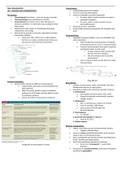
FINAL EXAMINATION LEC. 9 ARCHEAE AND CYANOBACTERIA The Archaea Crenarchaeota from Greek – crene; for spring or fountain Thaumarchaeata from Greekthaumas; wonder Euryarchaeota from Greek -eurus; wide archaeios for ancient or primitive) - to reflect the many ecological niches they occupy highly diverse with respect to morphology, physiology, reproduction and ecology best known for growth in anaerobic, hypersaline and high temperature habitats o these were often referred to as extremophiles, but this is no longer considered valid as they are also found in non-extreme environments Archaeal Metabolism • great variation among the different archaeal groups o organotrophy, autotrophy, and phototrophy have been observed o differ from other groups in glucose catabolism, pathways for CO2 fixation and the ability of some to synthesize methane o almost all methane (natural gas) is produced biologically by methanogenic archaea Crenarchaeota • metabolically diverse thermophiles • most are extremely thermophilic • many are acidophilic and sulfur dependent o for some, sulfur is used as electron acceptor in anaerobic respiration o for some, sulfur is used as electron source (chemolithotrophs) • almost all are strict anaerobes • many inhabit extreme environments that resemble early earth Thaumarchaeota mesophilic ammonia oxidizers, many are acidophilic and sulfur dependent o Until recently they were grouped as mesophilic Crenarchaeota but are now in a separate phylum o Found in marine plankton from polar, temperate and tropical waters as well as soil Archaea make up 20% of prokaryotic biomass of marine plankton Not all aracheaea exist in extreme environments o Have a unique archaeal specific lipid now called Thaumarchaeol Eurarchaeota • consists of many classes, orders, and families, but often divided informally into 5 major groups • this phylum contains the only known parasitic archaeon 1. Methanogens o Use acetate and H2 to reduce CO2 to CH4 o Present in anaerobic environments: marshes, sewage, rumens 2. Halobacteria o Min. 1.5 M NaCl conc. (prefer 3-4 M NaCl) o Grow in salt lakes, salted foods o Some produce ATP with light and bacteriorhodopsin 3. Thermoplasms o no cell wall 4. Extremely thermophilic S0 -reducers o Grow at 70-110 °C 5. Sulfate-reducers Bacteria: Cyanobacteria • largest, most diverse group of photosynthetic bacteria o Oxygenic photosynthetic • many are obligate photolithoautotrophs; some can grow slowly in dark as chemoheterotrophs • Show considerable reproductive diversity including binary fission, budding and fragmentation • Some have specialized reproductive structures o Some form “hormogonia” – small motile filaments • One group, the prochloropohytes, have both chlorophyll a and b but no phycobilins! o They are green o They are the only bacteria with chlb o The ancestors of prochlorophytes are considered the best candidates as the endosymbionts that gave rise to chloroplasts Heterocysts and Akinetes Fig. 21.13 What is a heterocyst? Specialized cell structures for N2 fixation When preferred N-source is not available up to 15% cells form into heterocyst’s Heterocysts • involves reorganization of photosynthetic membranes • synthesize nitrogenase • retain PSI. Why? • heterocyst’s have a thick wall - Why? • why does N2 fixation occur in the dark? • how does the heterocyst obtain nutrients? • is a heterocyst always required for nitrogen fixation? Cyanobacteria can be motile Advantages of gliding motility • enables cells to encounter insoluble nutrient sources and digest them with cell bound digestive enzymes • works well in drier habitats (e.g., soil, sediments, and rotting wood) • enables cells to position themselves optimally for light intensity, [O2], [H2S], temperature Ecology of cyanobacteria • Have a profound effect on global carbon cycle o – –Synechococcus and Prochlorococcus account for at least 1/3 of CO2 fixation • tolerant of environmental extremes o thermophilic species can grow at temperatures up to 75°C o often are primary colonizers • can cause blooms in nutrient-rich ponds and lakes o some produce toxins - Microcystis aeruginosa produces the potent liver toxin microcystin has been implicated in livestock poisoning and deaths • often form symbiotic relationships o e.g., are phototrophic partner in most lichens o e.g., symbionts with protozoa and fungi o e.g., nitrogen-fixing species form associations with plants Eutrophic pond • When certain nutrient levels get too high, such as from p
Información del documento
- Subido en
- 15 de enero de 2023
- Número de páginas
- 30
- Escrito en
- 2022/2023
- Tipo
- Examen
- Contiene
- Preguntas y respuestas

