SALES
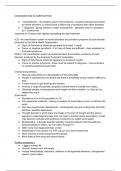
SALES Sale, concept A contract whereby one of the contracting parties (known the seller or vendor), obligates himself to transfer the ownership of and to deliver a determinate thing, and the other party, (known as the buyer or vendee),obligates himself to pay therefor a price certain in money or its equivalent. (See Art. 1458) Elements of a contract of sale 1. Essential elements/requisites - Those without which a contract of sale would not exist. a. Consent of the contracting parties b. Subject matter which should be a determinate thing c. Price certain in money or its equivalent 2. Natural elements - Those inherent in a contract of sale, which in the absence of stipulation excluding them, are deemed to exist . 3. Warranty against eviction a. Warranty against hidden defects and encum-brances 3. Accidental elements – They refer to particular stipulations of the parties such as terms, place and time of payment, and other conditions agreed upon. Characteristics of a contract of sale 1. Consensual - It is perfected by mere consent of the parties. 2. Principal - It can exist by itself without being dependent upon another contract. 3. Bilateral – The parties are bound by reciprocal obligations. 4. Onerous - Valuable considerations are given by both parties to acquire rights. 5. Commutative - The parties exchange almost equivalent values. 6. Nominate - It has a special name given to it by law, Sales distinguished from dacion en pago 1. In sale, there is no pre-existing credit, while in dacion en pago, there is a pre-existing credit. 2. A sale creates obligations, while dacion en pago extinguishes obligations. 3. In sale, the cause or consideration is the price, from the seller's point of view; and the delivery of the object, from the buyer's point of view. In dacion en pago, the cause or consideration is the extinguishment of the obligation, from the debtor's point of view; and the delivery of the object given in place of the credit, from the creditor's point of view. 4. In sale, there is greater freedom in fixing the price, while in dacion en pago, there is less freedom in fixing the price because of the amount of the pre-existing credit which the parties seek to extinguish, Sale distinguished from payment by cession or cession de bienes 1. In sale, there is no pre-existing credit, while in payment by cession, there are pre-existing credits. 2. A sale creates obligations, while payment by cession extinguishes obligations. 3. In sale, the cause or consideration is the price, from the seller's point of view; and the delivery of the object, from the buyer's point of view. In payment by cession, the cause or consideration is the extinguishment of the obligation, from the debtor's point of view; and the assignment of the things to be sold, from the creditors' point of view. 4. In sale, there is greater freedom in fixing the price, while in payment by cession, there is less freedom in fixing the price because of the fixed amount of the pre-existing credits which the parties seek to extinguish. 5. In sale, the ownership of the thing is transferred to the buyer. In payment by cession, the creditors do not become the owners of the properties assigned to them but are merely given the right to sell such properties and apply the proceeds to their claims. contact: Sale distinguished from contract for a piece of work A contract for the delivery at a certain price of an article which the vendor in the ordinary course of business manufactures or procures for the general market, whether the same is on hand or not, is a contract of sale. However, if the goods are to be manufactured specially for the customer and upon his special order, and not for the general market, it is a contract for a piece of work. (Art. 1467) Puregoods Corporation, which maintains a professional basketball team, entered into a contract with Avenidas Footwear Company for the latter to provide a pair of rubber shoes to the former's two imported basketball players, Scottie Duncan and John Bryant. Avenidas Footwear was instructed to make a pair for any or both of the players in case the company did not manufacture shoes of their size. No pair was, however, immediately available for both the players. Scottie Duncan, who is 6'3' tall and wears size 12 rubber shoes, was given a pair the following day from the 200 pairs that Avenidas Footwear was in the process of manufacturing for its customers at the time the orders were received. John Bryant, who is stands at 7 feet and wears size 18 shoes, was provided three days later,with a pair that was specially made for him since Avenidas Footwear does not make shoes of his size. What kind of contracts were entered into for the shoes provided to the two basketball players? Answer: The contract with respect to the shoes provided to Scottie Duncan was one of sale since the pair given to him was manufactured by Avenidas Footwear in the ordinary course of business. The contract with respect to the pair provided to John Bryant was for a piece of work since it was specially made for him and upon Puregoods' special order. Sale distinguished from barter and rule if consideration is partly in money and partly in another thing In sale, the cause or consideration is in money. In barter, the cause or consideration is another thing. However, where the consideration is partly in money and partly in another thing, the following rules shall be observed to determine whether the contract is a sale or barter: 1. The contract shall be one of sale or barter depending upon the manifest intention of the parties. 2. If the intention of the parties does not clearly appear: a) The contract is one of barter if the value of the thing given as part of the consideration exceeds the monetary consideration. b) The contract is one of sale if the monetary consideration is more than or equal to the value of the thing given as part of the consideration. (Art. 1468) Examples: 1. S and B entered into a written contract which states that “S, Seller, hereby transfers his ring worth P20,000.00 to B, Buyer, for B's cell phone worth P12,000.00 and cash of P8,000.00.” What contract was entered into between S and B? Answer: The contract entered into between S and B is one of sale. It is evident that such was their intention when they referred to themselves as seller and buyer, respectively, even if the value of the cell phone, the property consideration (P12,000.00) is more than the monetary consideration of P8,000.00. 2. Suppose the written contract merely states that "S hereby transfers his ring worth P20,000.00 to B, for B’s cell phone worth P12,000.00 and cash of P8,000.00.” What contract was entered into between S and B? Answer: The contract is one of barter since the intention of the parties does not clearly appear, and the value of the cell phone, the property consideration (P12,000.00) is more than the monetary consideration of P8,000.00 3. Suppose the written contract provides that "S hereby transfers his ring worth P20,000.00 to B, for B's cell phone worth P10,000.00 and cash of P10,000.00.” What contract was entered into between S and B? Answer: The contract is one of sale. Under Art. 1468, if the intention of the parties does not clearly appear, "it shall be considered a barter if the value of the thing given as a part of the consideration exceeds the amount of money or its equivalent; otherwise, it is a sale." "Otherwise", meaning, the monetary consideration is more than or equal to the value of the property consideration. Sale distinguished from contract to sell 1. In a contract of sale, the title to the property passes to the vendee upon the delivery of the thing sold; in a contract to sell, ownership is, by agreement, reserved to the vendor and is not to pass to the vendee until full payment of the purchase price. (Sps. Orden vs. Sps. Aurea, G. R. No. , August 20, 2008.) In a contract to sell, the prospective seller does not yet agree or consent to transfer ownership of the property subject of the contract to sell until the happening of an event, such as, in most cases, the full payment of the purchase price. (David vs. Misamis Occidental II Electric Cooperative, Inc., G.R. No. , July 11, 2012) (Note: Based on the foregoing discussions, a contract to sell partakes of the nature of a contract preparatory to the execution of a contract of sale.) 2. In a contract of sale, non-payment of the price is a negative resolutory condition, i.e., the vendor loses ownership of the property and cannot recover it until and unless the contract of sales is resolved or rescinded. In a contract to sell, full payment of the purchase price is a positive suspensive condition, i.e., title remains in the vendor if the vendee does not comply with condition precedent of making payment at the time specified in the contract. In other words, failure to pay the price is not a breach but an event that prevents the obligation of the vendor to convey title from becoming effective. (Sps. Orden vs. Sps. Aurea, supra; Castillo vs. Reves, G. R. NO. , November 28, 2007; Serrano vs. Caguiat, G. R. No. , February 28, 2007; Sps. Garcia vs. Court of Appeals, G.R. No. , April 23, 2010) 3. In a contract of sale, the risk of loss is on the buyer. In contract to sell, the risk of loss is on the seller. Case on Contract to sell Roque vs. Aguado G.R.No. , April 7, 2014 Held: Where the seller promises to execute a deed of absolute sale upon the completion by the buyer of the payment of the purchase price, the contract is only a contract to sell even if their agreement is denominated as a Deed of Conditional Sale. The treatment stems from the legal characterization of a contract to sell, that is, a bilateral contract whereby the prospective seller, while expressly reserving the ownership of the subject property despite delivery thereof to the prospective buyer, binds himself to sell the subject property exclusively to the prospective buyer upon the fulfillment of the condition agreed upon, such as, the full payment of the purchase price. Elsewise stated, in a contract to sell, ownership is retained by the vendor and is not to pass to the vendee until the full payment of the purchase price. Sale distinguished from agency to sell 1. In sale, title to the goods is transferred to the buyer upon delivery of the thing sold. In agency to sell, title to the goods is retained by the owner despite the delivery of the goods to the agent. 2. In sale, the buyer is required to pay the price. In agency to sell, the agent is required to turn over to the principal the price of the goods which he received from the buyer. 3. In sale, the recipient (i.e., the buyer) of the property may do with the property as he pleases. In agency to sell, the principal retains control of the property. (Sps. Viloria vs. Continental Airlines, Inc., G. R. No. , January 16, 2012, citing Commissioner of Internal Revenue vs. Constantino, 31 SCRA 779) Rules on the object of the contract of sale 1. Requisites of object of a contract of sale a. The thing must be within the commerce of men. b. The thing must be licit, i.e., it must not be contrary to law, morals, good customs, public order or public policy. (Art. 1459) c. The thing must be determinate. A thing is determinate if it is particularly designated or physically segregated from all others of the same class. The requisite that a thing is determinate is satisfied if at the time the contract is entered into, the thing is capable of being made determinate without the necessity of a new or further agreement between the parties. Art. 1460) 2. The vendor must have the right to transfer the ownership of the thing at the time that it is delivered. (Art. 1459) Thus, it is not necessary that the vendor must be the owner at the time of sale. 3. Things having a potential existence may be the object of a contract of sale. (Art. 1461) Thus, one can sell the young of animals that thereafter will be born or the future harvest from a farm. However, the thing must come into existence; otherwise, the sale will not be effective for not having a subject matter. Distinction between sale of an expected thing (emptio rei speratae) and the sale of the hope itself (emptio spei) a. Emptio rei speratae is the sale of a future thing; emptio spei deals with a present thing - the hope or expectancy b.In emptio rei speratae, the thing sold must come into existence; otherwise, the sale will not be effective. 4. In emptio spei, the sale produces effects even if the thing hoped for does not come into existence. However, the sale of vain hope or expectancy is void, such as the sale of a losing sweepstake ticket already drawn. The goods which form the subject of a contract of sale may be either: a) Existing goods owned or possessed by the seller. Thus, the sale of bathroom fixtures currently stored in the seller's warehouse is a sale of existing goods. b) Goods to be manufactured, raised, or acquired by the seller after the perfection of the contract of sale, called "future goods", or goods whose acquisition by the seller depends upon a contingency which may or may not happen. (Art. 1462) Examples: 1) The garments to be sewn or to be purchased by the seller are goods to be manufactured or acquired by the seller. 2) There may also be a sale of chickens that may be raised in a poultry farm. 3) D promised to give C a specific car if C completes his course in mechanical engineering. C may sell the car to X although the acquisition by C of the car is subject to a contingency. 5. The sole owner of a thing may sell an undivided interest therein. (Art. 1463) Such sale shall produce the effect of making the seller and the buyer co-owners of the thing sold. Example: S is the sole owner of an apartment. He sells 42 undivided interest therein to B. Such sale shall produce the effect of making S and B co-owners of the property with each party becoming an owner of undivided interest. 6. Sale of fungible goods Fungible goods refer to interchangeable goods such as grain, oil, etc., that allow one to be replaced by another without loss of value. There may be a sale of an undivided share of a specific mass of fungible goods though the seller purports to sell and the buyer purports to buy a definite number, weight or measure of the goods in the mass, and though the number, weight or measure of the goods in the mass is undetermined. The following rules shall be observed if the quantity sold is different from the quantity of the mass: a. If the quantity, i.e., number, weight or measure, of the mass is more than the quantity sold, the parties shall become coowners of the mass. (Art. 1464) Example: S sells to B 200 sacks of corn from a mass stored in the warehouse of S. The mass, however, actually consists of 300 sacks of corn. Thus, S and B will become co-owners of the whole mass to the extent of 2/3 for B and 1/3 for S b. If the quantity of the mass is less than the quantity sold, the buyer becomes the owner of the whole mass, with the seller being bound to make good the deficiency from goods of the same kind and quality, unless a contrary intent appears. (Art. 1464) Example: S sells to B 300 sacks of yellow corn from a mass stored in the warehouse of S. The mass, however, actually consists of 280 sacks of yellow corn. In this case, B becomes the owner of all the 280 sacks of yellow corn and S is bound to deliver to B an additional 20 sacks of yellow corn to complete the quantity agreed upon. 7. Things subject to a resolutory condition may be the object of a contract of sale. (Art. 1465) Example: S sold his lot to B with S being given the right to repurchase the lot within 5 years from the date of sale. The sale and the right to repurchase were registered in the Register of Deeds where the lot is located. Two years after the sale, B sold the lot to X. X became the owner of the lot subject to the right of S to repurchase it within the 5-year period from the time he sold it to B. Price, concept Price is the sum stipulated as the equivalent of the thing and also every incident taken into consideration for the fixing of the same, put to the debit of the vendee, and agreed to by him. (Unson vs. Urquico, 50 Phil. 171). Rules on price 1. Certainty of price The price of the thing sold must be certain; otherwise, the sale is void by reason of the absence of meeting of minds between the parties. The price is considered certain under the following rules: a) If the parties have agreed upon a definite amount for the sale. Example: S sold to B a specific wristwatch. The parties agreed that B would pay P2,500.00 for it. The price is certain because the parties have agreed on a definite amount for the thing sold. Fixing of the price by one of the contracting parties. The fixing of the price can never be left to the discretion of one of the contracting parties. However, if the price fixed by one of the parties is accepted by the other, the sale is perfected. (Art. 1473) Example: S sold his car to B at a price to be fixed by S ten days after their agreement. On the tenth day, S fixed the amount at P100,000.00. If B accepts the said price, the sale is perfected as there is a meeting of minds. If B does not so accept, no sale is perfected. b) If it be certain with reference to another thing certain. (Art. 1469) Example: S sells to B a certain ring the price of which is the price of 20 bags of Island cement being sold at a certain store. c. If the determination of the price is left to the judgment of a specified person or persons. (Art. 1469) 1) If such persons or persons are unable or unwilling to fix the price, the contract shall be inefficacious, unless the parties subsequently agree upon the price. 2) If the third person or persons acted in bad faith or by mistake, the courts may fix the price. 3) If such third person or persons are prevented from fixing the price or terms by the fault of the seller or buyer, the party not at fault may have such remedies against the party at fault as are allowed the seller or buyer, as the case may be. (Art. 1469) d. If the price fixed is that which the thing sold would have on a definite day, or in a particular exchange or market, or when an amount is fixed above or below the price on such day, or in such exchange or market, provided said amount is certain. (Art. 1472 ) Example: S sells to B 500 shares of stock of San Miguel-B shares at the price equivalent to the closing price of the shares on April 24, 2015, at the Philippine Stock Exchange. This is of course on the condition that there will be trading of the said shares on the day agreed upon; otherwise, the sale is of no effect. Or the parties may agree that the price of the shares will be 20% above or 20% below the price of the shares in the exchange on the said day. Effect if the price cannot be determined The sale shall be inefficacious. However, if the thing or any part thereof has been delivered to and appropriated by the buyer, he must pay a reasonable price therefor. What is reasonable price is a question of Tact dependent on the circumstances of each particular case. (Art. 1474) 2) Gross inadequacy of price Gross inadequacy of price does not affect a contract of sale, except as it may indicate a defect in me consent, or that the parties really intended a donation 01 some other act or contract. (Art. 1470) There is 80s inadequacy of price if a reasonable man will not agree to dispose of his property. (Vda. De Delfin vs. Dellota, G.R. No. , January 28, 2008, citing Aguilar vs. Ribato and Gonzales Vila, 40 Phil 570) Example: S sells to B for P180,000.00 a certain car whose actual value is P300,000.00. The fact that the price is inadequate does not affect the validity of the contract. However, if S agreed to sell the car at P180,000.00 because B used insidious words or machinations so that S would sell the car for the said price, then S may seek the annulment of the sale on the ground of vitiated consent due to fraud. 3) Simulated price If the price is simulated (i.e., the parties make it appear that a price certain in money is to be paid or has been paid), the sale is void, but the act may be shown to have been in reality a donation, or some other act or contract. (Art. 1471) Example: S and B entered into a contract where they made it appear that S sold his car to B for P100,000.00. In reality however, B did not give S P100,000.00. The sale here is void by reason of the absence of an essential requisite which is the price. The parties may, however, show that s really donated the car to B, in which case, the contract shall be one of donation, not a sale. Or if what B gave to S was a particular diamond ring, then the contract shall be one of barter, not a sale. When a contract of sale is perfected A contract of sale is perfected at the moment there is a meeting of minds upon the thing which is the object of the contract and upon the price. From that moment, the parties may reciprocally demand performance, subject to the provisions of law governing the form of contracts. (Art. 1475) Form of a contract of sale 1. Subject to the provisions of the Statute of Frauds and of any other applicable statute, a contract of sale may be in any of the following forms: a) in writing, or b) by word of mouth, or partly in writing and partly by word of mouth, or c) may be inferred from the conduct of the parties. (Art. 1483). 2. Under the Statute of Frauds, the sale involving the following must be in writing to be enforceable a. Sale of real property or of any interest therein (regardless of the price). b. Sale of goods, chattels or things in action the price of which is P500.00 or more. (Art. 1403) Things in action include credit, shares of stock and other incorporeal properties. 3. Sale of a piece of land through an agent The authority of the agent to sell a piece of land must be in writing; otherwise, the sale is void. (Art. 1874) a. If the authority of the agent to sell a piece of land is not in writing – the sale is void whatever may have been the form it was entered into, i.e., oral, private instrument or public instrument. b. If the authority of the agent is in a privato instrument and the sale was: 1) entered into orally the sale 18 unenforceable. (Art. 1403) 2) in a private instrument - the sale is valid. 3) in a public instrument - the sale is valid. c. If the authority of the agent is in a public instrument and the sale was: 1) entered into orally - the sale is unenforceable. (Art. 1403) 2) in a private instrument - the sale is valid. 3) in a public instrument - the sale is valid. Note: In order, however, that the sale may be recorded in the Register of Deeds, both the authority of the agent and the sale must be in a public instrument. (See Art. 1358, paragraphs 1 and 3.) Rules in case of sale by auction (Art. 1476) 1. Sale by auction in lots Each lot is the subject of a separate contract of sale. 2. When sale by auction is perfected When the auctioneer announces its perfection (a) by the fall of the hammer, or (b) in any other manner. a. a. Rights of parties before perfection 1) Any bidder may retract his bid. This is so because a bid is merely an offer and an offer may be withdrawn anytime before acceptance. 2) The auctioneer may withdraw the goods from the sale unless the auction has been announced to be without reserve. Withdrawal of the goods is equivalent to a rejection of the offer made by any bidder. a) Auction with reserve In an auction with reserve the auctioneer is the offeree and has the power of acceptance. As offeree he has the power to reject all bids Such rejection includes withdrawal of the goods during the bidding process. b) Auction without reserve In an auction without reserve, the auctioneer is much like an offeror, with the bidders competing to determine who will win the power of acceptance. After the auctioneer calls for bids on an article or lot, that article or lot cannot be withdrawn unless no bid is made within a reasonable time. b. Rights of parties after perfection The winning bidder cannot retract his bid nor can the auctioneer withdraw the goods since there is already a perfected contract. Withdrawal from the contract by either party constitutes a violation of the Principle of Mutuality of Contracts. (See Art. 1308.) 3. Right of seller to bid The seller may bid at the auction provided the following requisites are present: a) The right to bid must have been reserved expressly by or on behalf of the seller. b) His right to bid must not be prohibited by law or stipulation. For instance, in the exercise by the unpaid seller of his right to resell the goods, he cannot buy the goods directly or indirectly. (See Art. 1533.) c) Notice must be given that the sale is subject to a right to bid by or on behalf of the seller. Effect of employment by the seller of "bų bidders" or "puffers” without notice “By bidders" or "puffers” refer to persons employed by the seller to bid in his behalf, the purpose of which is to raise the price, but the said persons are not in themselves bound by their bids. Any sale whereby the seller employs “by bidders" or “puffers” without notice may be treated as fraudulent by the buyer. (Art. 1574). Thus, the buyer may annul the sale on the ground of vitiated consent due to fraud. When ownership of the thing sold is transferred The ownership of the thing sold is transferred upon the actual or constructive delivery thereof. (Art. 1477) The time when ownership is transferred is important to determine the party who shall bear the loss. The parties may, however, stipulate, that ownership in the thing sold shall not pass to the purchaser until he has fully paid the price. (Art. 1478) Promise to buy and/or sell 1. Bilateral promise - This takes place when one party promises to buy and the other party promises to sell a determinate thing at an agreed price. This is reciprocally demandable since this is as good as a perfected contract of sale. For enforceability, however, observance of the proper form is required, if the object of the sale is a movable with a price of at least P500.00, or real property or an interest therein, regardless of the price (See Art. 1403.) In other words, the promises should be in writing 2. Unilateral promise - Here, the promise to buy or to sell a determinate thing at a certain price is made by only one of the parties. The promise may be accepted or not and shall have the following effects: a. if not accepted by the promisee (policitacion) – This does not produce any legal effect, If accepted by the promisee – 1) And is supported by a consideration distinct from the price, the promise is binding upon the promisor. (Art. 1479) 2) And it is not supported by any consideration distinct from the price, the promise is not binding upon the promisor. Accordingly, the promisor can withdraw his promise by informing the promisee of such withdrawal even before the lapse of any option period given to the promisee. (See Art. 1324 on option contracts.) A unilateral promise to buy or sell, even if accepted, is only binding if supported by a consideration. In other words, “an accepted unilateral promise" can only have a binding effect if supported by a consideration, which means that the option can still be withdrawn, even if accepted, if the same is not supported by any consideration. (Eulogio vs. Sps. Apeles, G.R. No. , January 20, 2009, citing Southwestern Sugar and Molasses Company vs. Atlantic Gulf and Pacific Co., 97 Phil 241) Examples: a. B promised in writing to buy and S promised in writing to sell his car for P100,000.00. The promise of each party is reciprocally demandable. b. S promised to sell his car to B for P100,000.00 giving B one week to decide whether to buy or not. If B does not accept the promise, such non-acceptance does not create any obligation on the part of the parties. If B accepts the promise, S will be bound by the promise if B gives a consideration, say P500.00 because a contract of option is perfected. So S cannot dispose the property within the period that he gave to B for the exercise of his option. B, may or may not buy the car since he is not obliged to buy but is merely given the option to buy it. Query: How much will B pay if he eventually decides to buy the car? P100,000.00 or P99,500.00? Answer: P100,000.00 because the amount paid by B as option money is not part of the purchase price. Earnest money and option money, concept and distinctions Earnest money is the money given as part of the purchase price and as proof of the perfection of the contract. (Dizon vs. Lustre, 02381-R, June 21, 1974) It is also called "arras" or something of value to show that the buyer was really in earnest, and given to the seller to bind the bargain. (14 Words and Phrases 230) Option money, on the other hand, is the consideration paid for the purpose of holding one to his promise to buy or sell a determinate thing for a certain period of time, which consideration is separate and distinct from the purchase price. (Dizon Vs. Lustre, supra) However, the consideration for an option contract is not always monetary but could consist of other things or undertakings. If the consideration is not monetary, these must be things or undertakings of value, in view of the onerous nature of the option contract. Furthermore, when a consideration for an option contract is not monetary, said consideration must be clearly specified as such in the option contract or clause. (Bible Baptist Church vs. Court of Appeals, G.R. No. , November 26, 2004, 444 SCRA 607, also cited in Eulogio vs. Sps. Apeles, supra) From the foregoing discussions, earnest money and option money are distinguished as follows: 1. Earnest money is part of the purchase price, while option money is separate and distinct from the purchase price. 2. Earnest money is paid upon the perfection of a contract of sale, while option money is paid for a sale that is yet to be perfected. Illustration of earnest money B is interested in buying the car of S for P100.000.00 payable within 30 days from the date of sale. To show that he is really in earnest, B gives S P1,000.00 upon the execution of their agreement, which amount S accepts. There is here a perfected contract of sale between B and S. Accordingly, on the due date for the payment of the price, B will have to pay S the amount of P99,000.00 only. No perfected sale for prior payment of earnest money without property owner's consent to the sale First Optima Realty Corp. vs. Securitron Security Services, Inc. G.R. No. , January 28, 2015 Facts: ABC Corporation, through Mr. E, its general manager, offered to purchase a certain lot of XYZ Corporation, through Ms. Y, its executive vice-president. Thereafter, Mr. E personally negotiated with an employee of XYZ, but not with Ms. Y or XYZ's board of directors. ABC's offer to pay for the property in cash was also declined by Ms. Y who said that prior board approval was required for the transaction. While negotiations were still going on and before Ms. Y could get the approval of the board of directors of XYZ, ABC sent a letter and a check for P100,000.00 to XYZ’s receptionist/clerk, instead of Ms. Y's office. The letter indicated that the check was for the earnest money on the total price of P1,536,000.00. The clerk issued for the check a provisional receipt which indicated that the transaction was not yet cleared. The check was eventually deposited with and credited to XYZ's bank account in the course of its daily operations. All these without the knowledge of Ms. Y and the board of directors of XYZ. ABC now demands that XYZ execute deed of absolute sale in its favor saying there was a perfected sale because of the XYZ's acceptance of the earnest money. Is ABC correct? Held: No, ABC is not correct. In a potential sale transaction, the prior payment of earnest money even before the property owner can agree to sell his property is irregular, and cannot be used to bind the owner to the obligations of a seller under an otherwise perfected contract of sale. The property owner-prospective seller may not be legally obliged to enter into a sale with a prospective buyer through the latter's employment of questionable practices which prevent the owner from freely giving his consent to the transaction; this constitutes a palpable transgression of the prospective seller's right of ownership over the property Rules on preservation of, injury to or benefit from the thing sold before or after perfection 1. Duty of seller to preserve thing after perfection but before delivery The seller is obliged to take care of the thing with the diligence of a good father of a family unless the law or the stipulation of the parties requires another standard of care. (Art. 1163) 2. Right of the buyer to the fruits The buyer has a right to the fruits of the thing from the time of the perfection of the contract (Art. 1537), unless a contrary stipulation has been agreed upon or a later date is set by the parties when such right will accrue such as when the obligation to deliver arises at some future date. However, the buyer shall acquire no real right over the thing and its fruits until the same have been delivered to him. (Art. 1164) 3. Loss of or injury to the thing a. Loss before perfection (including deterioration in quality) 1) In case of complete loss, the sale is void because of the absence of the object. 2) In case of partial loss, the buyer may choose between: a) Withdrawal from the contract (rescission), and b) Demanding the remaining part and paying its proportionate price. (Arts. 1493, 1494) b. Loss after perfection - There are two views on this matter. 1) First view - Buyer bears the risk of loss (Art. 1480), i.e., he must pay the price. After perfection but before delivery, the buyer bears the risk of loss of or injury to the thing since any benefit therefrom during the same period inures to him. Therefore, the loss of the thing through a fortuitous event extinguishes the seller's obligation except in the following cases: a) When the seller delays. b) When the law provides that the seller shall be liable even in case of fortuitous event. c) When the parties have stipulated that the seller shall be liable even in case of a fortuitous event. d) When the nature of the seller's obligation requires the assumption of risk. (Art 1262) 2) Second view - Seller bears the risk of loss (Art. 1504), i.e., buyer is not obliged to pay the price. After perfection, the goods remain at the seller's risk until the ownership of the goods is transferred to the buyer by actual or constructive delivery. However, not-withstanding that the ownership is not transferred to the buyer, the goods are the buyer's risk: a) If there is an agreement to that effect. b) If ownership of the goods is retained by the seller merely to secure the performance by the buyer of his obligation under the contract. c) When actual delivery has been delayed through the fault of the buyer. Note: The weight of authority is on the second view because it is consistent with the principle of “res perit domino" which means "(T)he loss of property falls upon the owner.” Sales by sample; description; and sample and description 1. Sale by sample The parties contract solely with reference to the sample. The seller warrants that the bulk of the goods delivered corresponds with the sample shown to the buyer. 2. Sale by description The parties contract solely with reference to the description. The seller warrants that the bulk of the goods delivered corresponds with the description of the goods presented to the buyer. 3. Sale by sample and description The seller warrants that the bulk of the goods delivered corresponds with both the sample and the description, and not with only one. (Art. 1481) The buyer shall have reasonable opportunity of comparing the bulk with the description or the sample. (Art. 1481) Rescission by buyer If the goods delivered do not correspond with the sample, description, or sample and description, as the case may be, the buyer may ask for the rescission of the sale. (Art. 1481) Remedies of vendor in installment sales of personal property (Recto Law) (Art. 1484), and contracts purporting to be leases of personal property with option to buy, when the lessor has deprived the lessee of the possession or enjoyment of the thing 1. Exact fulfillment of the obligation, should the vendee fail to pay This remedy applies regardless of the number of installments defaulted. 2. If the vendee's failure to pay covers two or more installments, he may, at his option, avail himself of the first remedy, or do either of the following: a. Cancel the sales When the sale is cancelled or rescinded, the vendor shall return to the vendee the sums received minus reasonable rent. However, the parties may stipulate that the installments or rents paid shall not be returned provided the stipulation is not un conscionable (Art. 1486) b. Foreclose the chattel mortgage on the thing sold, if one has been constituted. In this case, he shall have no further action against the purchaser to recover any unpaid balance of the price. Any agreement to the contrary is void. Note: The above remedies are alternative, not cumulative. Accordingly, the availment by the vendor of one remedy will not entitle him to make use of the others. (Pacific Commercial Co. Vs. Dela Rama, 72 Phil 380) S sold his only car to B for P100,000.00 payable in 10 equal monthly installments of P10,000.00 each. As security, B executed a chattel mortgage on the car. 1. After paying the first three installments, B defaulted in the payment of the fourth installment. What remedy or remedies are available to S? Answer: S can exact fulfillment of the obligation, i.e., he can demand payment of the installment defaulted only unless there is an acceleration clause (the whole shall become due upon default of the payment of an installment) or that the default of the buyer is under such circumstances as to make him lose the right to make use of the period given to him. (Art. 1198) 2. May S cancel the sale or foreclose the chattel mortgage on the car? Answer: No, because the remedy of cancelling the sale or foreclosing the chattel mortgage constituted on the thing is available only when the buyer's default covers two or more installments. 3. B defaulted in the payment of fourth and fifth installments and as a result, S foreclosed the chattel mortgage constituted on the car. At the foreclosure sale, the car was sold only for a net amount of P50,000.00. Can S recover the deficiency of P20,000.00 from B? Answer: No. Since S chose the third remedy, he shall have no further action against the buyer for any deficiency. This is true even if there was an agreement between S and B that S could go after B should the purchase price at the auction sale be less than the balance of the original purchase price. O, the owner of a forklift, leased the same to T. The lease contract provided, among other terms and conditions, the following: (1) Lease period - two years; (2) monthly rental P2,000.00; (3) T is given the option to buy the forklift at the end of the term of the lease with the monthly rentals being considered as installments payments. After 8 months, T defaulted in his payment of rental on the ninth, tenth and eleventh months. Accordingly, o terminated the lease contract and repossessed the forklift. May 0 recover the rental in arrears from T? Answer: No. The contract between 0 and T which is a lease of personal property with option to buy is considered a sale of personal property in installments. Accordingly, Art. 1484 is applicable. Hence, O has no further action against T including the recovery of the rental in arrears. When deficiency may be recovered 1. In case of sale on straight-term. 2. If security foreclosed is other than the chattel mortgage constituted on the thing sold. 3. In the case of sale on execution of judgment in favor of the seller. S sold his only ring to B for P50,000.00 under the following terms: down payment of P30,000.00; balance payable at month end. As security, B executed a chattel mortgage on the ring. B defaulted in the payment of the balance. By reason thereof, S foreclosed the chattel mortgage on the ring. However, only P15,000.00 was realized in the foreclosure sale. Can S still proceed against B to collect the deficiency of P5,000.00? Answer: Yes because Art. 1484 does not apply to a sale on straight term which is a sale where the balance is to be paid in its entirety after the payment of an initial sum. This is an application of the general rule that if the foreclosure sale in chatel mortgage results in deficiency, the same may be recovered by the creditor. Article 1484 is an exception to such general rule, i.e., no deficiency may be recovered. S sold his only car to B for P100,000.00 payable in 10 equal monthly installments of P10,000.00 each. As security, B executed a chattel mortgage on the car. After paying the first 2 installments, B defaulted in the payment of the third, fourth and fifth installments. As a consequence, s brought a court action against B to recover the balance. The court rendered judgment in favor of S and against B who was ordered to pay. Since B had no other property except the car, S moved for the attachment of the car and its sale satisfy the judgment. At the execution sale, the car was solo only for a net amount of P75,000.00. 1. May s recover the deficiency of P5,000.00? Answer: Yes, because the prohibition to recover deficiency applies only if the S had the chatel mortgage on the car foreclosed. The prohibition does not apply if the thing is sold in an execution sale. In the instant case, S had the car sold to satisfy the judgment. Sale of Real Property in Installments (R.A. No. 6552, the Maceda Law) The law is known as the “Realty Installment Buyer Act. Its objective is "to protect buyers of real estate on installment payments against onerous and oppressive conditions. 1. Transactions covered Sale or financing of real estate on installment payments, including residential condominium apartments, but excluding industrial lots, commercial buildings, and sales to tenants under RA No. 3844 as amended by RA No. 6389 (Land Reform Law), where the buyer has paid at least two years of installments. 2. Rights of the buyer. Grace period to pay installment in case of default 1) If at least 2 years of installments had been paid at the time of default a) To pay, without additional interest, the unpaid installments due within the total grace period earned by him, which is fixed at the rate of one (1) month grace period for every one (1) year of installments paid. This right shall be exercised by the buyer only once in every five (5) years of the life of the contract and its extensions, if any. b) If the contract is cancelled, he shall be entitled to the refund of the cash surrender value of the payments on the property equivalent to fifty percent (50%) of the total payments made, and after five (5) years of installments, an additional five percent (5%) every year but not to exceed ninety percent (90%) of the total payments made. When cancellation shall take place The actual cancellation shall take place after thirty (30) days from receipt by the buyer of the notice of cancellation or the demand for rescission of the contract by notarial act and upon full payment of the cash surrender value to the buyer. Note: Down payments, deposits or options on the contracts shall be included in the computation of the total number of installments. 2) If less than two (2) years of installments had been paid at the time of default The buyer shall be given a grace period of not less than sixty (60) days from the date the installment became due to pay. When cancellation shall take place If the buyer fails to pay the installment due upon the expiration of the grace period, the seller may cancel the sale after thirty (30) days from the receipt by the buyer of the notice of cancellation or the demand for rescission of the contract by notarial act. b. Additional rights 1) The buyer shall have the right during the grace period before the cancellation of the contract: a) To sell his rights to another by notarial act; b) To assign his rights to another, by notarial act; or c) To reinstate the contract updating the account. 2) To pay in advance any installment or the full unpaid balance any time without interest. 3) To ask for the annotation of the full payment of the purchase price in the certificate of title covering the property. B bought from S Realty, Inc. a residential house and lot for P600,000.00. The terms of the contract provided for the following: down payment of P60,000.00; balance payable in 15 years in installments of P3,000.00 per month. After paying the down payment and 84 monthly installments, B defaulted in the payment of the 85th and succeeding installments. As a consequence, S Realty, Inc. cancelled the sale. How much cash surrender value is B entitled to receive? Answer: B shall be entitled to receive a cash surrender value of P187,200.00 computed as follows: 60%[P60,000.00 + (P3,000 x 84 months)]. Since B has paid more than 5 years of installments, he shall be entitled to a cash surrender value equivalent to 50% plus 5% for the sixth year and another 5% for the seventh year for a total of 60%. Maceda Law, not applicable to a loan transaction Sps. Sebastian vs. BPI Family Bank G.R. No. , October 22, 2014 Facts: Spouses H and W, employees of X Bank, obtained a housing loan from the latter. The loan, which was payable in 108 equal monthly amortizations through salary deductions, was secured by a real estate mortgage over a certain property. Subsequently, the spouses were separated from employment and were unable to pay their loan amortizations. Due to the default. X Bank brought suit to foreclose the real estate mortgage. The spouses raised, among other defenses, that the bank's foreclosure was premature, because under R.A. No. 6552, otherwise known as the “Maceda Law," they were entitled to a grace period within which to pay the installments defaulted, which period had not yet expired. Are the spouses correct? Held: No, the spouses are not correct. The monthly installments they were liable for was derived from a loan transaction, not a sale transaction, thereby giving rise to a lender borrower relationship between them and the bank. The "financing of real estate in installment payments” referred to under the Maceda Law should be construed only as a mode of payment in relation to the seller of the real estate, and excluded the concept of bank financing that was a type of loan. Here, the real estate was purchased from another company, not from the bank. Hence, there is no buyer-seller relationship between the spouses and the bank. Installment sale of subdivision lots and condominiums (P.D. No. 957, otherwise known as The Subdivision and Condominium Buyers' Protective Decree) 1. Transactions covered, what “sale” or “sell” includes (Sec. 2 (b)] a. Every disposition, or attempt to dispose, for a valuable consideration, of a subdivision lot, including the building and other improvements thereon, if any, in a subdivision project or a condominium unit in a condominium project. b. Contract to sell, contract of purchase and sale, exchange, attempt to sell, option of sale or purchase, a solicitation of a sale, or an offer to sell, directly or by an agent, or by circular, letter, advertisement or otherwise. 2. Subdivision lot and condominium unit, concept a. “Subdivision lot” shall mean any of the lots, whether residential, commercial, industrial, or recreational, in a subdivision project. [Sec. 2 (e)] b. “Condominium unit” shall mean a part of the condominium project intended for any type of independent use or ownership, including one or more rooms or spaces located in one or more floors (or part or parts of floors) in a building or buildings and such accessories as may be appended thereto. (Sec. 2 (h)] c. Rights of buyer in case of default The rights of the buyer in the event of his failure to pay the installments due for reasons other than the failure of the owner or developer to develop the project shall be governed by R.A. No. 6552, otherwise known as the “Realty Installment Buyer Act” or the Maceda Law. (Sec. 24) No installment payment made by the buyer shall be forfeited in favor of the owner or developer when the buyer, after due notice to the owner or developer, desists from further payment due to the failure of the owner or developer to develop the subdivision or condominium project according to the approved plans and within the time limit for complying with the same. Such buyer may, at his option, be reimbursed the total amount paid including amortization interests but excluding delinquency interests, with interest thereon at the legal rate. (Sec. 23) Note: A reading of The Subdivision and Condominium Buyers' Protective Decree indicates an expansion of the application of the Maceda Law so as to include subdivision lots whether residential, commercial, industrial, or recreational, in a subdivision project. [Sec. 2 (e)], and condominium units in any condominium project intended for any type of independent use or ownership, including one or more rooms or spaces located in one or more floors (or part or parts of floors) in a building or buildings and such accessories as may be appended thereto. [Sec. 2 (h)] Requisites for cancellation of contract to sell under the Maceda Law Under the Maceda Law, the actual cancellation of a contract to sell takes place after 30 days from receipt by the buyer of the notarized notice of cancellation, and upon full payment of the cash surrender value to the buyer. In other words, before the contract to sell can be validly and effectively cancelled, the seller has (1) to send a notarized notice of cancellation to the buyer and (2) refund the cash surrender value. Until and unless the seller complies with these twin mandatory requirements, the contract to sell between the parties remain valid and subsisting. Thus, the buyer has the right to continue occupying the property subject of the contract to sell, and may “still reinstate the contract by updating the account during the grace period and before the actual cancellation” of the contract. (Communities Cagayan, Inc. vs. Sps. Nanol, G.R. No. , November 14, 2012.) Capacity to buy or sell 1. Who may enter into a contract of sale As a general rule, all those who may oblige themselves may enter into a contract of sale. (Art. 1489) 2. Kinds of incapacity in a contract of sale a. Absolute incapacity - This applies to persons who cannot bind themselves and includes minors, insane or demented persons, and deaf-mutes who do not know how to write. (Art. 1327) A contract of sale entered into by a person suffering from absolute incapacity is voidable. However, when necessaries are sold to a minor or other incapacitated person, he must pay a reasonable price therefor. The sale therefore is valid. Necessaries include everything indispensable for sustenance, dwelling, clothing, medical attendance, education and transportation. (Art. 194, Family Code) b. Relative incapacity - This applies to certain persons who, under circumstances, cannot purchase certain property. The following are cases of relative incapacity: 1) The husband and the wife cannot sell property to each other, except: a) When a separation of property was agreed upon in the marriage settlements. The term “marriage settlements" is more familiarly known as “pre-nuptial or ante nuptial agreement.”) b) When there has been a judicial separation of property. (Art. 1490) Note: A sale between husband and wife that does not fall under the exceptions is void. 2) Persons prohibited from acquiring by purchase a) The guardian, the property of the person or persons under his guardianship. b) Agents, the property whose administration or sale may have been entrusted to them, unless the consent of the principal has been given. c) Executors and administrators, the property of the estate under administration. d) Public officers and employees, the property of the State or of any subdivision thereof, or of any government owned or controlled corporation or institution, the administration of which has been entrusted to them; this provision applies to judges and government experts who, in any manner whatsoever, take part in the sale. e) Justices, judges, prosecuting attorneys, clerks of court, and other officers and employees connected with the administration of justice, the property and rights in litigation or levied upon an execution before the court whose jurisdiction or territory they exercise their respective functions; this prohibition includes the act of acquiring by assignment and shall apply to lawyers, with respect to the property and rights which may be the object of any litigation in which they make take part by virtue of their profession. (Art. 1491) The contracts mentioned above have the following status: a. For items (a) to (c), the contract is voidable since only private interests are involved. b. For items (d) and (e), the contract is void since they are imbued with public interest. Note: It may be observed that the persons above-mentioned occupy positions of trust and confidence. OBLIGATIONS OF THE VENDOR Obligations of the vendor 1. To transfer the ownership of the thing sold. The ownership of the thing sold is acquired by the vendee from the moment the thing is delivered to him. (Art. 1496) 2. To deliver the thing sold. The vendor is bound to deliver the thing sold and its accessions and accessories in the condition in which they were upon the perfection of the contract. All the fruits shall pertain to the vendee from the day on which the contract is perfected. (Art. 1537) As a rule, the creditor has a right to the fruits on the thing from the time the obligation to deliver the thi ng arises (Art. 1164), but in a contract of sale, the fruits si pertain to the buyer from the day on when the cont ract was perfected. (Art. 1537). The seller and buyer may, however, stipulate that the fruits of the thing sold pertain to the buyer at some future time such as when the obligation is one with a period. 3. To warrant the thing sold. (Art. 1495) The vendor is liable for breach of warranty against eviction and warranty against hidden defects or encumbrances. (Art. 1547) 4, To take care of the thing sold with the diligence of a good father of a family unless the law or the stipulation of the parties requires another standard of care. (Art. 1163, Art. 1480) In case of loss, deterioration or improvement of the thing before delivery, the rules under Art. 1189 shall be observed, the vendor being considered the debtor. (Art. 1538) Delivery or tradition, concept It is a mode of acquiring ownership whereby the object of the contract is placed in the control and possession of the vendce, either actually or constructively. Delivery, in its natural sense, means something in addition to the delivery of property or title; it means transfer of possession. In the Law on Sales, delivery, whether actual or constructive contemplate "the absolute giving up of the control and custody on the part of the vendor, and the assumption of the same by the vendee.” (Equatorial Realty Development, Inc. Vs. Mayfair Theater, Inc., 370 SCA 56 (2001)] Kinds of delivery or tradition 1) Actual or real delivery - This is delivery by physically placing the thing sold in the hands of the vendee (in the case of movables) or physically placing it in his possession and control (in the case of immovables). 2) Constructive or legal delivery a. By legal formalities - When the sale is made through a public instrument, the execution thereof shall be equivalent to the delivery of the thing sold. if from the deed the contrary does not appear or cannot be clearly inferred (Art. 1498) This kind of delivery applies to both movable and immovable property. The execution of a public instrument only gives rise to a prima facie presumption of delivery. Such presumption is destroyed when the delivery is not affected because of a legal impediment. Thus, there is no constructive delivery although there was an execution of a deed of absolute sale which was duly notarized if the thing sold is in the control of another person. (See Asset Privatization Trust vs. TIJ. Enterprises, G.R. No. , May 8, 2009.) A person who does not have actual possession of the thing sold cannot transfer constructive possession by the execution and delivery of a public instrument. (Villamar Vs. Mangaoil, G.R. No. , April 11, 2012) The presumption is also negated by the failure of the vendee to take actual possession of the land sold despite her assertion that she was the lawful owner thereof and despite the fact that the sale to her was in a public instrument. (Beatingo vs.Bugasis, G.R. No. , February 9, 2011) b. Symbolic delivery (traditio simbolica) - Delivery that takes place by delivering the keys of the place or depository where the movable is stored or kept. (Art. 1498) Also referred to as traditio clavium. c. Traditio longa manu – Delivery of a movable by mere consent or agreement of the parties if the thing cannot be transferred to the possession of the vendee at the time of sale. (Art. 1499) Literally, “delivery by the long hand,”; usually made by pointing at the thing. d. Traditio brevi manu - Delivery that takes place when the vendee is already in the possession of the thing sold even before the sale and thereaites, continues in possession thereof in the concept o an owner. (Art. 1499) This applies to movabica only. Literally, “delivery by the short hand.” e. Traditio constitutum possessorium - Delivery than takes place when the vendor continues possession of the thing sold after the sale but another capacity such as that of a lessee depositary. (Art. 1500) This applies to both movable and immovable property. "delivery by agreement of possessors.” 3. Delivery of incorporeal property (quasi-traditio) a. By constructive tradition - Delivery of incorporeal property by the execution of a public document. b. Placing the titles of ownership in the possession of the vendee (such as delivering the stock certificate covering the shares of stock sold). c. Use by the vendee of his rights, with the consent of the vendor, (Art. 1501) (such as when the buyer of a book copyright prints the book on authority of the seller.) "Sale or return” and “sale on approval” 1. Sale or return The ownership of the goods is transferred to the buyer on delivery, but the buyer has the option to revest their ownership on the seller by returning them within the time fixed in the contract, or if no time has been fixed, within a reasonable time. (Art 1502) 2. Sale on approval or on trial or on satisfaction Ownership of the goods remains with the seller despite delivery but shall be transferred to the buyer in the following cases: a. When he signifies his approval or acceptance of the goods. b. When he does an act adopting the transaction. Thus, the buyer is deemed to have approved of the goods if he starts consuming or using them. c. If he does not signify his approval or acceptance of the goods but retains the goods without giving notice of rejection within the time fixed in the contract, or within a reasonable time, and such time has expired. (Art. 1502) Distinctions between "sale or return" and "sale on approval or on trial or satisfaction" 1. In "sale or return”, ownership of the goods passes to the buyer upon delivery. In “sale on approval, ownership passes to the buyer upon his acceptance of the goods or the expiration of the time given to him to signify his acceptance. 2. In “sale or return”, the risk of loss is on the buyer. In "sale on approval", the risk of loss is on the seller. 3. In "sale or return”, the buyer may return the goods even if he is satisfied of its quality. In “sale on approval”, the buyer has no right to return the goods if he is satisfied of its quality. Examples: 1. Sale or return On May 2, S delivered an electronic calculator to B under a “sale or return" arrangement. S gave B up to May 7 to return the electronic calculator. On delivery, B became the owner of the calculator. If on or before May 7, B does not return the calculator, the sale to him will become absolute. If B returns the calculator on or before May 7, ownership thereof is revested in S. Suppose that before B could return the calculator, the same is destroyed in a fire, must B still pay its price? The answer is Yes, because upon delivery, he became the owner of it, so the risk of loss was with him. The same rule applies, with more reason, if the loss was due to his fault. 2. Sale on approval On June 3, S delivered a computer to B under a "sale on approval" basis. S gave B up to June 10 to try the computer and decide to purchase it if it proves satisfactory. If the computer proves satisfactory after than by B and B signifies his approval to S, the ownership the computer is passed on to B upon his communication, of his approval to S. If B does not signify his approval of the computer but retains possession of the computer even after June 10, ownership thereof is likewise passed on to him. Suppose that before the time given to B has expired and B has not yet signified his approval to S, the computer is destroyed in a fire, will B be obliged to pay its price? The answer is No because the risk of loss is with S who retained ownership of the computer despite its delivery to B. However, if the cause of the loss is due to the fault of B, then B must pay for its price. Transfer of ownership by delivery of specific goods to carrier or other bailee General rule: Delivery of specific goods to a carrier or other bailee for the purpose of transmission to the buyer transfers ownership to the buyer. Exceptions, i.e., ownership of specific goods is retained by the seller despite delivery to carrier or other bailee in the following cases: 1. When there is a stipulation to that effect. 2. When by the terms of the bill of lading, the goods are to be delivered to the seller or his agent or to the order of the seller or his agent. 3. When by the terms of the bill of lading, the goods are to be delivered to the order of the buyer or his agent, but the bill of lading is retained by the seller or his agent. 4. When the seller draws on the buyer a bill of exchange for the price of the goods and transmits the bill of exchange and the bill of lading to the buyer to secure acceptance or payment of the bill of exchange, but the buyer dishonors such bill of exchange. (Art. 1503) However, if the bill of lading is negotiated to a purchaser for value in good faith, ownership of the goods is passed on to him. (Art. 1503) Sale by a person who is not the owner of the thing sold When goods are sold by a person who is not the owner thereof, the buyer acquires no better title than the seller had, except in the following cases: 1. When the sale is made under authority or with the consent of the owner. 2. When the owner is precluded by his conduct from denying the seller's authority to sell. 3. When the sale is made under the provisions of any factor's acts, recording laws or any other provisions of law enabling the apparent owner to dispose of the goods as if he were the true owner thereof. (Art. 1505) 4. When the sale is made under a statutory power of sale or under the order of court of competent jurisdiction. (Art. 1505) 5. When the purchase is made in a merchant's store, or in fairs, or markets. (Art. 1505) Problems: 1. S stole the ring of O and sells the same to B who does not have any knowledge that the ring was stolen. Did B acquire title to the ring? Answer: No, because the title of S is that of a thief and B, the buyer acquires no better title than Shad over it. O may therefore recover the ring from B without any obligation on his part to reimburse B. Whoever loses a movable or has been unlawfully deprived thereof may recover it from the person in possession of the same without such possessor being entitled to reimbursement, except if the acquisition in good faith had been made in a public sale or auction. (Art. 559) 2. Suppose the ring found its way into a jewelry store and it was from that jewelry store that B bought the ring in good faith. (a) Did B acquire title to the ring? (b) Can O recover the ring from B? Answers: (a) Yes, because when the purchase is made from a merchant's store, fair or market, title to the thing is transferred to the buyer notwithstanding that the seller is not the owner thereof. This is so because a contrary ruling would be in restraint of trade. (b) No, he cannot recover even if he offers to reimburse. The right to reimburse is available to the owner only if the acquisition was in a public sale. 3. O authorized S to sell his ring. Thereafter, S sells the ring of O to B. Did B acquire title to the ring? Answer: Yes, because the sale was made under the authority of the owner. 4. O gave his ring to S for safekeeping. Later, S sold the ring to B in the presence of O but without O's express authority. O did not make any
Escuela, estudio y materia
- Institución
- ACC 321
- Grado
- ACC 321
Información del documento
- Subido en
- 6 de enero de 2023
- Número de páginas
- 88
- Escrito en
- 2022/2023
- Tipo
- Examen
- Contiene
- Preguntas y respuestas
Temas
- sales sale
- and the other pa
-
concept a contract whereby one of the contracting parties known the seller or vendor
-
obligates himself to transfer the ownership of and to deliver a determinate thing