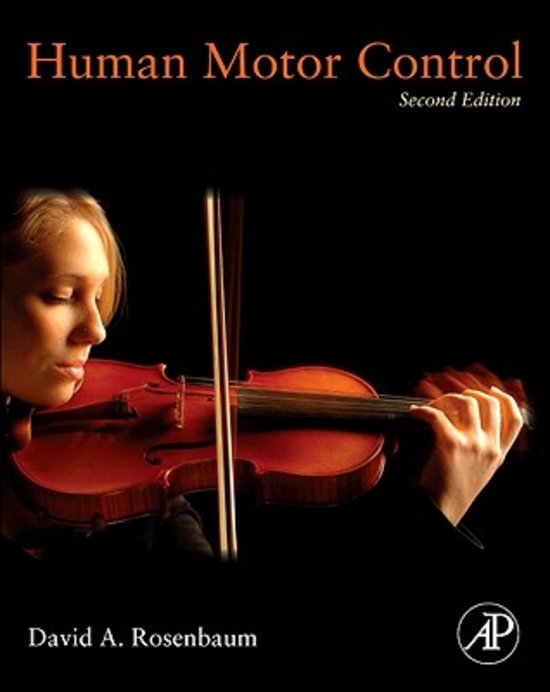
Human Motor Control
Second Edition
David A. Rosenbaum
Summary
PART 1 PRELIMINARIES................................................................................................3
Chapter 1 Introduction................................................................................................3
Understanding Human Motor Control............................................................................................ 3
Levels of Analysis.......................................................................................................................... 3
Fields Contributing to Research on Human Motor Control..............................................................3
Organization of the Book............................................................................................................... 4
Chapter 2 Core Problems.............................................................................................5
The Degree of Freedom Problem................................................................................................... 5
The Sequencing and Timing Problem............................................................................................ 5
The Perceptual-Motor Integration Problem.................................................................................... 6
The Learning Problem................................................................................................................... 7
Chapter 3 Physiological Foundations............................................................................8
Muscle.......................................................................................................................................... 8
Proprioception............................................................................................................................... 9
Spinal Cord................................................................................................................................. 10
Cerebellum................................................................................................................................. 11
Basal Ganglia.............................................................................................................................. 12
Motor Cortex............................................................................................................................... 12
Premotor Cortex.......................................................................................................................... 13
Supplementary Motor Area......................................................................................................... 13
Parietal Cortex............................................................................................................................ 13
Chapter 4 Psychological Foundations.........................................................................15
Theories of Sequencing and Timing............................................................................................ 15
Skill Acquisition........................................................................................................................... 15
Codes and Stores........................................................................................................................ 16
States of Mind............................................................................................................................. 17
PART 2 THE ACTIVITY SYSTEMS..................................................................................18
Chapter 6 Looking.....................................................................................................18
Blinking....................................................................................................................................... 18
Accommodation.......................................................................................................................... 18
Pupil Constriction and Dilation.................................................................................................... 18
General Features of Eye Movements........................................................................................... 18
1
, Saccades..................................................................................................................................... 19
Smooth Pursuit Movements........................................................................................................ 20
Vergence Movements.................................................................................................................. 21
Eye Movements and Space Constancy........................................................................................ 21
Development and Plasticity of Oculo-Motor Control.................................................................... 21
Chapter 7 Reaching and Grasping..............................................................................22
The Development of Reaching and Grasping............................................................................... 22
Visual Guidance.......................................................................................................................... 22
Aiming........................................................................................................................................ 23
Equilibrium Point Hypothesis....................................................................................................... 24
Discrete Versus Continuous Movements...................................................................................... 25
Intersegmental Coordination....................................................................................................... 25
2
, PART 1 PRELIMINARIES
Chapter 1 Introduction
How do we maintain stability? Holding an object steady in the face of changing
wind conditions or while standing in a moving stain are tasks that demand
stabilization. Without muscular control, such tasks would be impossible. Because
stabilization as well as movement are the jobs of the system covered here, we
refer to that system as the motor system, not just the movement system or the
stabilization system
If we knew how people control their bodies, we could endow robots with
programs that enable the robots to move as people do and carry out dangerous
and boring tasks that people currently do
Understanding Human Motor Control
Movement and stability just seem to happen. When things work well, it’s easy to
take them for granted. When one thinks about performance, one’s performance
often suffers
Considering movement disorders (for instance caused by an accident) and the
factors that cause them can illuminate the factors that allow for normal
performance. That knowledge can contribute to our understanding of motor
control (mc) in general
One understands a system if one can predict and control it
The Turing test is a method of judging intelligence, developed by Alan Turing.
One would interact via a computer with either a computer or a person. When one
cannot tell to whom she is talking to (either person or computer) the machine is
as intelligent as a person. A Turing test of motor intelligence is similar
Levels of Analysis
The computational level consists of a description, often
expressed mathematically, of one or more functions
that a system is supposed to achieve. Even if
equations are not used explicitly, they are used implicitly
in performance
The procedural level consists of behavioral and cognitive
states. Not all procedures work (the cat might fall off the
table)
The implementation level consists of the physical stuff that permits procedures
to be physically achieved (for the cat the muscle level, for a robot the hydraulics,
battery, etc.)
The understanding of human motor control (hmc) requires work at all three
levels.
Fields Contributing to Research on Human Motor Control
Physics
Physics helps determine the factors that limit or enable performance.
The approach to the analysis of feedback that engineers have developed is
called control theory.
3
Second Edition
David A. Rosenbaum
Summary
PART 1 PRELIMINARIES................................................................................................3
Chapter 1 Introduction................................................................................................3
Understanding Human Motor Control............................................................................................ 3
Levels of Analysis.......................................................................................................................... 3
Fields Contributing to Research on Human Motor Control..............................................................3
Organization of the Book............................................................................................................... 4
Chapter 2 Core Problems.............................................................................................5
The Degree of Freedom Problem................................................................................................... 5
The Sequencing and Timing Problem............................................................................................ 5
The Perceptual-Motor Integration Problem.................................................................................... 6
The Learning Problem................................................................................................................... 7
Chapter 3 Physiological Foundations............................................................................8
Muscle.......................................................................................................................................... 8
Proprioception............................................................................................................................... 9
Spinal Cord................................................................................................................................. 10
Cerebellum................................................................................................................................. 11
Basal Ganglia.............................................................................................................................. 12
Motor Cortex............................................................................................................................... 12
Premotor Cortex.......................................................................................................................... 13
Supplementary Motor Area......................................................................................................... 13
Parietal Cortex............................................................................................................................ 13
Chapter 4 Psychological Foundations.........................................................................15
Theories of Sequencing and Timing............................................................................................ 15
Skill Acquisition........................................................................................................................... 15
Codes and Stores........................................................................................................................ 16
States of Mind............................................................................................................................. 17
PART 2 THE ACTIVITY SYSTEMS..................................................................................18
Chapter 6 Looking.....................................................................................................18
Blinking....................................................................................................................................... 18
Accommodation.......................................................................................................................... 18
Pupil Constriction and Dilation.................................................................................................... 18
General Features of Eye Movements........................................................................................... 18
1
, Saccades..................................................................................................................................... 19
Smooth Pursuit Movements........................................................................................................ 20
Vergence Movements.................................................................................................................. 21
Eye Movements and Space Constancy........................................................................................ 21
Development and Plasticity of Oculo-Motor Control.................................................................... 21
Chapter 7 Reaching and Grasping..............................................................................22
The Development of Reaching and Grasping............................................................................... 22
Visual Guidance.......................................................................................................................... 22
Aiming........................................................................................................................................ 23
Equilibrium Point Hypothesis....................................................................................................... 24
Discrete Versus Continuous Movements...................................................................................... 25
Intersegmental Coordination....................................................................................................... 25
2
, PART 1 PRELIMINARIES
Chapter 1 Introduction
How do we maintain stability? Holding an object steady in the face of changing
wind conditions or while standing in a moving stain are tasks that demand
stabilization. Without muscular control, such tasks would be impossible. Because
stabilization as well as movement are the jobs of the system covered here, we
refer to that system as the motor system, not just the movement system or the
stabilization system
If we knew how people control their bodies, we could endow robots with
programs that enable the robots to move as people do and carry out dangerous
and boring tasks that people currently do
Understanding Human Motor Control
Movement and stability just seem to happen. When things work well, it’s easy to
take them for granted. When one thinks about performance, one’s performance
often suffers
Considering movement disorders (for instance caused by an accident) and the
factors that cause them can illuminate the factors that allow for normal
performance. That knowledge can contribute to our understanding of motor
control (mc) in general
One understands a system if one can predict and control it
The Turing test is a method of judging intelligence, developed by Alan Turing.
One would interact via a computer with either a computer or a person. When one
cannot tell to whom she is talking to (either person or computer) the machine is
as intelligent as a person. A Turing test of motor intelligence is similar
Levels of Analysis
The computational level consists of a description, often
expressed mathematically, of one or more functions
that a system is supposed to achieve. Even if
equations are not used explicitly, they are used implicitly
in performance
The procedural level consists of behavioral and cognitive
states. Not all procedures work (the cat might fall off the
table)
The implementation level consists of the physical stuff that permits procedures
to be physically achieved (for the cat the muscle level, for a robot the hydraulics,
battery, etc.)
The understanding of human motor control (hmc) requires work at all three
levels.
Fields Contributing to Research on Human Motor Control
Physics
Physics helps determine the factors that limit or enable performance.
The approach to the analysis of feedback that engineers have developed is
called control theory.
3