
Synaptic transmission chapter 5
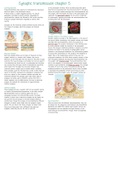
Learning objectives In the presynaptic terminal, there are dense projections (dark
• Neurotransmitters allow neurons to communicate by inducing an blue) that are associated with the active zone which is the place
electrical signal in the postsynaptic neuron where the synaptic vesicles discharge their neurotransmitters into
• Vesicle fusion is a highly regulated process, it is calcium the synaptic cleft. The blueish structure on the postsynaptic side
dependent, controlled by specific proteins, responsible for represents the postsynaptic density, this structure is important
neurotransmitter release, and followed by fast vesicle recycling for postsynaptic signalling and senses the neurotransmitters that
• Neurons compute information originated by several other are being sent from the presynapse.
neurons
Synapses are the functional contacts between neurons. There are
two classes of synapses, electrical synapses and chemical
synapses.
Synaptic vesicles in the chemical synapse
Synaptic vesicles are made in the Golgi Apparatus in the soma of
the neuron. Before transmission, the synaptic vesicles are formed
and filled with neurotransmitters, which are caused by an
electrical signal. The synaptic transmission is then initiated when
an action potential invades the terminal of the presynaptic
neuron. The change in membrane potential is caused by an action
potential that leads to the opening of voltage-gated calcium
channels in the presynaptic membrane. The concentration gradient
Electrical synapses of calcium (the concentration on the outside of the membrane is
Electrical synapses (there are not many of these) do not have higher than on the inside) allows calcium to flow over the
synaptic vesicles or a synaptic cleft. Instead, they use an presynaptic membrane. this influx allows synaptic vesicles to fuse
electrical current that goes from one neuron to the other via gap with the plasma membrane and exocytose neurotransmitters into
junctions. This type of synapse is extremely fast and can signal in the synaptic cleft (chemical signal). The neurotransmitters then
a bi-directional way (from the pre- to postsynapse and the other bind to the receptors on the postsynaptic neurons which causes
way around). Also, the signal cannot be modulated (no plasticity), channels to open (sometimes close)(electrical signal). This changes
which means that the signal has the same strength. Gap the ability of ions to flow across the membrane altering the
junctions contain a unique type of channel called a connexon, membrane potential of the postsynaptic neuron, which increases
which provides a path for the electrical current to flow from one or decreases the probability of that neuron firing an action
neuron to the other. Connexons are composed of connexins that potential. During this synaptic cycle, the synaptic vesicles are
serve as a subunit to form connexon channels and make the recycled.
connection between the synapses super tight. These types of
synapses are mainly used by inhibitory neurons that form a
cluster together, such as GABA neurons. This way an electrical
synapse can modulate the transmission of signals between
chemical synapses.
Chemical synapses
These synapses do have a synaptic cleft and use synaptic vesicles
to transfer information/neurotransmitters to the other synapse.
Neurotransmitters work as chemical agents that act as
messengers between the communicating neurons. The signal
transfer is slower than in electrical synapses and the signal can
only go from the pre-synapse to the post-synapse making it
unidirectional. Though this synapse can be modulated by different Neurotransmitters
strengths of stimuli, which means that this synapse is super There are more than 100 different neurotransmitters. They can
plastic. This also means that these synapses can detach when be divided into two categories: small-molecule neurotransmitters
they are not being used, this is different from electrical (glutamate and GABA) that mediate rapid synaptic actions and
synapses, cause they stay for the rest of your life. neuropeptides that can modulate the signal intensity of the
small-molecule neurotransmitters. Though, these neuropeptides
are slow-acting.
Learning objectives In the presynaptic terminal, there are dense projections (dark
• Neurotransmitters allow neurons to communicate by inducing an blue) that are associated with the active zone which is the place
electrical signal in the postsynaptic neuron where the synaptic vesicles discharge their neurotransmitters into
• Vesicle fusion is a highly regulated process, it is calcium the synaptic cleft. The blueish structure on the postsynaptic side
dependent, controlled by specific proteins, responsible for represents the postsynaptic density, this structure is important
neurotransmitter release, and followed by fast vesicle recycling for postsynaptic signalling and senses the neurotransmitters that
• Neurons compute information originated by several other are being sent from the presynapse.
neurons
Synapses are the functional contacts between neurons. There are
two classes of synapses, electrical synapses and chemical
synapses.
Synaptic vesicles in the chemical synapse
Synaptic vesicles are made in the Golgi Apparatus in the soma of
the neuron. Before transmission, the synaptic vesicles are formed
and filled with neurotransmitters, which are caused by an
electrical signal. The synaptic transmission is then initiated when
an action potential invades the terminal of the presynaptic
neuron. The change in membrane potential is caused by an action
potential that leads to the opening of voltage-gated calcium
channels in the presynaptic membrane. The concentration gradient
Electrical synapses of calcium (the concentration on the outside of the membrane is
Electrical synapses (there are not many of these) do not have higher than on the inside) allows calcium to flow over the
synaptic vesicles or a synaptic cleft. Instead, they use an presynaptic membrane. this influx allows synaptic vesicles to fuse
electrical current that goes from one neuron to the other via gap with the plasma membrane and exocytose neurotransmitters into
junctions. This type of synapse is extremely fast and can signal in the synaptic cleft (chemical signal). The neurotransmitters then
a bi-directional way (from the pre- to postsynapse and the other bind to the receptors on the postsynaptic neurons which causes
way around). Also, the signal cannot be modulated (no plasticity), channels to open (sometimes close)(electrical signal). This changes
which means that the signal has the same strength. Gap the ability of ions to flow across the membrane altering the
junctions contain a unique type of channel called a connexon, membrane potential of the postsynaptic neuron, which increases
which provides a path for the electrical current to flow from one or decreases the probability of that neuron firing an action
neuron to the other. Connexons are composed of connexins that potential. During this synaptic cycle, the synaptic vesicles are
serve as a subunit to form connexon channels and make the recycled.
connection between the synapses super tight. These types of
synapses are mainly used by inhibitory neurons that form a
cluster together, such as GABA neurons. This way an electrical
synapse can modulate the transmission of signals between
chemical synapses.
Chemical synapses
These synapses do have a synaptic cleft and use synaptic vesicles
to transfer information/neurotransmitters to the other synapse.
Neurotransmitters work as chemical agents that act as
messengers between the communicating neurons. The signal
transfer is slower than in electrical synapses and the signal can
only go from the pre-synapse to the post-synapse making it
unidirectional. Though this synapse can be modulated by different Neurotransmitters
strengths of stimuli, which means that this synapse is super There are more than 100 different neurotransmitters. They can
plastic. This also means that these synapses can detach when be divided into two categories: small-molecule neurotransmitters
they are not being used, this is different from electrical (glutamate and GABA) that mediate rapid synaptic actions and
synapses, cause they stay for the rest of your life. neuropeptides that can modulate the signal intensity of the
small-molecule neurotransmitters. Though, these neuropeptides
are slow-acting.


