
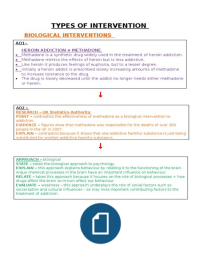
TYPES OF INTERVENTION
BIOLOGICAL INTERVENTIONS
AO1-
HEROIN ADDICTION + METHADONE
Methadone is a synthetic drug widely used in the treatment of heroin addiction.
Methadone mimics the effects of heroin but is less addictive.
Like heroin it produces feelings of euphoria, but to a lesser degree.
Initially a heroin addict is prescribed slowly increasing amounts of methadone
to increase tolerance to the drug.
The drug is slowly decreased until the addict no longer needs either methadone
or heroin.
↓
AO2 –
RESEARCH – UK Statistics Authority
POINT – contradicts the effectiveness of methadone as a biological intervention to
addiction.
EVIDENCE – figures show that methadone was responsible for the deaths of over 300
people in the UK in 2007.
EXPLAIN – contradicts because it shows that one addictive harmful substance is just being
substituted for another addictive harmful substance.
↓
APPROACH – biological
STATE – takes the biological approach to psychology.
EXPLAIN – this approach explains behaviour by relating it to the functioning of the brain.
Argue chemical processes in the brain have an important influence on behaviour.
RELATE – takes this approach because it focuses on the role of biological processes + how
drugs affect the brain so in turn affect our behaviour.
EVALUATE – weakness – this approach underplays the role of social factors such as
socialisation and cultural influences – so may miss important contributing factors to the
treatment of addiction.
BIOLOGICAL INTERVENTIONS
AO1-
HEROIN ADDICTION + METHADONE
Methadone is a synthetic drug widely used in the treatment of heroin addiction.
Methadone mimics the effects of heroin but is less addictive.
Like heroin it produces feelings of euphoria, but to a lesser degree.
Initially a heroin addict is prescribed slowly increasing amounts of methadone
to increase tolerance to the drug.
The drug is slowly decreased until the addict no longer needs either methadone
or heroin.
↓
AO2 –
RESEARCH – UK Statistics Authority
POINT – contradicts the effectiveness of methadone as a biological intervention to
addiction.
EVIDENCE – figures show that methadone was responsible for the deaths of over 300
people in the UK in 2007.
EXPLAIN – contradicts because it shows that one addictive harmful substance is just being
substituted for another addictive harmful substance.
↓
APPROACH – biological
STATE – takes the biological approach to psychology.
EXPLAIN – this approach explains behaviour by relating it to the functioning of the brain.
Argue chemical processes in the brain have an important influence on behaviour.
RELATE – takes this approach because it focuses on the role of biological processes + how
drugs affect the brain so in turn affect our behaviour.
EVALUATE – weakness – this approach underplays the role of social factors such as
socialisation and cultural influences – so may miss important contributing factors to the
treatment of addiction.


