NR 224 Exam 3 Study Guide
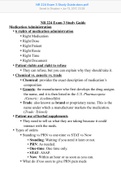
NR 224 Exam 3 Study Guide Medication Administration • 6 rights of medication administration • Right Medication • Right Dose • Right Patient • Right Route • Right Time • Right Document • Patient rights and right to refuse • They can refuse, but you can explain why they should take it. • Chemical vs. generic vs. trade • Chemical: provides the exact description of medication’s composition • Generic: the manufacturer who first develops the drug assigns the name, and it is then listed in the U.S. Pharmacopeia (Generic: Acedimedifin) • Trade: also known as brand or proprietary name. This is the name under which a manufacturer markets the medication. (Trade: Tylenol) • Patient use of herbal supplements • They need to tell us what they are taking because it could interact with the meds. • Types of orders • Standing vs PRN vs one-time vs STAT vs Now ▪ Standing: Waiting if you need it later or not. ▪ PRN: As needed. ▪ One-time: One time only. ▪ STAT: ASAP. ▪ Now: Within an hour or as soon as you can. • What do if too soon to give PRN pain meds NR 224 Exam 3 Study Guide Medication Administration • 6 rights of medication administration • Right Medication • Right Dose • Right Patient • Right Route • Right Time • Right Document • Patient rights and right to refuse • They can refuse, but you can explain why they should take it. • Chemical vs. generic vs. trade • Chemical: provides the exact description of medication’s composition • Generic: the manufacturer who first develops the drug assigns the name, and it is then listed in the U.S. Pharmacopeia (Generic: Acedimedifin) • Trade: also known as brand or proprietary name. This is the name under which a manufacturer markets the medication. (Trade: Tylenol) • Patient use of herbal supplements • They need to tell us what they are taking because it could interact with the meds. • Types of orders • Standing vs PRN vs one-time vs STAT vs Now ▪ Standing: Waiting if you need it later or not. ▪ PRN: As needed. ▪ One-time: One time only. ▪ STAT: ASAP. ▪ Now: Within an hour or as soon as you can. • What do if too soon to give PRN pain meds NR 224 Exam 3 Study Guide Medication Administration • 6 rights of medication administration • Right Medication • Right Dose • Right Patient • Right Route • Right Time • Right Document • Patient rights and right to refuse • They can refuse, but you can explain why they should take it. • Chemical vs. generic vs. trade • Chemical: provides the exact description of medication’s composition • Generic: the manufacturer who first develops the drug assigns the name, and it is then listed in the U.S. Pharmacopeia (Generic: Acedimedifin) • Trade: also known as brand or proprietary name. This is the name under which a manufacturer markets the medication. (Trade: Tylenol) • Patient use of herbal supplements • They need to tell us what they are taking because it could interact with the meds. • Types of orders • Standing vs PRN vs one-time vs STAT vs Now ▪ Standing: Waiting if you need it later or not. ▪ PRN: As needed. ▪ One-time: One time only. ▪ STAT: ASAP. ▪ Now: Within an hour or as soon as you can. • What do if too soon to give PRN pain meds NR 224 Exam 3 Study Guide Medication Administration • 6 rights of medication administration • Right Medication • Right Dose • Right Patient • Right Route • Right Time • Right Document • Patient rights and right to refuse • They can refuse, but you can explain why they should take it. • Chemical vs. generic vs. trade • Chemical: provides the exact description of medication’s composition • Generic: the manufacturer who first develops the drug assigns the name, and it is then listed in the U.S. Pharmacopeia (Generic: Acedimedifin) • Trade: also known as brand or proprietary name. This is the name under which a manufacturer markets the medication. (Trade: Tylenol) • Patient use of herbal supplements • They need to tell us what they are taking because it could interact with the meds. • Types of orders • Standing vs PRN vs one-time vs STAT vs Now ▪ Standing: Waiting if you need it later or not. ▪ PRN: As needed. ▪ One-time: One time only. ▪ STAT: ASAP. ▪ Now: Within an hour or as soon as you can. • What do if too soon to give PRN pain meds NR 224 Exam 3 Study G Saved to Dropbox • Jun 13, 2017, 23C28 ▪ You non pharm pain meds as necessary • What do if standing order has expired ▪ Call Dr. for a new order. • Instilling ear drops for adult and child • Proper technique: Use sterile solution, can put cotton ball in ear but don’t push it in. Drops need to be room temp. Do not force the medication in the ear. ▪ Adult: up and back- Ages 3 and up ▪ Child: down and back • Ear irrigation: • Eye drops • Proper technique – In the white part of the eye only. Don’t touch the tip of the dropper to the pts eye. Never use another pts to another patient. Drops at room temp or specific temp. • Care of the artificial eye • Physician orders • What do you do if written incorrectly or can’t read the order or a piece is missing? ▪ Call the physician to verify order. • Change of times for medications? Can I or can’t I? ▪ If it is a PRN or once daily you can. • Roles • Prescriber: Dr., NP, or PA. Orders can be written (hand or electronic), verbal, or given by telephone. Each medication order needs to include the pt’s name, order date, med name, dosage, route, time of administration, drug indication, and prescriber’s signature. ▪ Verbal: are illegal unless it is an emergency situation. • RN: You give the meds. • Pharmacist: they fill the meds. • Be able to do med calculations. • Know math conversions • Know types of math problems from CAS review • Why do patient refuse medications? • What can be done to assist patient in changes their minds to ▪ You non pharm pain meds as necessary • What do if standing order has expired ▪ Call Dr. for a new order. • Instilling ear drops for adult and child • Proper technique: Use sterile solution, can put cotton ball in ear but don’t push it in. Drops need to be room temp. Do not force the medication in the ear. ▪ Adult: up and back- Ages 3 and up ▪ Child: down and back • Ear irrigation: • Eye drops • Proper technique – In the white part of the eye only. Don’t touch the tip of the dropper to the pts eye. Never use another pts to another patient. Drops at room temp or specific temp. • Care of the artificial eye • Physician orders • What do you do if written incorrectly or can’t read the order or a piece is missing? ▪ Call the physician to verify order. • Change of times for medications? Can I or can’t I? ▪ If it is a PRN or once daily you can. • Roles • Prescriber: Dr., NP, or PA. Orders can be written (hand or electronic), verbal, or given by telephone. Each medication order needs to include the pt’s name, order date, med name, dosage, route, time of administration, drug indication, and prescriber’s signature. ▪ Verbal: are illegal unless it is an emergency situation. • RN: You give the meds. • Pharmacist: they fill the meds. • Be able to do med calculations. • Know math conversions • Know types of math problems from CAS review • Why do patient refuse medications? • What can be done to assist patient in changes their minds to ▪ You non pharm pain meds as necessary • What do if standing order has expired ▪ Call Dr. for a new order. • Instilling ear drops for adult and child • Proper technique: Use sterile solution, can put cotton ball in ear but don’t push it in. Drops need to be room temp. Do not force the medication in the ear. ▪ Adult: up and back- Ages 3 and up ▪ Child: down and back • Ear irrigation: • Eye drops • Proper technique – In the white part of the eye only. Don’t touch the tip of the dropper to the pts eye. Never use another pts to another patient. Drops at room temp or specific temp. • Care of the artificial eye • Physician orders • What do you do if written incorrectly or can’t read the order or a piece is missing? ▪ Call the physician to verify order. • Change of times for medications? Can I or can’t I? ▪ If it is a PRN or once daily you can. • Roles • Prescriber: Dr., NP, or PA. Orders can be written (hand or electronic), verbal, or given by telephone. Each medication order needs to include the pt’s name, order date, med name, dosage, route, time of administration, drug indication, and prescriber’s signature. ▪ Verbal: are illegal unless it is an emergency situation. • RN: You give the meds. • Pharmacist: they fill the meds. • Be able to do med calculations. • Know math conversions • Know types of math problems from CAS review • Why do patient refuse medications? • What can be done to assist patient in changes their minds to ▪ You non pharm pain meds as necessary • What do if standing order has expired ▪ Call Dr. for a new order. • Instilling ear drops for adult and child • Proper technique: Use sterile solution, can put cotton ball in ear but don’t push it in. Drops need to be room temp. Do not force the medication in the ear. ▪ Adult: up and back- Ages 3 and up ▪ Child: down and back • Ear irrigation: • Eye drops • Proper technique – In the white part of the eye only. Don’t touch the tip of the dropper to the pts eye. Never use another pts to another patient. Drops at room temp or specific temp. • Care of the artificial eye • Physician orders • What do you do if written incorrectly or can’t read the order or a piece is missing? ▪ Call the physician to verify order. • Change of times for medications? Can I or can’t I? ▪ If it is a PRN or once daily you can. • Roles • Prescriber: Dr., NP, or PA. Orders can be written (hand or electronic), verbal, or given by telephone. Each medication order needs to include the pt’s name, order date, med name, dosage, route, time of administration, drug indication, and prescriber’s signature. ▪ Verbal: are illegal unless it is an emergency situation. • RN: You give the meds. • Pharmacist: they fill the meds. • Be able to do med calculations. • Know math conversions • Know types of math problems from CAS review • Why do patient refuse medications? • What can be done to assist patient in changes their minds to ▪ You non pharm pain meds as necessary • What do if standing order has expired ▪ Call Dr. for a new order. • Instilling ear drops for adult and child • Proper technique: Use sterile solution, can put cotton ball in ear but don’t push it in. Drops need to be room temp. Do not force the medication in the ear. ▪ Adult: up and back- Ages 3 and up ▪ Child: down and back • Ear irrigation: • Eye drops • Proper technique – In the white part of the eye only. Don’t touch the tip of the dropper to the pts eye. Never use another pts to another patient. Drops at room temp or specific temp. • Care of the artificial eye • Physician orders • What do you do if written incorrectly or can’t read the order or a piece is missing? ▪ Call the physician to verify order. • Change of times for medications? Can I or can’t I? ▪ If it is a PRN or once daily you can. • Roles • Prescriber: Dr., NP, or PA. Orders can be written (hand or electronic), verbal, or given by telephone. Each medication order needs to include the pt’s name, order date, med name, dosage, route, time of administration, drug indication, and prescriber’s signature. ▪ Verbal: are illegal unless it is an emergency situation. • RN: You give the meds. • Pharmacist: they fill the meds. • Be able to do med calculations. • Know math conversions • Know types of math problems from CAS review • Why do patient refuse medications? • What can be done to assist patient in changes their minds to ▪ You non pharm pain meds as necessary • What do if standing order has expired ▪ Call Dr. for a new order. • Instilling ear drops for adult and child • Proper technique: Use sterile solution, can put cotton ball in ear but don’t push it in. Drops need to be room temp. Do not force the medication in the ear. ▪ Adult: up and back- Ages 3 and up ▪ Child: down and back • Ear irrigation: • Eye drops • Proper technique – In the white part of the eye only. Don’t touch the tip of the dropper to the pts eye. Never use another pts to another patient. Drops at room temp or specific temp. • Care of the artificial eye • Physician orders • What do you do if written incorrectly or can’t read the order or a piece is missing? ▪ Call the physician to verify order. • Change of times for medications? Can I or can’t I? ▪ If it is a PRN or once daily you can. • Roles • Prescriber: Dr., NP, or PA. Orders can be written (hand or electronic), verbal, or given by telephone. Each medication order needs to include the pt’s name, order date, med name, dosage, route, time of administration, drug indication, and prescriber’s signature. ▪ Verbal: are illegal unless it is an emergency situation. • RN: You give the meds. • Pharmacist: they fill the meds. • Be able to do med calculations. • Know math conversions • Know types of math problems from CAS review • Why do patient refuse medications? • What can be done to assist patient in changes their minds to take their meds? ▪ Explain why they should take the meds and what could happen if they don’t take it. • Injections • Rotate sites • Best site and route for absorption (Abdomen and Sublingual) • Degree of insertion of needle for all injections • Intramuscular: 90 degrees Sub Q: 45(-90(2 inches or 5 cm of tissue) degrees Intradermal: 15 degrees • When can we change the timing of a medication of the patient requests per their timing at home? • Subcutaneous injection - Pinch the skin • Absorption time (longer or slower) - slower • Medications are excreted where? • If excretion is delayed then the above is reduced and medication toxicity occurs. • kidneys • Syringes • Needles lengths and gauges • 19 gaug
Información del documento
- Subido en
- 1 de diciembre de 2022
- Número de páginas
- 15
- Escrito en
- 2022/2023
- Tipo
- Examen
- Contiene
- Desconocido