6.7.22
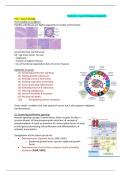
1.1 Introduction to biological molecules
covalent bonding: the share
of pairs of electrons, non-metal non-metal
lonic bonding -
transfer of electrons between non-metal + metal
Hydrogen bonding
not evenly distributed and tend time in
Electrons within a molecule are to
spend more one position
Certain areas are more negatively charged.
Molecule is said to be polarised. (a polar molecule)
Negative region of one
polarised molecule + the positively charged region of another attract each other.
↳ weak electrostatic bond is
formed between the two
colective electrostatic bonds, form important forces that alter the
physical properties of the molecule.
-
t
H
O
+
H
TH -
f
O
+H
Macro molecules
monomer polymerisationpolymer
Monomers are usually based off of carbon
Polysaccharides, polypetides and polynucleotides are made
naturally
condensation and hydrolysis reactions
·condensation polymerisation = water by product
e.g formation of a polypeptide from amino acids and the polysaccharide starch from the monosaccharide
glucose
are condensation reactions.
Polymers can be broken down
through the addition of water
water used in breaking the bonds that line the subunits of a polymer, spliting the molecule into its constituent
parts
This is called a hydrolysis reaction.
Metabolism
Rate at which all the chemical reactions in an organism take place
Mole and molar solution
x1023- number
Avagadros constant 6.023
=
of particles in a mole.
Molar solution =
I mole of solute in each litre of solution.
, 819122
1.2
carbohydrates: monosaccharides
Carbohydrates - carbon molecules combined with water CHONS P
asit to
(carbo) Chydrate)
Life based on carbon
arid intere
Carbonators bonds w/ other carbons of
readily form allows a
sequence carbon atoms to be built
up.
-
↳ backbone other atoms be attatched.
along which can
Carbon atom - versatile -
variety of life.
Carbon molecules
containing molecules -
organic
the
making of large molecules
monomer: individual molecules
monomer
e.g. monosaccharides
monomer of carbohydrates sugar (a saccharide) :
Pair of monosaccharides - disaccharide
Polysaccharides - lots of monosaccharides
monosaccharides
sweet
tasting main
respiratory substrate
soluable easily transported
General formula: (CH2O)n n can be
any number
from three to seven
e.g glucose, galactose and fructrose.
·
glucose is a nexose (6 carbon) sugar-formula (pH2O
=
↳ can be
arranged in many ways e.gglicose has two isomers - a
glucose and
B glucose -group CHOH
C c -
0 A
H
-
/ H /
I
the H and OH molecules
~ tto
Of
are
swapped
when
they combine to make disaccharides, they form different
disaccharides.
is
where n= 3 itis called a triose
sugar e.g. glyceraldehyde (31603
where it is called ribose is (zM100s
n= 5 a
pentose sugar e.g
where n= 6 it is called a nexose
sugar e.gglucose is CCM120,
monosaccharides are all
reducing sugars, and
they all reduce benedicts reagent.
1.1 Introduction to biological molecules
covalent bonding: the share
of pairs of electrons, non-metal non-metal
lonic bonding -
transfer of electrons between non-metal + metal
Hydrogen bonding
not evenly distributed and tend time in
Electrons within a molecule are to
spend more one position
Certain areas are more negatively charged.
Molecule is said to be polarised. (a polar molecule)
Negative region of one
polarised molecule + the positively charged region of another attract each other.
↳ weak electrostatic bond is
formed between the two
colective electrostatic bonds, form important forces that alter the
physical properties of the molecule.
-
t
H
O
+
H
TH -
f
O
+H
Macro molecules
monomer polymerisationpolymer
Monomers are usually based off of carbon
Polysaccharides, polypetides and polynucleotides are made
naturally
condensation and hydrolysis reactions
·condensation polymerisation = water by product
e.g formation of a polypeptide from amino acids and the polysaccharide starch from the monosaccharide
glucose
are condensation reactions.
Polymers can be broken down
through the addition of water
water used in breaking the bonds that line the subunits of a polymer, spliting the molecule into its constituent
parts
This is called a hydrolysis reaction.
Metabolism
Rate at which all the chemical reactions in an organism take place
Mole and molar solution
x1023- number
Avagadros constant 6.023
=
of particles in a mole.
Molar solution =
I mole of solute in each litre of solution.
, 819122
1.2
carbohydrates: monosaccharides
Carbohydrates - carbon molecules combined with water CHONS P
asit to
(carbo) Chydrate)
Life based on carbon
arid intere
Carbonators bonds w/ other carbons of
readily form allows a
sequence carbon atoms to be built
up.
-
↳ backbone other atoms be attatched.
along which can
Carbon atom - versatile -
variety of life.
Carbon molecules
containing molecules -
organic
the
making of large molecules
monomer: individual molecules
monomer
e.g. monosaccharides
monomer of carbohydrates sugar (a saccharide) :
Pair of monosaccharides - disaccharide
Polysaccharides - lots of monosaccharides
monosaccharides
sweet
tasting main
respiratory substrate
soluable easily transported
General formula: (CH2O)n n can be
any number
from three to seven
e.g glucose, galactose and fructrose.
·
glucose is a nexose (6 carbon) sugar-formula (pH2O
=
↳ can be
arranged in many ways e.gglicose has two isomers - a
glucose and
B glucose -group CHOH
C c -
0 A
H
-
/ H /
I
the H and OH molecules
~ tto
Of
are
swapped
when
they combine to make disaccharides, they form different
disaccharides.
is
where n= 3 itis called a triose
sugar e.g. glyceraldehyde (31603
where it is called ribose is (zM100s
n= 5 a
pentose sugar e.g
where n= 6 it is called a nexose
sugar e.gglucose is CCM120,
monosaccharides are all
reducing sugars, and
they all reduce benedicts reagent.