NURS 450 Exam 3 Study Guide - DETAILED SOLUTIONS LATEST UPDATES
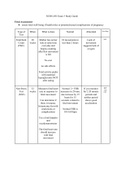
NURS 450 Exam 3 Study Guide Fetal Assessment ● assess fetal well-being if health risks or potential/actual complications of pregnancy Type of Test When What is done Normal Abnormal Next Step Fetal Kick Count (FKC) 28 weeks Mother lies on her side at same time everyday and begins counting after first movement is felt No cost no side effects Fetal activity peaks with maternal hypoglycemia NOT after eating 10 movements in less than 2 hours Lack of movement suggests lack of oxygen NST Non Stress Test (NST) 32 weeks Measures fetal heart rate in response to fetal movement Can determine if there is trauma, Intrauterine Growth restrictions or complications Use a fetal doppler and tocodynamometer The fetal heart rate should increase with fetal movement Normal: 2+ FHR increases in 20 min, rate increase by 15 beats for 15 seconds, related to fetal movement Normal FHR is 110-160 bpm If you monitor for 2 20 minute periods and neither period shows good acceleration BPP and CST Most Common Fetal Assessment Biophysica l Profile 32 weeks Non stress test results AND ultrasound for 30 minutes to assess; FHR, Fetal breathing movements, fetal body movements, fetal muscle tone, amount of amniotic fluid Use a fetal doppler and tocodynamometer 2 points for normal 0 points for abnormal 8-10 points: normal result, repeat weekly 6 points: suspect lack of adequate oxygen, repeat in 24 hours and deliver if still 6 points or less 4 points: suspect lack of adequate oxygen, if 36 weeks + deliver, if less than 36 weeks do a lung maturity test 0-2 points: deliver ASAP CST Contractio n Stress Test (CST) Assesses fetal tolerance of stress where the stress is uterine contractions Monitor FHR in response to contraction (3 in 10 minutes) Don't do it if: placenta previa, cerclage, incompetent cervix, multiple gestation, history of c sections Negative (Normal): adequate contractions, no concerning rate changes with contractions and no late decelerations, follow daily FKC Positive (Abnormal): repetitive late accelerations, decelerations with ½ contractions, not due to uterine hyperstimulation, hasten fetal delivery ● Fetoscope: horn or stethoscope ● Fetal Doppler: small, high frequency sound waves are reflected off fetal heart to calculate heart rate ● Tocodynamometer measures the frequency and duration of contractions Electronic Fetal Monitoring (EFM) ● Measures fetal heart rate and uterine contractions ● May indicate changes in oxygen levels of fetus and excessive bleeding affecting fetus ● Uses Fetal Doppler to measure FHR and fetal movement ● If there are signs of fetal distress ○ Epidural analgesia ○ Labor induction ● The printouts of the EFM can show false positives and false negatives and be interpreted differently by experts ● No reliable audible indicator of fetal distress can be shown except in extreme changes in heart rate Types of Fetal Monitoring (External vs. Internal) Name External or Internal What is being measured Ultrasound Transducer or Doppler External FHR Tocodynamometer External Frequency and Duration of Contractions Fetal Scalp Electrode (FSE) Internal (requires rupture of membrane) Attached to baby's scalp to record electrical conduction of fetal heart Intrauterine Pressure Catheter (IUP) Internal (requires rupture of membrane) Thin tube inserted inside the uterine cavity to measure duration, frequency and strength of uterine contractions ● Risks and/or benefits of intermittent versus continuous fetal monitoring ○ Risks for Baby ■ Potential infection (internal monitoring) ■ Possible fetal distress from artificial rupture of membranes or FSE insertion ■ Possible unnecessary interventions: assisted or surgical delivery ○ Risks for Mom ■ Restricts position and movement ■ FHR variations may cause unnecessary interventions ■ Machine becomes focus of attention ■ Possible need for early ROM ■ Possible infection ○ Benefits for Baby ■ May detect risk to baby's health during labor ○ Benefits for Mom
Información del documento
- Subido en
- 13 de noviembre de 2022
- Número de páginas
- 17
- Escrito en
- 2022/2023
- Tipo
- Examen
- Contiene
- Preguntas y respuestas