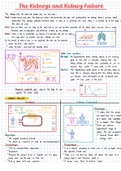
The Kidneys and Kidney Failure
converted
Thekidneysfilterthebloodandremoveureaionsandwater
Urea thebloodandproteinare
excessaminoacidsfrom intoratsandcarbohydratesforstorageduringa processcalled
deaminationThisprocess producesammoniawhich toxic
is so is convertedintoureawhere it isfilteredoutofthebody in
theformofurine
Ions tonsaretakenintothebodybythefoodthatweeatandarethenabsorbedintothebloodsomeionsare lostinsweat
bythekidneys
y y
howevermost absorptionandfiltration done
re is
water waterislostorre absorbed
byosmosisItislostfromtheskinviasweat
y
thelungswhenwe breathe andthekidneysviaurine
Iftheamount
ofwaterorions isnotregulatedthecellscanbeaffected
watertoolittle cellsshrink
watertoohigh cellsswellandpossiblyburst
all3
Waterlevelregulation
Toohigh thehypothalamusstops sendingsignalstothepituitary
gland so less a
bit is released meaningthat the
kidneytubuleswillbecomeless permeable so will re
absorb less water morewaterintheurine
Toolow thehypothalamussendssignalstothepituitarygland so
moreabitis released meaningthatthekidneytubules
willbecome morepermeable sowill reabsorbmore
water lesswater intheurine
Negativefeedbackloop wayforthebodyto self
regulatethewatertevels
KIDNEYFAILURE
Dialysis KidneyTransplant
Advantages
Itmeansthattheperson
willspendlesstimeinhospit
asitdoesn'tneed repeatable
It ischeaperthandialys
Thereare
immunosuppressant
drugsto
reducetherisk
Advantages
ofdon't
Howeverthese
rejectio
always work
Nochanceof rejection or needforimmunosuppressants
Disadvantages Disadvantages
Stillan uncomfortable experience It is a surgical proceduresocomeswith a riskofdeathdurin
Expensive theoperation smallrisk
thepatienttobe in hospital for34days
Requires There isa riskthatthebodywilldetecttheorgan as a
everyweek fortherest oftheir life foreignobjectandtherefore rejectit
Risk bloodclotsand infection
of mmmm
, HOMEOSTASIS: CONTROLLING BODY TEMP:
Homeostasis is about regulation of the conditions The optimum body temperature is 37°C as it is the
inside your body and cells, to maintain a stable best temperature for enzyme function. Therefore,
internal environment, in response to changes in both this body temperature must be kept constant:
internal and external conditions. 1. The body has to maintain the amount of energy
• We have lots of automatic control systems in our gained and lost to keep the temperature constant
body that help with regulation, which includes both 2. There are receptors in the thermoregulatory
the nervous and hormonal communication centre in the brain which are sensitive to blood
systems temperature
• All of these automatic control systems are made 3. The thermoregulatory centre receives impulses
up of three main components: receptors, from temperature receptors in the skin
coordination centres and effectors Temperature receptors detect the change in body
temperature. The thermoregulatory centre acts as a
Negative feedback is used by the body to coordination centre and triggers the effectors, which
counteract changes will produce the response to counteract the change.
• When a level of something e.g. temperature, gets
too high or too low, your body uses negative Different responses are produced by effectors to
feedback in order to bring the level back to normal counteract an increase or decrease in body temp.
• The receptor detects that it is too high or too low When you’re too hot sweat is produced, which
and the coordination centre receives and evaporates the transfer energy. As well as this, the
processes the information and organises a blood vessels dilate so energy is transferred easier.
response. The effector will then produce the When you’re too cold your hairs stand up to trap air,
response to counteract the change. no sweat is produced, blood vessels constrict and
you shiver to transfer energy.
ENDOCRINE SYSTEM: CONTROLLING BLOOD GLUCOSE:
Hormones are chemical messengers that are sent Blood glucose is controlled as part of homeostasis
in the blood. • When blood glucose is too high, the pancreas
• They are produced in and secreted from endocrine releases insulin which allows the liver to convert
glands, which make up your endocrine system. the excess glucose into glycogen, which is stored
Some of these glands are: in the liver and muscles
• The pituitary gland = the ‘master gland; in the • When blood glucose is too low, the pancreas
brain, which produces hormones, of which many releases glucagon, which causes the liver to
act on other glands convert glycogen into glucose, which is released
• Ovaries = produce oestrogen into the blood
• Testes = produce testosterone Diabetes can prevent people from being able to
• Thyroid = produces thyroxine, which regulates control their blood sugar levels
things such as metabolic rate Type 1 diabetes:
• Adrenal gland = produces adrenaline, which • Where the pancreas produces little or no insulin, so
prepares the body for a’fight or flight’ response their blood sugar level can rise very high. Insulin
• Pancreas = produces insulin which is used to injections are often used, which is very effective.
regulate blood glucose level Regular exercise and limiting carbohydrates is also
recommended.
The differences between hormones and nerves are: Type 2 diabetes:
• Nerves are very fast acting, act for a fast time and • Where a person becomes resistant to their own
act on a very precise area insulin, which can also cause blood sugar levels to
• Hormones act slower, act for a longer time and act rise. Being overweight can increase your chance of
in a more general way than nerves developing it, and regular exercise with controlling
carbohydrates can help to control the disease.
converted
Thekidneysfilterthebloodandremoveureaionsandwater
Urea thebloodandproteinare
excessaminoacidsfrom intoratsandcarbohydratesforstorageduringa processcalled
deaminationThisprocess producesammoniawhich toxic
is so is convertedintoureawhere it isfilteredoutofthebody in
theformofurine
Ions tonsaretakenintothebodybythefoodthatweeatandarethenabsorbedintothebloodsomeionsare lostinsweat
bythekidneys
y y
howevermost absorptionandfiltration done
re is
water waterislostorre absorbed
byosmosisItislostfromtheskinviasweat
y
thelungswhenwe breathe andthekidneysviaurine
Iftheamount
ofwaterorions isnotregulatedthecellscanbeaffected
watertoolittle cellsshrink
watertoohigh cellsswellandpossiblyburst
all3
Waterlevelregulation
Toohigh thehypothalamusstops sendingsignalstothepituitary
gland so less a
bit is released meaningthat the
kidneytubuleswillbecomeless permeable so will re
absorb less water morewaterintheurine
Toolow thehypothalamussendssignalstothepituitarygland so
moreabitis released meaningthatthekidneytubules
willbecome morepermeable sowill reabsorbmore
water lesswater intheurine
Negativefeedbackloop wayforthebodyto self
regulatethewatertevels
KIDNEYFAILURE
Dialysis KidneyTransplant
Advantages
Itmeansthattheperson
willspendlesstimeinhospit
asitdoesn'tneed repeatable
It ischeaperthandialys
Thereare
immunosuppressant
drugsto
reducetherisk
Advantages
ofdon't
Howeverthese
rejectio
always work
Nochanceof rejection or needforimmunosuppressants
Disadvantages Disadvantages
Stillan uncomfortable experience It is a surgical proceduresocomeswith a riskofdeathdurin
Expensive theoperation smallrisk
thepatienttobe in hospital for34days
Requires There isa riskthatthebodywilldetecttheorgan as a
everyweek fortherest oftheir life foreignobjectandtherefore rejectit
Risk bloodclotsand infection
of mmmm
, HOMEOSTASIS: CONTROLLING BODY TEMP:
Homeostasis is about regulation of the conditions The optimum body temperature is 37°C as it is the
inside your body and cells, to maintain a stable best temperature for enzyme function. Therefore,
internal environment, in response to changes in both this body temperature must be kept constant:
internal and external conditions. 1. The body has to maintain the amount of energy
• We have lots of automatic control systems in our gained and lost to keep the temperature constant
body that help with regulation, which includes both 2. There are receptors in the thermoregulatory
the nervous and hormonal communication centre in the brain which are sensitive to blood
systems temperature
• All of these automatic control systems are made 3. The thermoregulatory centre receives impulses
up of three main components: receptors, from temperature receptors in the skin
coordination centres and effectors Temperature receptors detect the change in body
temperature. The thermoregulatory centre acts as a
Negative feedback is used by the body to coordination centre and triggers the effectors, which
counteract changes will produce the response to counteract the change.
• When a level of something e.g. temperature, gets
too high or too low, your body uses negative Different responses are produced by effectors to
feedback in order to bring the level back to normal counteract an increase or decrease in body temp.
• The receptor detects that it is too high or too low When you’re too hot sweat is produced, which
and the coordination centre receives and evaporates the transfer energy. As well as this, the
processes the information and organises a blood vessels dilate so energy is transferred easier.
response. The effector will then produce the When you’re too cold your hairs stand up to trap air,
response to counteract the change. no sweat is produced, blood vessels constrict and
you shiver to transfer energy.
ENDOCRINE SYSTEM: CONTROLLING BLOOD GLUCOSE:
Hormones are chemical messengers that are sent Blood glucose is controlled as part of homeostasis
in the blood. • When blood glucose is too high, the pancreas
• They are produced in and secreted from endocrine releases insulin which allows the liver to convert
glands, which make up your endocrine system. the excess glucose into glycogen, which is stored
Some of these glands are: in the liver and muscles
• The pituitary gland = the ‘master gland; in the • When blood glucose is too low, the pancreas
brain, which produces hormones, of which many releases glucagon, which causes the liver to
act on other glands convert glycogen into glucose, which is released
• Ovaries = produce oestrogen into the blood
• Testes = produce testosterone Diabetes can prevent people from being able to
• Thyroid = produces thyroxine, which regulates control their blood sugar levels
things such as metabolic rate Type 1 diabetes:
• Adrenal gland = produces adrenaline, which • Where the pancreas produces little or no insulin, so
prepares the body for a’fight or flight’ response their blood sugar level can rise very high. Insulin
• Pancreas = produces insulin which is used to injections are often used, which is very effective.
regulate blood glucose level Regular exercise and limiting carbohydrates is also
recommended.
The differences between hormones and nerves are: Type 2 diabetes:
• Nerves are very fast acting, act for a fast time and • Where a person becomes resistant to their own
act on a very precise area insulin, which can also cause blood sugar levels to
• Hormones act slower, act for a longer time and act rise. Being overweight can increase your chance of
in a more general way than nerves developing it, and regular exercise with controlling
carbohydrates can help to control the disease.