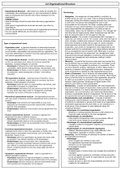
2.2 Organisational Structure
• Organisational Structure - determines how tasks are divided and
coordinated, who employees report to, who has authority to define Terminology
tasks to employees and what the role of each employee is in the
organisation • Delegation - the assignment of responsibility or authority to
another person to carry out a task. It has an empowering effect on
• CUEGIS relation
employees, shifting the decision-making authority from one level to
• what terminology should be used when discussing organisations
culture a lower level. The person that delegates the work is still
accountable for the outcome. Can help in building skills and
• what types of organisational structures are used most often by
organisations motivation but can cause frustration and confusion if the person
whom responsibilities are delegated is not willing to take on
• what are the pros and cons of each type of organisational structure
responsibility. Tasks may be repetitive or tedious. The manager will
• how do cultural differences and innovation impact on
communication have free time for higher-priority tasks. Employees may feel that
they are doing the tasks of the manager for less pay.
• Span of control - the number of subordinates that a manager or
supervisor can directly control. The number varies with they type of
work: complex, variable work reduces it (narrow), whereas routine,
Types of organisational charts fixed work increases it (wide). Narrow span of control indicates
close supervision and direct control of the supervisor over the
• Organisation chart - a graphical illustration of relationships between employees, many levels of management, less independence and
an organisation’s departments, functions and people. Indicates flow of decision authority for subordinates, and a large distance between
communication, responsibility and reporting within an organisation. The the top management and the bottom staff. Wide span of control
most basic differentiation is between horizontal organisational structure means less control from the supervisor, low management costs,
and vertical organisational structure empowerments through delegation of authority, and less distance
between top management and employees, leading to better
• Flat organisational structure - limited levels of hierarchy, wide span of communication.
control, de-centralised, short chains of command, democratic • Hierarchy - a pyramid like structure where each level except the
leadership, increased delegation of authority top and bottom has one higher and lower level. The higher a level
• Advantages: employees have more responsibilities, improved is in the hierarchy, the greater the authority or importance. There
coordination, easier decision making process, reduced salary cost can be a hierarchy of ideas, individuals, or items. Many levels of
• Disadvantages: confusion on who to report to, unclear job function hierarchy is classed a tall organisational structure, whereas few
for employees, career development is limited - which affects levels of hierarchy is classed as a flat organisational structure.
motivation • Chain of Command - line of authority and responsibility along
which orders are passed from one person to another. Henri Fayol’s
• Tall organisation structure - numerous levels of hierarchy, narrow theory is that the chain of command in the organisation should be
span of control, centralised, lengthy chains of command, top-down as clear-cut as possible to ensure efficiency and an effective
leadership, limited delegation of authority decision making process. Employees at higher levels of the
• Advantages: tasks are clear-cut, responsibilities well defined, clear hierarchy give orders to their subordinates.
opportunities to progress to a higher level • Bureaucracy - a system of administration with clear hierarchical
• Disadvantages: information flow may become unclear as there are structure in which people are expected to follow precisely defined
so many levels, high salary costs for management, employees rules and procedure. It is used to describe the formal rules in an
frustration due to lack of influence on decision making organisation, the communication and impersonal relationships.
Involves a considerable amount of paperwork. Can be found in the
• Hierarchical organisational structure - tall organisational structure civil government and administration, and in military organisations.
with many levels of hierarchy, and the organisational chart is similar to a • Decentralisation and centralisation - a transfer of decision
pyramid making power. Decentralisation is usually achieved by delegation
• Advantages: clear authority and responsibility at every level, of authority to individuals or groups at all levels of an organisation.
employees are motivated by promotion opportunities, employees Centralised organisational structure relies on one individual or a
become more specialised small group of top managers to make decisions about the
• Disadvantages: ineffective communication across departments may company’s direction.
occur • Advantages of a centralised organisation
• efficiency in making business decisions under pressure as
• Product organisational structure - business is organised into those are made centrally by the top management
departments focused on different products. • Disadvantages of centralisation
• Advantages: more effective in meeting customer needs, competition • many layers of bureaucracy make communication difficult
between departments leads to more successful products. • more time will be needed to accomplish tasks
• Disadvantages: functions may be duplicated, lack of central control • Advantages of a decentralised organisation
over separate decisions • managers utilise the employees’ expertise and knowledge at
various levels
• Functional organisational structure - a common type of • Disadvantages of a decentralised organisation
organisational structure in which the organisation is divided into smaller • different individual opinions may create difficulty in the
groups based on specialised functional area, such as marketing, organisation, especially in decision making
production, finance, IT, etc… • Delayering - the HR strategy of reducing the number of levels in
• Advantages: allows for specialisation as people with similar skills the organisational hierarchy
are grouped, more efficient operations with specialisation • Advantages
• Disadvantages: rigid communication due to standardised • fewer mangers are needed so less costs
operations, horizontal coordination between functional units can be • the organisation becomes less bureaucratic
poor, difficult to coordinate functional units with organisational • decisions can be made faster
growth, competing interest of units may cause delays and lack of • encourages innovation
commitment • Disadvantages
• increased span of control which can increase the workload of
• Geographic organisational structure - used by organisations in managers
different geographic locations. • can have negative impacts on motivation is there were jobs
• Advantages: application of regional strategies is possible, better • not all companies are suited for organisational structures with
performance in regions markets boosts performance of the company few levels of hierarchy
• Disadvantages: decision making can become decentralised easily, • people will have to take new responsibilities and time will be
communication and coordination can be delayed needed for the adjustment
• Organisational Structure - determines how tasks are divided and
coordinated, who employees report to, who has authority to define Terminology
tasks to employees and what the role of each employee is in the
organisation • Delegation - the assignment of responsibility or authority to
another person to carry out a task. It has an empowering effect on
• CUEGIS relation
employees, shifting the decision-making authority from one level to
• what terminology should be used when discussing organisations
culture a lower level. The person that delegates the work is still
accountable for the outcome. Can help in building skills and
• what types of organisational structures are used most often by
organisations motivation but can cause frustration and confusion if the person
whom responsibilities are delegated is not willing to take on
• what are the pros and cons of each type of organisational structure
responsibility. Tasks may be repetitive or tedious. The manager will
• how do cultural differences and innovation impact on
communication have free time for higher-priority tasks. Employees may feel that
they are doing the tasks of the manager for less pay.
• Span of control - the number of subordinates that a manager or
supervisor can directly control. The number varies with they type of
work: complex, variable work reduces it (narrow), whereas routine,
Types of organisational charts fixed work increases it (wide). Narrow span of control indicates
close supervision and direct control of the supervisor over the
• Organisation chart - a graphical illustration of relationships between employees, many levels of management, less independence and
an organisation’s departments, functions and people. Indicates flow of decision authority for subordinates, and a large distance between
communication, responsibility and reporting within an organisation. The the top management and the bottom staff. Wide span of control
most basic differentiation is between horizontal organisational structure means less control from the supervisor, low management costs,
and vertical organisational structure empowerments through delegation of authority, and less distance
between top management and employees, leading to better
• Flat organisational structure - limited levels of hierarchy, wide span of communication.
control, de-centralised, short chains of command, democratic • Hierarchy - a pyramid like structure where each level except the
leadership, increased delegation of authority top and bottom has one higher and lower level. The higher a level
• Advantages: employees have more responsibilities, improved is in the hierarchy, the greater the authority or importance. There
coordination, easier decision making process, reduced salary cost can be a hierarchy of ideas, individuals, or items. Many levels of
• Disadvantages: confusion on who to report to, unclear job function hierarchy is classed a tall organisational structure, whereas few
for employees, career development is limited - which affects levels of hierarchy is classed as a flat organisational structure.
motivation • Chain of Command - line of authority and responsibility along
which orders are passed from one person to another. Henri Fayol’s
• Tall organisation structure - numerous levels of hierarchy, narrow theory is that the chain of command in the organisation should be
span of control, centralised, lengthy chains of command, top-down as clear-cut as possible to ensure efficiency and an effective
leadership, limited delegation of authority decision making process. Employees at higher levels of the
• Advantages: tasks are clear-cut, responsibilities well defined, clear hierarchy give orders to their subordinates.
opportunities to progress to a higher level • Bureaucracy - a system of administration with clear hierarchical
• Disadvantages: information flow may become unclear as there are structure in which people are expected to follow precisely defined
so many levels, high salary costs for management, employees rules and procedure. It is used to describe the formal rules in an
frustration due to lack of influence on decision making organisation, the communication and impersonal relationships.
Involves a considerable amount of paperwork. Can be found in the
• Hierarchical organisational structure - tall organisational structure civil government and administration, and in military organisations.
with many levels of hierarchy, and the organisational chart is similar to a • Decentralisation and centralisation - a transfer of decision
pyramid making power. Decentralisation is usually achieved by delegation
• Advantages: clear authority and responsibility at every level, of authority to individuals or groups at all levels of an organisation.
employees are motivated by promotion opportunities, employees Centralised organisational structure relies on one individual or a
become more specialised small group of top managers to make decisions about the
• Disadvantages: ineffective communication across departments may company’s direction.
occur • Advantages of a centralised organisation
• efficiency in making business decisions under pressure as
• Product organisational structure - business is organised into those are made centrally by the top management
departments focused on different products. • Disadvantages of centralisation
• Advantages: more effective in meeting customer needs, competition • many layers of bureaucracy make communication difficult
between departments leads to more successful products. • more time will be needed to accomplish tasks
• Disadvantages: functions may be duplicated, lack of central control • Advantages of a decentralised organisation
over separate decisions • managers utilise the employees’ expertise and knowledge at
various levels
• Functional organisational structure - a common type of • Disadvantages of a decentralised organisation
organisational structure in which the organisation is divided into smaller • different individual opinions may create difficulty in the
groups based on specialised functional area, such as marketing, organisation, especially in decision making
production, finance, IT, etc… • Delayering - the HR strategy of reducing the number of levels in
• Advantages: allows for specialisation as people with similar skills the organisational hierarchy
are grouped, more efficient operations with specialisation • Advantages
• Disadvantages: rigid communication due to standardised • fewer mangers are needed so less costs
operations, horizontal coordination between functional units can be • the organisation becomes less bureaucratic
poor, difficult to coordinate functional units with organisational • decisions can be made faster
growth, competing interest of units may cause delays and lack of • encourages innovation
commitment • Disadvantages
• increased span of control which can increase the workload of
• Geographic organisational structure - used by organisations in managers
different geographic locations. • can have negative impacts on motivation is there were jobs
• Advantages: application of regional strategies is possible, better • not all companies are suited for organisational structures with
performance in regions markets boosts performance of the company few levels of hierarchy
• Disadvantages: decision making can become decentralised easily, • people will have to take new responsibilities and time will be
communication and coordination can be delayed needed for the adjustment