4.5.4 Place
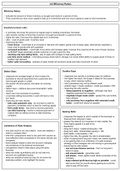
• Place concerns how products travel from the producer to the consumer
• producers have two options: sell directly to the consumer or use an
intermediary to help with the distribution process
• 3 types of intermediaries: wholesalers, retailers, agents and brokers Channels of Distribution:
• a path a product takes when it travels from
producer to the final consumers
• the amount of intermediaries will
Wholesalers: depend on the following: factors
• product type
• specialise in purchasing large quantities of stock from producers, storing it and • size of the distributor
then selling it on to the retailers and sometimes consumers • corporate objective
• important link between producers and small retailers • cost
• can significantly reduce distribution costs and time as they act as a central • control
delivery and collection point • legal factors
• breaking bulk - buy larger quantities from producers and their large order size
means that they achieve purchasing economies of scale, which reduces their • Direct Distribution
average costs. Then store the goods in a large warehouse until they are needed • does not use intermediaries, producers
by retailers. This reduces storage costs for both producers and retailers sell directly to their consumers
• intermediaries make their profit by marking up the goods they distribute, which • these businesses can control their own
increases the final cost to the consumer prices and do not have to pay any
commission to agents, allowing them to
keep all revenue they receive
• enjoy close contact with their customers
Retailers: which allows them to understand the
needs of their target market, meaning that
• purchase goods from wholesalers and producers, then sell them to the final goods and services can be developed to
consumer meet their needs
• Examples: convenience stores, supermarkets, online retailers, department • producers may decide to distribute their
stores, vending machines, high street shops and chain stores. products using one or more intermediaries
• retailers make life easier which is why consumers use them • producers and manufacturers can
• producers often select retailers based on how easy it is for their target market concentrate on their core activities
to visit and make a purchase • it is possible for a single product to use
• supermarkets know that products placed at the end of an aisle or at eye level more than one channel so that it can reach
achieve significantly greater sales than those on the top or bottom shelves a range of market segments
• these are attractive to producers that may even pay an additional fee to
supermarkets to achieve prime positioning • Producer to retailer to consumer
• Retailers also play an important role in promoting the brand image of a product • producers deliver their products to central
• using points of sale, below the line promotions or selecting a retailer with a distribution centres owned by retailers.
luxury image can also contribute to higher revenue • The retailers take care of sending the
• the line between success and failure of a product can come down to accessing product to their stores.
the right retailer • allows retailers and producer to form close
relationships
• some retailers have now developed
electronic data exchange that allow them
to order replacement products directly
Agents or brokers from producers as soon as one is sold in
their stores
• may be used to aid any of the distribution channels. They promote and sell
products on behalf of producers • Producer to wholesaler to retailer to
• the difference between an agent and a retailer is that the agent does not own consumer
the product it is selling • may be necessary to use a wholesaler to
• Instead the agent promotes the product and charged a commission on every distribute and store a product is it going to
sales it arranges be sold through smaller convenience
• examples of agents: price comparison websites, travel agents, estate agents, stores
ebay, international distributors • these modest retailers simply do not have
• brokers usually find their expertise suitable for various products the resources or buying power to
• a common example is a mortgage broker, who tries to pair borrowers with purchase directly from producers, they
different mortgage products. therefore use wholesalers that can offer a
• The broker does not work for specific banks, but when it finds a suitable range of products and break bulk
product for a customer, they receive a commission from the bank for doing so • The disadvantage of this channel is that
• International distributors play an important role in helping firms achieve global there are two intermediaries adding a
expansion markup to the price
• when businesses first start to sell their products overseas, they know very little • Goods can end up being more expensive
about the local market. International agents can provide this knowledge at a that if they are sold via retailers only
cost
• agents promote their products to foreign wholesalers and retailers. They can
also advise on local laws and customs to ensure costly mistakes are not made
• Place concerns how products travel from the producer to the consumer
• producers have two options: sell directly to the consumer or use an
intermediary to help with the distribution process
• 3 types of intermediaries: wholesalers, retailers, agents and brokers Channels of Distribution:
• a path a product takes when it travels from
producer to the final consumers
• the amount of intermediaries will
Wholesalers: depend on the following: factors
• product type
• specialise in purchasing large quantities of stock from producers, storing it and • size of the distributor
then selling it on to the retailers and sometimes consumers • corporate objective
• important link between producers and small retailers • cost
• can significantly reduce distribution costs and time as they act as a central • control
delivery and collection point • legal factors
• breaking bulk - buy larger quantities from producers and their large order size
means that they achieve purchasing economies of scale, which reduces their • Direct Distribution
average costs. Then store the goods in a large warehouse until they are needed • does not use intermediaries, producers
by retailers. This reduces storage costs for both producers and retailers sell directly to their consumers
• intermediaries make their profit by marking up the goods they distribute, which • these businesses can control their own
increases the final cost to the consumer prices and do not have to pay any
commission to agents, allowing them to
keep all revenue they receive
• enjoy close contact with their customers
Retailers: which allows them to understand the
needs of their target market, meaning that
• purchase goods from wholesalers and producers, then sell them to the final goods and services can be developed to
consumer meet their needs
• Examples: convenience stores, supermarkets, online retailers, department • producers may decide to distribute their
stores, vending machines, high street shops and chain stores. products using one or more intermediaries
• retailers make life easier which is why consumers use them • producers and manufacturers can
• producers often select retailers based on how easy it is for their target market concentrate on their core activities
to visit and make a purchase • it is possible for a single product to use
• supermarkets know that products placed at the end of an aisle or at eye level more than one channel so that it can reach
achieve significantly greater sales than those on the top or bottom shelves a range of market segments
• these are attractive to producers that may even pay an additional fee to
supermarkets to achieve prime positioning • Producer to retailer to consumer
• Retailers also play an important role in promoting the brand image of a product • producers deliver their products to central
• using points of sale, below the line promotions or selecting a retailer with a distribution centres owned by retailers.
luxury image can also contribute to higher revenue • The retailers take care of sending the
• the line between success and failure of a product can come down to accessing product to their stores.
the right retailer • allows retailers and producer to form close
relationships
• some retailers have now developed
electronic data exchange that allow them
to order replacement products directly
Agents or brokers from producers as soon as one is sold in
their stores
• may be used to aid any of the distribution channels. They promote and sell
products on behalf of producers • Producer to wholesaler to retailer to
• the difference between an agent and a retailer is that the agent does not own consumer
the product it is selling • may be necessary to use a wholesaler to
• Instead the agent promotes the product and charged a commission on every distribute and store a product is it going to
sales it arranges be sold through smaller convenience
• examples of agents: price comparison websites, travel agents, estate agents, stores
ebay, international distributors • these modest retailers simply do not have
• brokers usually find their expertise suitable for various products the resources or buying power to
• a common example is a mortgage broker, who tries to pair borrowers with purchase directly from producers, they
different mortgage products. therefore use wholesalers that can offer a
• The broker does not work for specific banks, but when it finds a suitable range of products and break bulk
product for a customer, they receive a commission from the bank for doing so • The disadvantage of this channel is that
• International distributors play an important role in helping firms achieve global there are two intermediaries adding a
expansion markup to the price
• when businesses first start to sell their products overseas, they know very little • Goods can end up being more expensive
about the local market. International agents can provide this knowledge at a that if they are sold via retailers only
cost
• agents promote their products to foreign wholesalers and retailers. They can
also advise on local laws and customs to ensure costly mistakes are not made