-EWT: Anxiety:
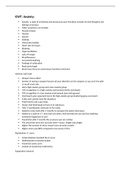
Anxiety- a state of emotional and physical arousal. Emotions include worried thoughts and
feelings of tension.
Other symptoms can include:
Muscle tension
Nausea
Sweats
Shaking
Overactive bladder
Heart rate increases
Blushing
Hyperventilation
Lack of hunger
Breathlessness
Increased breathing
Feelings of suffocation
Body parts tingle
Brain loses focus on unnecessary functions (memory)
-Johnson and Scott:
Weapon focus effect
Anxiety of seeing a weapon focuses all your attention on the weapon so you won’t be able
to recall much else.
Had a high anxiety group and a low anxiety group.
33% recognition in a high anxiety environment (knife and blood)
49% recognition in a low anxiety environment (pen with grease)
Overheard same argument but in the high anxiety group shattering glass was heard.
Yuille and Cutshall (real life situation):
Thief tried to rob a gun shop.
Owner shot thief dead in front of 21 witnesses.
Only 13 participants took part in the study.
Asked to come back after 5 months to compare the police interviews.
Asked on a scale of 1-7, how have you been, how stressed are you and has anything
emotional happened to you?
Found that after 5 months the accuracy was very similar.
The areas that were less accurate were= colour, height and weight.
Higher the amount of stress meant more accurate results.
Higher stress was 88% compared to less stress (75%).
-Explanation- U curve:
Yerkes-Dodson invented the U curve.
Dieffenbacher reviewed studies.
Found the same curve
Looked at eyewitness testimonies.
-Supportive research:
Anxiety- a state of emotional and physical arousal. Emotions include worried thoughts and
feelings of tension.
Other symptoms can include:
Muscle tension
Nausea
Sweats
Shaking
Overactive bladder
Heart rate increases
Blushing
Hyperventilation
Lack of hunger
Breathlessness
Increased breathing
Feelings of suffocation
Body parts tingle
Brain loses focus on unnecessary functions (memory)
-Johnson and Scott:
Weapon focus effect
Anxiety of seeing a weapon focuses all your attention on the weapon so you won’t be able
to recall much else.
Had a high anxiety group and a low anxiety group.
33% recognition in a high anxiety environment (knife and blood)
49% recognition in a low anxiety environment (pen with grease)
Overheard same argument but in the high anxiety group shattering glass was heard.
Yuille and Cutshall (real life situation):
Thief tried to rob a gun shop.
Owner shot thief dead in front of 21 witnesses.
Only 13 participants took part in the study.
Asked to come back after 5 months to compare the police interviews.
Asked on a scale of 1-7, how have you been, how stressed are you and has anything
emotional happened to you?
Found that after 5 months the accuracy was very similar.
The areas that were less accurate were= colour, height and weight.
Higher the amount of stress meant more accurate results.
Higher stress was 88% compared to less stress (75%).
-Explanation- U curve:
Yerkes-Dodson invented the U curve.
Dieffenbacher reviewed studies.
Found the same curve
Looked at eyewitness testimonies.
-Supportive research: