P8 Solar system; stability of orbital motions; satellites
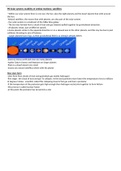
- Within our solar system there is one star, the Sun, plus the eight planets and the dwarf planets that orbit around
the Sun.
-Natural satellites, the moons that orbit planets, are also part of the solar system.
- Our solar system is a small part of the Milky Way galaxy.
- The Sun was formed from a cloud of dust and gas (nebula) pulled together by gravitational attraction.
- All planets rotate, just at different speeds
o Some planets rotate in the opposite direction or on a skewed axis to the other planets, and this may be due to past
collisions throwing its axis off balance
- Larger planets have rings, as their gravitational field is so strong it attracts debris
-mercury Venus earth and mars are rocky planets
-Jupiter Saturn Uranus and Neptune are larger planets
-Pluto is a dwarf planet very small
-moons are natural satellites which orbit the planet
How stars form
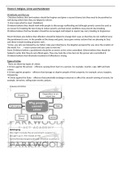
-stars form from clouds of dust and gas(nebula gas mainly hydrogen)
-first stage : the cloud of dust and gas To collapse. As the dust particles move faster the temperature rises to millions
of degrees Celsius . scientists called this collapsing cloud of hot gas and dust a protostar
-if the temperature of the protostar gets high enough then hydrogen nuclei joins together to form helium
-this process is called nuclear fusion
-at this point the protostar has turned into a star
- Within our solar system there is one star, the Sun, plus the eight planets and the dwarf planets that orbit around
the Sun.
-Natural satellites, the moons that orbit planets, are also part of the solar system.
- Our solar system is a small part of the Milky Way galaxy.
- The Sun was formed from a cloud of dust and gas (nebula) pulled together by gravitational attraction.
- All planets rotate, just at different speeds
o Some planets rotate in the opposite direction or on a skewed axis to the other planets, and this may be due to past
collisions throwing its axis off balance
- Larger planets have rings, as their gravitational field is so strong it attracts debris
-mercury Venus earth and mars are rocky planets
-Jupiter Saturn Uranus and Neptune are larger planets
-Pluto is a dwarf planet very small
-moons are natural satellites which orbit the planet
How stars form
-stars form from clouds of dust and gas(nebula gas mainly hydrogen)
-first stage : the cloud of dust and gas To collapse. As the dust particles move faster the temperature rises to millions
of degrees Celsius . scientists called this collapsing cloud of hot gas and dust a protostar
-if the temperature of the protostar gets high enough then hydrogen nuclei joins together to form helium
-this process is called nuclear fusion
-at this point the protostar has turned into a star