

Chemistry 4: Stoichiometry of Chemical Reactions Solutions.
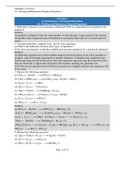
Chemistry 4: Stoichiometry of Chemical Reactions Solutions. 4.1: Writing and Balancing Chemical Equations 1. What does it mean to say an equation is balanced? Why is it important for an equation to be balanced? Solution An equation is balanced when the same number of each element is represented on the reactant and product sides. Equations must be balanced to accurately reflect the law of conservation of matter. 2. Consider molecular, complete ionic, and net ionic equations. (a) What is the difference between these types of equations? (b) In what circumstance would the complete and net ionic equations for a reaction be identical? Solution (a) Molecular equations are written without regard to the dissociation of any ionic reactants or products, with all formulas represented as neutral substances. Complete ionic equations more realistically represent all dissolved ions.Net ionic equations represent only those dissolved ions that are chemically or physically changed by the reaction, omitting any spectator ions. (b) If there are no spectator ions involved in a reaction, its complete and net ionic equations will be the same. 3. Balance the following equations: (a) PCl ( ) H O( ) POCl ( ) HCl( ) 5 2 3 s l l aq (b) Cu( ) HNO ( ) Cu(NO ) ( ) H O( ) NO( ) 3 3 2 2 s aq aq l g (c) H ( ) I ( ) HI( ) 2 2 g s s (d) Fe( ) O ( ) Fe O ( ) 2 2 3 s g s (e) Na( ) H O( ) NaOH( ) H ( ) 2 2 s l aq g (f) 4 2 2 7 2 3 2 2 (NH ) Cr O ( ) Cr O ( ) N ( ) H O( ) s s g g (g) P ( ) Cl ( ) PCl ( ) 4 2 3 s g l (h) PtCl ( ) Pt( ) Cl ( ) 4 2 s s g Solution (a) PCl ( ) H O( ) POCl ( ) 2HCl( ) 5 2 3 s l l aq ; (b) 3 3 2 2 3Cu( ) 8HNO ( ) 3Cu(NO ) ( ) 4H O( ) 2NO( ) s aq aq l g ; (c) H ( ) I ( ) 2HI( ) 2 2 g s s ; (d) 2 2 3 4Fe( ) 3O ( ) 2Fe O ( ) s g s ; (e) 2 2 2Na( ) 2H O( ) 2NaOH( ) H ( ) s l aq g ; (f) (NH4 ) 2 Cr 2O7 (s) ¾¾® Cr 2O3 (s) + N2 (g) + 4H2O(g) ; (g) P ( ) 6Cl ( ) 4PCl ( ) 4 2 3 s g l ; (h) PtCl ( ) Pt( ) 2Cl ( ) 4 2 s s g 4. Balance the following equations: (a) Ag( ) H S( ) O ( ) Ag S( ) H O( ) 2 2 2 2 s g g s l (b) P ( ) O ( ) P O ( ) 4 2 4 10 s g s (c) Pb( ) H O( ) O ( ) Pb(OH) ( ) 2 2 2 s l g s OpenStax Chemistry 4.1: Writing and Balancing Chemical Equations Page 2 of 32 (d) Fe( ) H O( ) Fe O ( ) H ( ) 2 3 4 2 s l s g (e) Sc O ( ) SO ( ) Sc (SO ) ( ) 2 3 3 2 4 3 s l s (f) Ca (PO ) ( ) H PO ( ) Ca(H PO ) ( ) 3 4 2 3 4 2 4 2 aq aq aq (g) Al( ) H SO ( ) Al (SO ) ( ) H ( ) 2 4 2 4 3 2 s aq aq g (h) TiCl ( ) H O( ) TiO ( ) HCl( ) 4 2 2 s g s g Solution (a) 2 2 2 2 4Ag( ) + 2H S( ) + O ( ) 2Ag S( ) + 2H O( ) s g g s l ; (b) P ( ) 5O ( ) P O ( ) 4 2 4 10 s g s ; (c) 2 2 2 2Pb( ) + 2H O( ) + O ( ) 2Pb OH ( ) s l g s ; (d) 2 3 4 2 3Fe( ) + 4H O( ) Fe O ( ) + 4H ( ) s l s g ; (e) 2 3 3 2 4 3 Sc O ( ) + 3SO ( ) Sc SO ( ) s l s ; (f) 3 4 3 4 2 4 2 2 Ca PO ( ) + 4H PO ( ) 3Ca H PO ( ) aq aq aq ; (g) 2 4 2 4 2 3 2Al( ) + 3H SO ( ) Al SO ( ) + 3H ( ) s aq aq g ; (h) TiCl ( ) + 2H O( ) TiO ( ) + 4HCl( ) 4 2 2 s g s g ] 5. Write a balanced molecular equation describing each of the following chemical reactions. (a) Solid calcium carbonate is heated and decomposes to solid calcium oxide and carbon dioxide gas. (b) Gaseous butane, C4H10, reacts with diatomic oxygen gas to yield gaseous carbon dioxide and water vapor. (c) Aqueous solutions of magnesium chloride and sodium hydroxide react to produce solid magnesium hydroxide and aqueous sodium chloride. (d) Water vapor reacts with sodium metal to produce solid sodium hydroxide and hydrogen gas. Solution (a) CaCO ( ) CaO( ) + CO ( ) 3 2 s s g ; (b) 4 10 2 2 2 2C H ( ) + 13O ( ) 8CO ( ) + 10H O( ) g g g g ; (c) 2 MgCl ( ) + 2NaOH( ) Mg OH ( ) + 2NaCl( ) 2 aq aq s aq ; (d) 2 2 2H O( ) + 2Na( ) 2NaOH( ) + H ( ) g s s g 6. Write a balanced equation describing each of the following chemical reactions. (a) Solid potassium chlorate, KClO3, decomposes to form solid potassium chloride and diatomic oxygen gas. (b) Solid aluminum metal reacts with solid diatomic iodine to form solid Al2I6. (c) When solid sodium chloride is added to aqueous sulfuric acid, hydrogen chloride gas and aqueous sodium sulfate are produced. (d) Aqueous solutions of phosphoric acid and potassium hydroxide react to produce aqueous potassium dihydrogen phosphate and liquid water. Solution (a) 3 2 2KClO ( ) 2KCl( ) + 3O ( ) s s g ; (b) 2 2 6 2Al( ) + 3I ( ) Al I ( ) s s s ; (c) 2 4 2 4 2NaCl( ) + H SO ( ) 2HCl( ) + Na SO ( ) s aq g aq ; (d) H PO ( ) + KOH( ) KH PO ( ) + H O( ).
Información del documento
- Subido en
- 13 de agosto de 2022
- Número de páginas
- 32
- Escrito en
- 2022/2023
- Tipo
- Examen
- Contiene
- Preguntas y respuestas

