18D - Industrial Chemical Reactions
Haber process
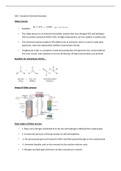
• Equation –
• The Haber process is an industrial reversible reaction that uses nitrogen (N2) and hydrogen
(H2) to produce ammonia (NH2) (3H2). At high temperatures, an iron catalyst is usually used.
• This chemical reaction produces 450 million tons of ammonia, which is used to make dyes,
explosives, and most importantly, fertilizer (ammonium nitrate).
• Coughing (at most) is a symptom of ammonia production (If exposed to low concentrations)
The nose, throat, and respiratory tract are all burning. (If high concentrations are present)
Equation for ammonium nitrate –
Image of Haber process
Main stages of Haber process
• 1. Pipes carry nitrogen (extracted from the air) and hydrogen (obtained from natural gas).
• 2. Increase the pressure of the gas mixture to 200 atmospheres.
• 3. The pressurised gases are heated to 450°C and then passed through an iron catalyst tank.
• 4. Ammonia liquefies and can be removed as the reaction mixture cools.
• 5. Nitrogen and hydrogen that have not been reacted are recycled.
, Why is the reaction performed at 400 – 500 degrees and 200 atm pressure
• This graph shows that as the pressure increases, the yield of ammonia increases for any
given temperature.
• It also shows that as the temperature drops at a given pressure (X-axis), the yield of
ammonia rises.
• As the temperature rises, the yield rises with it. When the pressure of a reaction involving
gases as reactants and products is increased, the pressure of the reaction mixture decreases,
causing the side with the fewest moles of gas to reduce the pressure.
• When the temperature rises, the equilibrium position shifts in an endothermic direction,
lowering the temperature.
• • The lowest temperature possible is required to get the most ammonia into the equilibrium
mixture.
• • A compromise temperature of 400-450°C produces a reasonable amount of ammonia in
the equilibrium mixture (even if it is only 15%) in a short amount of time
• • The highest possible pressure is required to get as much ammonia as possible into the
equilibrium mixture. A pressure of 200 atmospheres is high, but not astronomically so.
• • A compromise pressure of 200 atmospheres was chosen for economic reasons. If the
pressure is too high, the cost of producing it outweighs the value of the extra ammonia
produced.
Why the gas mixture is cooled (after the reaction):
• To liquefy the ammonia and separate it from the other gases.
• The unreacted gases are then recirculated through a chamber, ensuring a continuous flow.
Haber process
• Equation –
• The Haber process is an industrial reversible reaction that uses nitrogen (N2) and hydrogen
(H2) to produce ammonia (NH2) (3H2). At high temperatures, an iron catalyst is usually used.
• This chemical reaction produces 450 million tons of ammonia, which is used to make dyes,
explosives, and most importantly, fertilizer (ammonium nitrate).
• Coughing (at most) is a symptom of ammonia production (If exposed to low concentrations)
The nose, throat, and respiratory tract are all burning. (If high concentrations are present)
Equation for ammonium nitrate –
Image of Haber process
Main stages of Haber process
• 1. Pipes carry nitrogen (extracted from the air) and hydrogen (obtained from natural gas).
• 2. Increase the pressure of the gas mixture to 200 atmospheres.
• 3. The pressurised gases are heated to 450°C and then passed through an iron catalyst tank.
• 4. Ammonia liquefies and can be removed as the reaction mixture cools.
• 5. Nitrogen and hydrogen that have not been reacted are recycled.
, Why is the reaction performed at 400 – 500 degrees and 200 atm pressure
• This graph shows that as the pressure increases, the yield of ammonia increases for any
given temperature.
• It also shows that as the temperature drops at a given pressure (X-axis), the yield of
ammonia rises.
• As the temperature rises, the yield rises with it. When the pressure of a reaction involving
gases as reactants and products is increased, the pressure of the reaction mixture decreases,
causing the side with the fewest moles of gas to reduce the pressure.
• When the temperature rises, the equilibrium position shifts in an endothermic direction,
lowering the temperature.
• • The lowest temperature possible is required to get the most ammonia into the equilibrium
mixture.
• • A compromise temperature of 400-450°C produces a reasonable amount of ammonia in
the equilibrium mixture (even if it is only 15%) in a short amount of time
• • The highest possible pressure is required to get as much ammonia as possible into the
equilibrium mixture. A pressure of 200 atmospheres is high, but not astronomically so.
• • A compromise pressure of 200 atmospheres was chosen for economic reasons. If the
pressure is too high, the cost of producing it outweighs the value of the extra ammonia
produced.
Why the gas mixture is cooled (after the reaction):
• To liquefy the ammonia and separate it from the other gases.
• The unreacted gases are then recirculated through a chamber, ensuring a continuous flow.