Mdc 2 Final Exam Study Guide
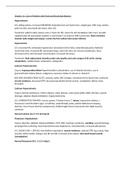
Chapter 11: Care of Patients with Fluid and Electrolyte Balance Hypervolemia S/S: pitting edema, increased HR/BP/HR, distended neck and hand veins, weight gain, SOB, lung crackles, pale/cool skin, decreased lab values, alter LOC Treatment: patient safety (assess every 2 hours for PE), assess for skin breakdown (skin care), provide supplemental O2 and position patient in semi-fowler’s to improve SOB, furosemide, fluid restriction, monitor daily weight and output, restrict Na/low sodium diet (water follows) Hypovolemia S/S: increased HR, orthostatic hypotension (increased risk for falls), weak/thready pulse, flattened neck/hand veins, increased RR, decreased turgor, warm/dry skin, dry mucous membranes, fever, decreased urine and increased concentration, increased lab values Treatment: fluid replacement (monitor pulse rate/quality and urine output of 30 ml/hr. during rehydration), antidiarrheals, antiemetics, antipyretics Calcium: Hypercalcemia Causes: hyperparathyroidism/hyperthyroidism, dehydration, use of thiazide diuretics, use of glucocorticoids, kidney failure, malignancy, excessive intake of calcium or vitamin D S/S: (EKG CHANGES FROM CLOT): cyanosis, pallor, EKG changes, increased risk for blood clots, profound muscle weakness, decreased DTR, decreased peristalsis/bowel sounds, constipation, kidney stone formation Calcium: Hypocalcemia Causes: lactose intolerance, Crohn’s disease, celiac disease, acute pancreatitis, ESKD, diarrhea, wound drainage, alkalosis (hyperventilation), hyperproteinemia S/S: (HYPERACTIVE CRAMPS): muscle spasms (“charley horses”), tetany, hyperactive reflexes, + Trousseau’s and Chvostek’s signs, arrythmias, weak/thready pulse, painful abdominal cramping, diarrhea, loss of bone density (osteoporosis), brittle/fragile bones (may break with slight trauma), confusion Normal Calcium (Ca+): 9.0-10.5mg/dL Potassium: Hypokalemia Causes: diuretics, alkalosis (hyperventilation), TPN, NPO, Cushing’s syndrome, vomiting, wound drainage, prolonged NG suctioning, heat-induced/excessive diaphoresis, corticosteroids, increased aldosterone S/S: (SLOW, LOW, + LETHAL): low/shallow respirations, muscle weakness, reduced DTR, leg cramps, limp muscles, lethal cardiac changes, low BP and HR, increased urine output, decreased bowel sounds (constipation) Normal Potassium (K+): 3.5-5.0 mEq/L Magnesium: Hypomagnesemia S/S: (HYPERACTIVE TWITCHING/SEIZING): HTN, dysrhythmias, constipation, hyperactive DTRs, involuntary movements, + Trousseau’s and Chvostek’s signs, Torsade’s de Pointes, weak respirations Normal Magnesium (Mg+): 1.8-2.6 mEq/L Sodium: Hyponatremia S/S: (SALT LOSS): confusion, trouble concentrating, seizures, stupor, muscle weakness/spasms, diminished DTRs, abdominal cramping, increased urine output, loss of appetite, shallow respirations, orthostatic hypotension, diarrhea Normal Sodium (Na+): 136-145 mEq/L Chapter 12: Care of Patients with Problems of Acid-Base Balance ABG Interpretation 1. Is the pH out of range? (in range and opposite direction-fully compensated; out of range and opposite direction-partially compensated; same direction-uncompensated) 2. Is the PaCO2 normal/out of range? (respiratory) 3. Is the HCO3 normal/out of range? (metabolic) 4. Match the one (PaCO2 or HCO3) that is the same as the pH. (acidosis or alkalosis) 5. Does the one that does not match/remains go in the opposite direction of pH? (compensation) 6. Is PaO2 and O2 sat out of range? (hypoxemia) Respiratory Acidosis/Metabolic Acidosis Interpretation: Kussmaul breathing, hyperkalemia, warm/dry/pink skin Causes: hypoventilation, asthma, COPD, pneumonia, in table below Respiratory Alkalosis/Metabolic Alkalosis Interpretation: hypocalcemia and hypokalemia, dizziness, twitching, tingling, increased HR and RR Causes: in table below Common Causes of Alkalosis Metabolic Alkalosis Increase of base components Oral ingestion of bases: Antacids Parenteral base administration: Blood transfusion Sodium bicarbonate Total parenteral nutrition Decrease of acid components Prolonged vomiting Nasogastric suctioning Hypercortisolism Hyperaldosteronism Thiazide diuretics Respiratory Alkalosis Excessive loss of carbon dioxide Hyperventilation, fear, anxiety Mechanical ventilation Salicylate toxicity High altitudes Shock Early-stage acute pulmonary problems Common Causes of Acidosis Acid-Base Assessment TEST ARTERIAL SIGNIFICANCE OF ABNORMAL FINDINGS pH 7.35-7.45 Increased: Metabolic alkalosis, loss of gastric fluids, decreased potassium intake, diuretic therapy, fever, salicylate toxicity, respiratory alkalosis, hyperventilation Decreased: Metabolic or respiratory acidosis, ketosis, renal failure, starvation, diarrhea, hyperthyroidism
Información del documento
- Subido en
- 14 de marzo de 2022
- Número de páginas
- 20
- Escrito en
- 2022/2023
- Tipo
- Examen
- Contiene
- Preguntas y respuestas