
Lecture 1 introduction
Innovation does not take place in isolation, but is a collective act & influenced by many factors
Three components of a system:
• Shared function or goal
• Comprised of components and interactions
• Has observable boundaries
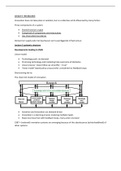
Demand en supply side met daartussen een tussenliggende infrastructuur.
Lecture 2 systemic structure
Developments leading to (N)IS
Linear model:
• Technology push: no demand
• Promising technology and marketing help overcome all obstacles
• Linear process: ‘steps follow up smoothly’ – true?
• ‘linear model’-based policy unsuccessful: considered no feedback loops
Shortcoming led to:
The chain link model of innovation
• Invention and innovation are demand driven
• Innovation is a learning process involving multiple inputs
• Steps less linear but with feedback loops, many actors involved
1987 > (national) innovation systems are emerging because of the obsolescence (achterhaaldheid) of
other systems
,Why develop NIS?
• Developed to foster EU competitiveness:
o 80s-90s: international trends threaten competitiveness
• Innovation important for economic growth
3 characteristics of IS
1. System shares a goal/main function
o Overall goal of IS: To develop, diffuse & use innovation
2. Two constituents: components and interactions
o (The same for any type of IS)
o Structural components
▪ Organizations (players, actors): formal structures that are consciously created
and have an explicit purpose
• Suppliers, producers, distributors, banks, venture capitalists,
educational bodies, governments, NGOs, etc.
• National differences: public R&D (US) vs. corporate R&D (JPN)
▪ Infrastructure / materiality / technology: The physical objects that support
innovation
• Roads, refueling stations, internet, smart phones, etc.
• Confusion: knowledge & investment infrastructure
▪ Networks
• Strong vs. weak links
• Key to knowledge exchange, production chains, collaborative R&D...
, • Institutions: sets of common habits, norms, routines, established practices, rules or laws
that regulate the relations and interactions between individuals, groups and organizations.
i.e. ‘rules of the game’
o Formal (hard) institutions: rules that are codified and enforced
o Informal (soft) institutions: tacit rules, shaped by collective interaction
▪ Normative rules: social norms and values with moral significance
▪ Cognitive rules: collective mind frames
→ Supply side
Includes the whole supply chain of products & services:
→ Demand side
Different consumer wants & needs:
• Segmented markets
• Culture: affects uptake of innovation
• Innovations may require new consumer behaviors
→ Knowledge & investment
Dutch research takes place in:
• Universities & medical centers
• Research institutes
• Companies
→ Government
• Different types of government policy instruments:
, o Regulations
o R&D subsidies
o Sales incentives, fiscal policies and buyer (PPI)
o Finance: InvestNL
• Policy made at different levels:
o Local, provincial, national, regional (EU), global
• Government is advised by agencies
→ Intermediaries
• Organizations that bring different actors together: Innovation alliance of government, private
sector, universities and research centers
• Lobby organizations
Interactions: Interrelations between components
• Institutions set restrictions for actors
• Actors influence each other & Institutions
3. There are observable boundaries to the system
• Geographical (RIS/NIS)
• Technological (TIS)
• Sectoral (SIS)
• Societal function (MLP = sociotechnical system (=interactie tussen technologie en samenleving))
Future of IS:
• National
o Big regional innovation differences
o Regional differences in institutions
o Knowledge spillovers & exchange are local
o Supra-regional: too much diversity & complexity!
• Regional
o National language, culture, networks, education, policy
▪ determines innovation patterns
• Global
o Globalization effects very impactful & overlooked
Innovation does not take place in isolation, but is a collective act & influenced by many factors
Three components of a system:
• Shared function or goal
• Comprised of components and interactions
• Has observable boundaries
Demand en supply side met daartussen een tussenliggende infrastructuur.
Lecture 2 systemic structure
Developments leading to (N)IS
Linear model:
• Technology push: no demand
• Promising technology and marketing help overcome all obstacles
• Linear process: ‘steps follow up smoothly’ – true?
• ‘linear model’-based policy unsuccessful: considered no feedback loops
Shortcoming led to:
The chain link model of innovation
• Invention and innovation are demand driven
• Innovation is a learning process involving multiple inputs
• Steps less linear but with feedback loops, many actors involved
1987 > (national) innovation systems are emerging because of the obsolescence (achterhaaldheid) of
other systems
,Why develop NIS?
• Developed to foster EU competitiveness:
o 80s-90s: international trends threaten competitiveness
• Innovation important for economic growth
3 characteristics of IS
1. System shares a goal/main function
o Overall goal of IS: To develop, diffuse & use innovation
2. Two constituents: components and interactions
o (The same for any type of IS)
o Structural components
▪ Organizations (players, actors): formal structures that are consciously created
and have an explicit purpose
• Suppliers, producers, distributors, banks, venture capitalists,
educational bodies, governments, NGOs, etc.
• National differences: public R&D (US) vs. corporate R&D (JPN)
▪ Infrastructure / materiality / technology: The physical objects that support
innovation
• Roads, refueling stations, internet, smart phones, etc.
• Confusion: knowledge & investment infrastructure
▪ Networks
• Strong vs. weak links
• Key to knowledge exchange, production chains, collaborative R&D...
, • Institutions: sets of common habits, norms, routines, established practices, rules or laws
that regulate the relations and interactions between individuals, groups and organizations.
i.e. ‘rules of the game’
o Formal (hard) institutions: rules that are codified and enforced
o Informal (soft) institutions: tacit rules, shaped by collective interaction
▪ Normative rules: social norms and values with moral significance
▪ Cognitive rules: collective mind frames
→ Supply side
Includes the whole supply chain of products & services:
→ Demand side
Different consumer wants & needs:
• Segmented markets
• Culture: affects uptake of innovation
• Innovations may require new consumer behaviors
→ Knowledge & investment
Dutch research takes place in:
• Universities & medical centers
• Research institutes
• Companies
→ Government
• Different types of government policy instruments:
, o Regulations
o R&D subsidies
o Sales incentives, fiscal policies and buyer (PPI)
o Finance: InvestNL
• Policy made at different levels:
o Local, provincial, national, regional (EU), global
• Government is advised by agencies
→ Intermediaries
• Organizations that bring different actors together: Innovation alliance of government, private
sector, universities and research centers
• Lobby organizations
Interactions: Interrelations between components
• Institutions set restrictions for actors
• Actors influence each other & Institutions
3. There are observable boundaries to the system
• Geographical (RIS/NIS)
• Technological (TIS)
• Sectoral (SIS)
• Societal function (MLP = sociotechnical system (=interactie tussen technologie en samenleving))
Future of IS:
• National
o Big regional innovation differences
o Regional differences in institutions
o Knowledge spillovers & exchange are local
o Supra-regional: too much diversity & complexity!
• Regional
o National language, culture, networks, education, policy
▪ determines innovation patterns
• Global
o Globalization effects very impactful & overlooked


