Maternity Final Exam Study Guide
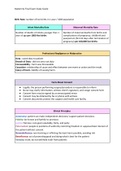
Maternity Final Exam Study Guide Birth Rate: number of live births in 1 year / 1000 population Infant Mortality Rate Maternal Mortality Rate Number of deaths of infants younger than 1 year of age per 1000 live births Number of maternal deaths from births and complications of pregnancy, childbirth and puerperium (first 42 days after termination of pregnancy) per 100,000 live births Professional Negligence or Malpractice Duty - owed duty to patient Breach of Duty - did not carry out duty Foreseeability - harm was foreseeable Causation- relationship of cause and effect between one event or action and the result. Injury of harm- liability of causing harm. Facts About Consent ● Legally, the person performing surgery/procedure is responsible to inform ● Nurse may clarify information, witness client’s signature, and cosign consent form ● Consent form may be signed by an emancipated minor ● Consent may be obtained by fax or phone with witness ● Consent documents protect the surgeon and health care facility Ethical Principles Autonomy: patient can make independent decisions/ support patient decisions. Fidelity: be honest and faithful to promises Justice: fairness; care given equitably, fairly, and justly Paternalism: people in positions of authority restricting freedom in supposed best interest of the patient without consent Nonmaleficence: non-harming or inflicting the least harm possible; avoiding risk Beneficence: act of promoting good and doing what is best for the patient Veracity: truth; do not withhold truth from patients Maternity Final Exam Study Guide Involution Definition: process of the uterus returning to its nearly prepregnant size, shape, and location Involution takes 6-8 weeks Uterine Atony → Boggy/Soft uterus ● Concerned about postpartum hemorrhage ● Massage the fundus Fundus deviated from midline ● Empty bladder Factors Affecting Involution Faster Involution ● Breastfeeding ● Normal labor/delivery ● Early ambulation ● Complete expulsion of placenta Slower Involution ● Multiple gestations ● C section ● Polyhydramnios ● Retained placenta ● Full bladder ● Multiple fetuses ● Prolonged Labor Lochia Postpartum uterine discharge classified according to appearances/contents Rubra First 1-3 days, RED Blood & debris Normal: heavy menstrual period Abnormal: saturating a pad in 15 min/less Serosa Days 3-10 Pale serosanguinous to light brown Old blood, WBCs, serum, tissue, debris Alba Days 10-14 creamy yellow/white, usually gone by 2 weeks, can last 6 weeks NORMAL: clots size of grapes or smaller ABNORMAL: clots size of plum or larger Maternity Final Exam Study Guide Physiologic Adaptations ● Cardiac output elevated transiently ● Diuresis and diaphoresis ● WBC (leukocytosis) increase (can increase up to 30,000) ● Fibrinogen (risk for clots) increase ● Risk of urinary retention ● Proteinuria ● Prolactin for lactation ● Constipation Rhogam + Rubella Shots ● Mom Rh negative, infant Rh positive ● Rhogam at 28 weeks and 72 hours postpartum ● Negative COOMBS test ● If mom is negative indirect COOMBs then you need to give Rhogam ● If mom is indirect COOMBs positive, she’s already sensitized and does not need Rhogam Hep B Baby receives Hep B vaccine and Hep B immunoglobulin / HBIG Postpartum Assessment ● BUBBLEHEB ● After pains ○ Occur within first few days, more common with multiparous women ○ Apply warm blanket to abdomen, ibuprofen, encourage patient to empty bladder ● Void within 4 hours after birth ● Ice packs (first 24 hours) and sitz baths (after 24 hours) for episiotomy ● Vital signs Maternity Final Exam Study Guide Postpartum Hemorrhage Definition: blood loss greater than 500 mL vaginal and greater than 1,000 mL C-Section ● Early/Primary ○ Occurs during first 24 hours after birth ● Late/Delayed/Secondary ○ May occur from 24 hours to 12 weeks post delivery Causes: ● Tone: uterine atony ● Tissue: retained placental fragments ● Trauma: lower genital lacerations (1st-4th degree lacerations) ● Thrombin disorders: disseminated intravascular coagulation (DIC) ● RIsk factors: ○ Multiple babies/pregnancies, large baby, twins, pitocin, difficult labor, C section, assistive device S/Sx PPH: ● Saturation of peripad within 15 min ● Boggy fundus after massage ● Tachycardia (late sign) ● Decrease in BP (late sign) Interventions: ● Massage fundus until firm - do not overmassage ● Increase IV fluid ● Increase oxytocin, additional uterotonics ● Methergine ● Surgical interventions ● Weigh pads to estimate blood loss Hematoma Definition: collection of blood within connective tissues of vagina or perineal area related to a vessel that ruptures and continues to bleed S/Sx Hematoma: ● Severe pain in vaginal/perineal area ● Tachycardia, hypotension Interventions: ● Large hematomas surgically drained ● Apply ice for first 24 hours ● Monitor for decrease BP and increase pulse → indicate shock ● Administer analgesics for pain Maternity Final Exam Study Guide Uterotonics The use of uterotonics for the prevention of PPH during the 3rd stage of labor is recommended for all births. Oxytocin is the recommended uterotonic drug for preventing PPH and should be used for management of 3rd stage labor for all births. Oxytocin Actions: Stimulates uterine smooth muscle that produces intermittent contractions. Vasopressor and antidiuretic properties Indications: control of postpartum bleeding after placental expulsion Methergine Actions: directly stimulates smooth and vascular smooth muscles causing sustained uterine contractions Indications: prevent or treat PPH/uterine atony/subinvolution. Contraindicated in hypertensive patients. Hemabate Actions: contraction of uterine muscle Indications: uterine atony Cytotec Actions: acts as a prostaglandin analogue causes uterine contractions Indications: to control PPH Postpartum Infection Temp of 100.4 or greater on 2 of the first 10 days Temp of 101 in the first 24 hours Endometritis Definition: infection of the uterus Risk Factors: ● C-Section ● Prolonged ROM ● Prolonged labor ● Obesity ● Multiple cervical exams during labor S/Sx: ● Postpartum fever ● Midline lower abdominal pain ● Uterine tenderness ● Purulent lochia ● Chills ● Headache ● Malaise and/or Anorexia Medical Management: ● Antibiotic therapy ● Urinalysis ● CBC Nursing Interventions ● Reduce risk of endometritis ○ Educate on proper hand-washing, proper perineal care (wiping front to back) ● Pain management measures Maternity Final Exam Study Guide Mastitis Definition: inflammation/infection of the breast tissue, common among lactating women. Usually occurs in one breast in the upper outer breast quadrant. Causes: ● S. Aureus - most common organism ● Improper latch, poor breast hygiene S/Sx: ● Breast tenderness or warmth to touch ● Malaise/generally feeling ill ● Breast swelling and hardness ● Pain or burning sensation continuously or while breastfeeding ● Fever of 101 F or greater ● Skin redness Medical Management: ● Oral antibiotics 10-14 days Nursing Interventions: ● Risk reduction ○ Less likely to occur with complete emptying of breast ○ Teach proper latch-on technique ○ Stress regular breastfeeding, avoid missing feeds ● Apply warm compresses to promote circulation ● Encourage woman to continue to breastfeed or to massage and express milk from the affected breast to promote continuation of milk flow UTI Definition: infection of the urethra/bladder Causes: ● Bacteria from normal bowel flora (E. Coli) ● Invasive manipulation of urethra (Foley catheter) ● Epidural anesthesia (decreases woman’s ability to feel urge to void, leading to urine stasis & overdistended bladder S/Sx: ● Frequent, urgent and/or painful urination with suprapubic pain ● Low grade fever, hematuria Medical Management: ● Urinalysis, CBC, urine culture and sensitivity ● Antibiotics Nursing Interventions: ● Assist woman to bathroom to void within a few hours after birth to flush out bacteria; remind to void every 3-4 hours ● Change pads every 3-4 hours ● Adequate fluid intake Maternity Final Exam Study Guide Thrombus Pulmonary Embolism Definition: blood clot within the vascular system S/sx: ● Leg pain ● Swelling ● Redness ● Positive Homan’s sign (pain with dorsiflexion of foot) Medical Management: ● Objective tests ○ Doppler ultrasound Nursing Interventions: ● Ambulation ● Elastic stockings Definition: occurs when blood clot breaks free from the vein wall → travels to lungs → blocks blood supply S/Sx: ● Chest pain ● Difficulty breathing ● Tachycardia Medical Management: ● Chest Xray, CT and EKG used to diagnose PE PPD vs. Baby Blues Postpartum Depression Occurs after 2 weeks postpartum S/sx seen in first 3 months Postpartum psychosis develops in few days→weeks Baby Blues Temporary Peaks at 3-5 days (end by day 10) Menstrual Cycle ● Secretion of LH and FSH stimulates mature follicles ● Follicles start secreting large amounts of estrogen, causing endothelial lining to thicken ● As estrogen increases, LH increases, progesterone increases ● LH spikes → causes ovulation → leaves behind corpus luteum ● Progesterone suppresses LH & FSH ● If an egg is not fertilized, the corpus luteum degenerates, estrogen and progesterone drops, cycle begins again Maternity Final Exam Study Guide Ovarian Uterine Cycle Follicular Phase Menstrual Phase Proliferative Phase OVULATION occurs on day 14 on cycle of 28 days OVULATION Luteal Phase Secretory Phase Ischemic Phase FSH LH Estrogen Progesterone Menstrual ↑ same ↓ ↓ Proliferative ↓ ↑ ↑ same Secretory ↓ ↓ ↑ ↑ Ischemic ↑ ↑ ↓ ↓ Fertilization ● Critical: 72 hours (24-48 hours before, 12-24 hours after) ● Capacitation: process where the sperm head/plasmic membrane of the head changes, allows it to become more active and able to penetrate ovum ● Ampulla: outer third of the fallopian tube, where fertilization takes place ● Zygote secretes HCG Maternity Final Exam Study Guide Hormones of Pregnancy Hormone Secreted Actions Estrogen Ovaries-early then placenta ↑Uterine growth ↑ Support of breast development ↑Uterine blood flow Prevents further follicular development during pregnancy (don’t want to get pregnant again) Relaxes pelvic ligaments Progesterone Corpus luteum early on then placenta Relaxes smooth muscle which reduces gastric motility and relaxes blood vessel walls (↓systemic vascular resistance) Supports/maintains uterine lining for implantation and the developing embryo DECREASES prostaglandin production hCG Cells of developing placenta (Trophoblast) Prevents involution of corpus luteum, which maintains production of progesterone/some estrogen until placenta is formed Levels peak at 9-10 weeks gestation, as pregnancy progresses hCG decreases Levels higher in multiple pregnancies Measured in urine for home pregnancy kits hPL Placenta Makes glucose available for developing fetus Promotes relative insulin resistance later in pregnancy Both growth promoting and lactogenic (milk producing) Prolactin Anterior Pituitary Promotes breast development/supports lactation After birth, prolactin release stimulates milk production - lactation is suppressed by estrogen Oxytocin Posterior Pituitary Stimulates uterine contractions Stimulates the milk ejection reflex Aldosterone Adrenals ↑ during pregnancy to conserve sodium and maintain fluid balance Cortisol Adrenals ↑ during pregnancy Active in metabolism of glucose/fats Helpful in preventing rejection of pregnancy because of its anti-inflammatory effect FSH Anterior Pituitary Initiates maturation of ovum, necessary for conception, suppressed during pregnancy LH Anterior Pituitary Stimulates ovulation of the mature ovum in the nonpregnant state Prostaglandins Cell Membranes Stimulates smooth muscle contractility, with oxytocin influences onset of normal labor, may be abnormally high in preterm labor, used to promote cervical ripening Maternity Final Exam Study Guide
Información del documento
- Subido en
- 29 de noviembre de 2021
- Número de páginas
- 56
- Escrito en
- 2021/2022
- Tipo
- Examen
- Contiene
- Preguntas y respuestas