NURS 6630 MIDTERM EXAM STUDY GUIDE
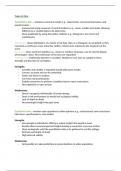
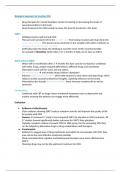
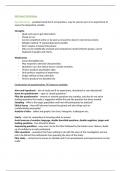
Non-compliant patients Neurotransmitters- are chemical messengers that allow signals to cross synapses to transmit information from a nerve cell or neuron to a target cell. Nerve transmitters coordinate behavor by stiulating an action or inhibiting an impulse. Example of neurotransmitters: dopamine. Used by the brain to help regulate breathing, heartbeat, and digestion. It can also affect concentration, sleep, and mood. Neurons- have many sizes, lengths, and shapes that determine their function based on where they are in the brain; and are the cells of chemical communication in the brain. Human brains are comprised of tens of billions of neurons, and each is linked to thousands of other neurons. Thus, the brain has trillions of specialized connections known as synapses. * The anatomically addressed brain is thus a complex wiring diagram, ferrying electrical impulses to wherever the “wire” is plugged in (synapses). **When neurons malfunction behavioral symptoms may occur. When drugs alter neuronal function, behavioral symptoms may be relieved, worsened, or produced. Neurons are some of the longest-lived cells in your body; neurons are irreplaceable, and neurons have huge appetites (glucose and appetites). Neurons transit signals when stimulated by sensory input or triggered by neighboring neurons. Gene Expression Cytochrome P450 Enzyme System Pharmacokinetics- the way the body does to the drug. Mechanisms of receptors including: G-Protein linked receptors- (see notes) nicotine cholinergic Serotonin- present in the brain and digestive tract; inhibitory neurotransmitter has been identified as an important factor in mood, depression, anxiety, sleep, emotions, and regulation in appetite and temperature. Serotonin imbalances are involved in depression, impulse behavior, sleep, and emotional disorders. Dopamine- functions as both an inhibitory and excitatory neurotransmitter; critical for memory and motor skills. (Behavior, learning, sleep, mood, focus, attention, immune health, and pleasurable rewards). Ex: excessive amounts are linked to schizophrenia- a long term psych disorder of a type involving a breakdown in the relation between thought, emotion, and behavior; also linked to addictive or impulsive behaviors. Norepinephrine- widely distributed throughout the body, acts as a neuromodulatory optimizing brain performance; as part of the bodies flight or fight response, it quickly provides an accurate assessment of danger or stressful situations. Obsessive amounts of this chemical, especially when no actual danger exists can lead to anxious and hyperactive. Epinephrine- widely known as adrenaline; is both a neurotransmitter and hormone that is essential to metabolism, attention, focus, stress, fear, anger, panic, and excitement. Abnormal levels of epinephrine are linked to sleep disorders, anxiety, hypertension, and lowered immunity. Acetylcholine- this widely distributed excitatory neurotransmitter was the 1st to be identified, and triggers voluntary muscle contraction, controls heartbeat, and stimulates hormones; enables muscle action, learning, and memory; research NURS 6630 MIDTERM EXAM STUDY GUIDE suggest that ACH may be critical for sleep, attentiveness, sexuality, and memory. Ex: Alzheimer’s patients have a deterioration in their acetylcholine neurons. GABA (y-aminobutyric acid)-as the major inhibitory neurotransmitter widely distributed through the brain; GABA is considered a significant mood modulator. When GABA levels are too low or GABA action is impaired, neurons can become overexcited which can lead to restlessness, anxiety, or irritability. Glutamate- the most common neurotransmitter in the central nervous system; glutamate is an excitatory relative of GABA that is involved in most aspects of brain functioning, including cognition, learning, memory, and is considered a major mediator of the excitatory signals, regulating the brain development as well as the elimination and formation of nerve synapses. D2 receptors glycine receptors ionotropic receptors Hormones- chemical messengers that are manufactured by the endocrine glands, travel through the bloodstream, and affect other tissues. They are chemically identical to some neurotransmitters (Control: attraction, appetite, and aggression) While the nervous and endocrine system are similar that they produce chemicals destined to hit up certain receptors; they operate at different speeds. (Ex: if nervous system wants to get in touch with you- sends a text; endocrine system- send through the mail). *** 6 key neurotransmitter systems targeted by psychotropic drugs: serotonin, norepinephrine, dopamine, acetylcholine, glutamate, and GABA. Stahl’s Essential Psychopharmacology Chapter 1 – Chemical Neurotransmission Anatomical versus chemical basis of neurotransmission What is neurotransmission? Neurotransmission can be described in many ways: anatomically, chemically, and electrically. The anatomical basis of neurotransmission is neurons and the connections between them, called synapses, sometimes also called the anatomically addressed nervous system, a complex of “hardwired” synaptic connections between neurons, not unlike millions of telephone wires within thousands upon thousands of cables. The anatomically addressed brain is thus a complex wiring diagram, ferrying electrical impulses to wherever the “wire” is plugged in (i.e., at a synapse). Synapses can form on many parts of a neuron, not just the dendrites as axodendritic synapses, but also on the soma as axosomatic synapses, and even at the beginning and at the end of axons (axoaxonic synapses). However; such synapses are said to be “asymmetric” since communication is structurally designed to be in one direction. Neurotransmitter is packaged in the presynaptic nerve terminal like ammunition in a loaded gun, and then fired at the postsynaptic neuron to target its receptors. General structure of a neuron: All neurons have a cell body known as the soma, which is the command center of the nerve and contains the nucleus of the cell. All neurons are also set up structurally to both send and receive information. Neurons send information via an axon that forms presynaptic terminals as the axon passes by (en passant) or as the axon ends. Neurons also receive information through dendrites (spines on dendrites, and often NURS 6630 MIDTERM EXAM STUDY GUIDE through an elaborately branching “tree” of dendrites), sometimes via spines on the dendrites and often through an elaborately branching “tree” of dendrites. Dendrites- “receiver” (branch like) are the listeners, they pick up messages, other news and gossip from other cells and convey that to the cell body. Axon Neurons- “send” are like the talkers, long extension can be short or run a full meter from the spine, down to the ankle. The axons transmit electrical impulses away from the cell body to other cells. Chemically addressed nervous system- forms the chemical basis of neurotransmission: namely, how chemical signals are coded, decoded, transduced, and sent along the way. Axodendritic, axosomatic, and axoaxonic connections. After neurons migrate, they form synapses. As shown in this figure, synaptic connections can form not just between the axon and dendrites of two neurons (axodendritic) but also between the axon and the soma (axosomatic) or the axons of the two neurons (axoaxonic). Communication is anterograde (directed forward in time) from the axon of the first neuron to the dendrite, soma, or axon of the second neuron. Neuron or nerve cells are building blocks that comprise the nervous system: made up of billions of neurons. 3 basic parts: Soma, dendrites, and axons. Soma is the neurons life support that contains the necessary cell action like (nucleus, ribosome, mitochonidria) if the soma dies, the whole neuron does. Dendrites- “short and bushy” receive messages of gossip and listens and sends information back to the soma. The axon “talker” is a long cable like extension that transmits electrical impulses from the cell body out to other neurons. Depending on the type of axon it is, it can be encased in a protective layer of fatty tissue sometimes called the myelin sheath. The myelin sheath speeds up the transmission of messages, and if it degrades, the signals are degraded as well leading to a lack of muscle control, as seen in multiple sclerosis. The contact points between neurons are called synapses; that almost, but don’t touch the neighboring axons, close by, but don’t touch. The microscopic cleft; he synaptic gap, so when an action potential runs down to the end of an axon, it activates the chemical messenger that jumps that tiny synaptic gap, flying like that little air kiss, landing on the receptor sites of the receiving neuron. Those messengers are neuro transmitters; although they slide right into their intended receptors like a key into a lock; they do not stay bonded to the receiving neuron. They just sort of pop out having exited or inhibited the receiving neurons trigger then the extras immediately get reabsorbed by the neuron that released them in the first place; in a process called reuptake; sort of like here you go---SIKE! Neurons communicate with neurotransmitters which in term cause motion and emotion. Some just make you feel good like endorphins- natural, opiatelike neurotransmitters linked to pain control and pleasure. Excitatory Neurotransmitters- rev neurons up, increasing the chances of firing off a potential. Norepinephrine- control alertness and arousal. Glutamate- involved in memory, but an oversupply can “wig-out” the brain causing seizures and migraines; why some are sensitive to MSG or monosodium glutamate in ramen. Inhibitory Neurotransmitters- chill neurons out; decreasing the likelihood that the neuron will jump into action. GABA (Gamma-Aminobutryic Acid) is a major inhibitory neurotransmitter. Serotonin- affect mood, hunger, and sleep; low NURS 6630 MIDTERM EXAM STUDY GUIDE amounts are linked to depression, a certain class of antidepressants help raise levels in the brain. Neurotransmitters such as Acetylcholine & Dopamine- play both sides and can either excite or inhibit neurons; depending on the type of receptors they come in contact with. - Neurotransmission: classic, retrograde, and volume o Classic neurotransmission- an electrical process by which neurons send electrical impulses from one part of the cell to another part of the same cell as their axons; they do not jump directly to other neurons, but involves one neuron hurling a chemical messenger or neurotransmitter, at the receptors of a second neuron between a & b. Thus the electrical impulses communicate within a neuron can be electrical, communication between neurons at synapses is chemical. o Retrograde neurotransmission- the discovery that postsynaptic neurons can also “talk back” to their presynaptic neurons. Chemicals produced specifically as retrograde neurotransmitters include endocannabinoids “endogenous marijuana”, synthesized in the postsynaptic neuron. Another example is the gaseous neurotransmitter, NO “nitric oxide” which is synthesized postsynaptically and then diffuses out of the postsynaptic membrane and into the presynaptic membrane to interact with cyclic guanosine monophosphate. o Volume Neurotransmission- some neurotransmission does not need a synapse at all; this is volume neurotransmission, or non-synaptic diffusion transmission. Chemical messengers sent by one neuron to another can spill over to sites distant to the synapses by diffusion. A good example of volume neurotransmission is dopamine action in the prefrontal cortex. Here there are very few dopamine reuptake transport pumps (dopamine transporters or DATs) to terminate the action of dopamine released in the prefrontal cortex during neurotransmission. This is much different from other brain areas, such as the striatum, where dopamine reuptake pumps are present in abundance. Thus, when dopamine neurotransmission occurs at a synapse in the prefrontal cortex, dopamine is free to spill over from that synapse and diffuse to neighboring dopamine receptors to stimulate them, even though there is no synapse at these “spillover” sites. - Stages of Chemical Neurotransmission- an electrical impulse in the first neuron is converted to a chemical signal at the synapses between it and a second neuron, in a process known as excitation-secretion coupling, the first stage of chemical neurotransmission. - Excitation- Secretion Coupling- the way that the neuron transduces an electrical stimulus into a chemical event. An electrical impulse in the first-or presynaptic neuron is converted into a chemical signal at the synapse known as excitation-secretion coupling. Once an electrical impulse invades the presynaptic axon terminal, it causes the release of chemical neurotransmitter stored there. As sodium flows into the presynaptic nerve through sodium channels in the axon membrane, the electrical charge of the action potential moves along the axon until it reaches the presynaptic nerve terminal, where it also opens calcium channels. As calcium flows into the presynaptic nerve terminal, it causes synaptic vesicles anchored to the inner membrane to spill their chemical contents into the synapse. The way is paved for chemical communication by previous synthesis of neurotransmitter and storage of neurotransmitter in the first neuron’s presynaptic axon terminal. - Signal transduction cascades- is a larger process than just the communication of a presynaptic axon with a postsynaptic neuron at the synapse between them.
Escuela, estudio y materia
- Institución
-
Chamberlain School Of Nursing
- Grado
-
NURSING
Información del documento
- Subido en
- 27 de noviembre de 2021
- Número de páginas
- 14
- Escrito en
- 2021/2022
- Tipo
- Examen
- Contiene
- Preguntas y respuestas
Temas
-
nurs 6630 midterm exam study guide