CONFLICT MANAGEMENT – CH3
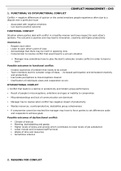
1. FUNCTIONAL VS DYSFUNCTIONAL CONFLICT
Conflict = negative differences of opinion or the varied emotions people experience often due to a
dispute over a particular issue
- Associated with negative emotions
- Can lead to positive outcome
FUNCTIONAL CONFLICT
Situation where parties deal with conflict in a healthy manner and have respect for each other's
opinions. The outcome is positive and may lead to innovation, creativity and higher productivity
Important to:
- Respect each other
- Listen to each other's point of view
- Acknowledge that there may be merit in opposing view
- Compromiser to resolve conflict that would lead to a win-win situation
→ Manager may sometimes have to play the devil's advocate (create conflict) in order to band a
team
Possible outcomes to functional conflict:
- Creates awareness of problem that needs to be solved
- Team members start to consider range of ideas, ⸫ increased participation and stimulated creativity
and productivity
- Inaccurate perceptions & misconceptions cleared
- Clarification of individuals views and cooperation occurs
DYSFUNCTIONAL CONFLICT
= Conflict that leads to a decline in productivity and hinders group performance
• Result of people's misconceptions, ambitions and egos or inability to compromise
• Misunderstandings and lack of communication are dominant
• Manager has to resolve when conflict has negative impact of productivity
• Wastes resources, counterproductive, destabilize group cohesiveness
• If compromise cannot be reached the manager may have to force parties to set differences aside
and cooperate to achieve goals
Possible outcomes of dysfunctional conflict:
Climate of distrust
Blaming, backstabbing and gossip
Higher levels of stress and anxiety which contributes to lower levels of job satisfaction
Lower morale and increased staff turnover
Waste of time and resources
Sometimes violence
2. REASONS FOR CONFLICT
1. FUNCTIONAL VS DYSFUNCTIONAL CONFLICT
Conflict = negative differences of opinion or the varied emotions people experience often due to a
dispute over a particular issue
- Associated with negative emotions
- Can lead to positive outcome
FUNCTIONAL CONFLICT
Situation where parties deal with conflict in a healthy manner and have respect for each other's
opinions. The outcome is positive and may lead to innovation, creativity and higher productivity
Important to:
- Respect each other
- Listen to each other's point of view
- Acknowledge that there may be merit in opposing view
- Compromiser to resolve conflict that would lead to a win-win situation
→ Manager may sometimes have to play the devil's advocate (create conflict) in order to band a
team
Possible outcomes to functional conflict:
- Creates awareness of problem that needs to be solved
- Team members start to consider range of ideas, ⸫ increased participation and stimulated creativity
and productivity
- Inaccurate perceptions & misconceptions cleared
- Clarification of individuals views and cooperation occurs
DYSFUNCTIONAL CONFLICT
= Conflict that leads to a decline in productivity and hinders group performance
• Result of people's misconceptions, ambitions and egos or inability to compromise
• Misunderstandings and lack of communication are dominant
• Manager has to resolve when conflict has negative impact of productivity
• Wastes resources, counterproductive, destabilize group cohesiveness
• If compromise cannot be reached the manager may have to force parties to set differences aside
and cooperate to achieve goals
Possible outcomes of dysfunctional conflict:
Climate of distrust
Blaming, backstabbing and gossip
Higher levels of stress and anxiety which contributes to lower levels of job satisfaction
Lower morale and increased staff turnover
Waste of time and resources
Sometimes violence
2. REASONS FOR CONFLICT