Notes by Roxanne Willemse
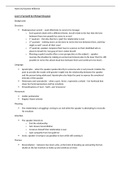
Love’s Farewell by Michael Drayton
Background:
Structure
Shakespearean sonnet – used effectively to convey his message
o Each quatrain deals with a different theme, but all relate to the fact that the love
between these two people has come to an end
o 1st quatrain – the idea that he is ‘glad’ the relationship is over
o 2nd quatrain – nothing more can be done to revive the love between them, and they
might as well ‘cancel all their vows’
o 3rd quatrain- speaker compares their love to a person on their deathbed who is
about to breath his ‘last gasp of love’s latest breath’
o Rhyming couplet (usually offers a new perspective on the subject) – speaker
reverses the situation by making an earnest and sincere plea to his lover that it is still
possible to revive the almost dead love between them and continue to be lovers
Language
Apostrophe – when the speaker speaks directly to someone who is not present. Enables the
poet to provide the reader with greater insight into the relationship between the speaker
and the person being addressed. Apostrophe also helps the poet to express the emotional
intensity of the speaker
Metonymy and synecdoche – when a part, ‘brow’, represents a whole – her forehead that
shoes her facial expressions and her emotions
Personifications of ‘love’, ‘faith’, and ‘innocence’
Movement
Iambic pentameter
Regular rhyme scheme
Meaning
The relationship is struggling/ coming to an end while the speaker is attempting to reconcile
his emotions
Intention
The speaker intends to:
o End the relationship
o Get closure/reconciliation
o Convince himself that relationship is over
o Gain sympathy from her/guilt her
Ironic: speaker is trying to say goodbye to love while still wanting it
Themes
Reconciliation - between two lovers who, at the brink of breaking up and parting forever,
decide at the last moment to make up and continue as lovers
Love’s Farewell by Michael Drayton
Background:
Structure
Shakespearean sonnet – used effectively to convey his message
o Each quatrain deals with a different theme, but all relate to the fact that the love
between these two people has come to an end
o 1st quatrain – the idea that he is ‘glad’ the relationship is over
o 2nd quatrain – nothing more can be done to revive the love between them, and they
might as well ‘cancel all their vows’
o 3rd quatrain- speaker compares their love to a person on their deathbed who is
about to breath his ‘last gasp of love’s latest breath’
o Rhyming couplet (usually offers a new perspective on the subject) – speaker
reverses the situation by making an earnest and sincere plea to his lover that it is still
possible to revive the almost dead love between them and continue to be lovers
Language
Apostrophe – when the speaker speaks directly to someone who is not present. Enables the
poet to provide the reader with greater insight into the relationship between the speaker
and the person being addressed. Apostrophe also helps the poet to express the emotional
intensity of the speaker
Metonymy and synecdoche – when a part, ‘brow’, represents a whole – her forehead that
shoes her facial expressions and her emotions
Personifications of ‘love’, ‘faith’, and ‘innocence’
Movement
Iambic pentameter
Regular rhyme scheme
Meaning
The relationship is struggling/ coming to an end while the speaker is attempting to reconcile
his emotions
Intention
The speaker intends to:
o End the relationship
o Get closure/reconciliation
o Convince himself that relationship is over
o Gain sympathy from her/guilt her
Ironic: speaker is trying to say goodbye to love while still wanting it
Themes
Reconciliation - between two lovers who, at the brink of breaking up and parting forever,
decide at the last moment to make up and continue as lovers