
Oct 2011
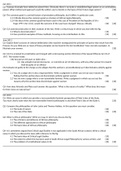
Q1- A group of people have settled on planet Mars. Obviously there is no state or established legal system on an uninhabited
planet. What method and approach could the settlers use to decide on the basis of their future legal system? [30]
Q2- The common good is a central feature of premodern philosophy, but it differs in particular cases.
2.1 Critically discuss the common good as a feature of African legal philosophy (10)
2.2 if the idea of the common good had been used in the case of President of the Republic of SA v
Hugo 1997 4 SA 1 (CC), would the outcome of the case have changed? Discuss critically (10) [20]
Q3- CLS used deconstruction in their analyses of the law. Write a critical essay in which you deal with the flg:
3.1 What is deconstruction? (15)
3.2 Give practical examples of these methods, focusing on SA contributions to this. (15) [30]
June 2011
Q1- Explain Rawl’s process of rational deliberation (the maximin strategy)and the principles of justice that result from this
Process. Do you think one or more of these principles can be found in the SA Constitution? Give concrete examples to
Illustrate your answer. [30]
Q2- Ms X is arrested for prostitution and charged with contravening section 20(1A)(a) of the Sexual Offences Act 23 of
1957. This section reads:
(1A) Any person 18 years or older who: -
(a) Has unlawful carnal intercourse , or commits an act of indecency, with any other person for reward;
Shall be guilty of an offence
Ms X pleads not guilty to the charge as she alleges that this section is unconstitutional as it discriminates unfairly against
women.
2.1 You are a judge who is also a legal positivist. Write a judgment in which you set out your reasons for
finding that the section does not discriminate unfairly against women (10)
2.2 You are now a judge who is a non-essentialist feminist. Write a judgment in which you set out the
reasons why this section does discriminate against women (10) [20]
Q3- How does Aristotle and Plato each answer the question: ‘What is the nature of reality?’ What does this mean
for their views on natural law? [30]
Oct 2010
Q1- Write an essay in which you provide a non-essentialist feminist perspective of Plato’s idea of the State.
You must clearly state what the non-essentialist feminist philosophy is and what Plato’s idea of the State is. [20]
Q2- Compare the philosophies of John Locke and Thomas Hobbes. In this question you must consider:
2.1 The state of nature (10)
2.2 The role of the State (10) [20]
Q3- What is African philosophy? Write an essay in which you discuss the flg:
3.1 The criticisms and defences of African philosophy (10)
3.2 The different approaches to African philosophy (10)
3.3 The basic ideas of African philosophy (10) [30]
Q4- It is sometimes argued that Critical Legal Studies is not applicable in the South African context. Write a critical
essay in which you discuss the issue with reference to the flg:
4.1 The basic ideas of Critical Legal Studies (10)
4.2 The extent to which this has been used in South African Legal Philosophy by various writers; and (10)
4.3 The problem of constitutional values in SA (10) [30]
Q1- A group of people have settled on planet Mars. Obviously there is no state or established legal system on an uninhabited
planet. What method and approach could the settlers use to decide on the basis of their future legal system? [30]
Q2- The common good is a central feature of premodern philosophy, but it differs in particular cases.
2.1 Critically discuss the common good as a feature of African legal philosophy (10)
2.2 if the idea of the common good had been used in the case of President of the Republic of SA v
Hugo 1997 4 SA 1 (CC), would the outcome of the case have changed? Discuss critically (10) [20]
Q3- CLS used deconstruction in their analyses of the law. Write a critical essay in which you deal with the flg:
3.1 What is deconstruction? (15)
3.2 Give practical examples of these methods, focusing on SA contributions to this. (15) [30]
June 2011
Q1- Explain Rawl’s process of rational deliberation (the maximin strategy)and the principles of justice that result from this
Process. Do you think one or more of these principles can be found in the SA Constitution? Give concrete examples to
Illustrate your answer. [30]
Q2- Ms X is arrested for prostitution and charged with contravening section 20(1A)(a) of the Sexual Offences Act 23 of
1957. This section reads:
(1A) Any person 18 years or older who: -
(a) Has unlawful carnal intercourse , or commits an act of indecency, with any other person for reward;
Shall be guilty of an offence
Ms X pleads not guilty to the charge as she alleges that this section is unconstitutional as it discriminates unfairly against
women.
2.1 You are a judge who is also a legal positivist. Write a judgment in which you set out your reasons for
finding that the section does not discriminate unfairly against women (10)
2.2 You are now a judge who is a non-essentialist feminist. Write a judgment in which you set out the
reasons why this section does discriminate against women (10) [20]
Q3- How does Aristotle and Plato each answer the question: ‘What is the nature of reality?’ What does this mean
for their views on natural law? [30]
Oct 2010
Q1- Write an essay in which you provide a non-essentialist feminist perspective of Plato’s idea of the State.
You must clearly state what the non-essentialist feminist philosophy is and what Plato’s idea of the State is. [20]
Q2- Compare the philosophies of John Locke and Thomas Hobbes. In this question you must consider:
2.1 The state of nature (10)
2.2 The role of the State (10) [20]
Q3- What is African philosophy? Write an essay in which you discuss the flg:
3.1 The criticisms and defences of African philosophy (10)
3.2 The different approaches to African philosophy (10)
3.3 The basic ideas of African philosophy (10) [30]
Q4- It is sometimes argued that Critical Legal Studies is not applicable in the South African context. Write a critical
essay in which you discuss the issue with reference to the flg:
4.1 The basic ideas of Critical Legal Studies (10)
4.2 The extent to which this has been used in South African Legal Philosophy by various writers; and (10)
4.3 The problem of constitutional values in SA (10) [30]


