
study
(*)(CHEM
guide.pdf10/23/2026,
)__*_()()(_(()*)()(*)(CHEM
121 module 2 study 8:13:01
guide.pdf10/23/2026,
AM*@*^%^#!*&^*&^!()(@*&$*@10/23/2026,
121 module 2 study
8:13:01
guide.pdf10/23/2026,
AM*@*^%^#!*&^*&^!()(@*&$*@10/23/2026,
8:13:01
4:03:13
AM*@*^%^#!*&^*&^!()(@*&$*@10/23/2026,
AM1 of 9Page 1CHEM
4:03:13121
AM1module
of 9Page
2 study
1CHEM
4:03:13
guide.pdf2026/10/23Page
121
AM1module
of 9Page
2 study
1CHEM
guide.pdf2026/1
1 of121
9 module
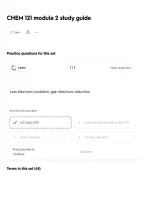
CHEM 121 module 2 study guide
Save
Practice questions for this set
Learn 1 /7 Study using Learn
Loss electrons oxidation; gain electrons reduction
Give this one a go later!
LEO goes GER 2 empirical formula (how to find it %)
3 redox reactions 4 net ionic equation
Press any key to
Don't know?Continue
continue
Terms in this set (48)
study
(*)(CHEM
guide.pdf10/23/2026,
121 module 2 study
8:13:01
guide.pdf10/23/2026,
AM*@*^%^#!*&^*&^!()(@*&$*@10/23/2026,
8:13:01 AM*@*^%^#!*&^*&^!()(@*&$*@10/23/2026,
4:03:13 AM1 of 9Page 1CHEM
4:03:13121
AM1module
of 9Page
2 study
1CHEM
guide.pdf2026/10/23Page
121 module 2 study guide.pdf2026/1
1 of 9
,study
(*)(CHEM
guide.pdf10/23/2026,
)__*_()()(_(()*)()(*)(CHEM
121 module 2 study 8:13:01
guide.pdf10/23/2026,
AM*@*^%^#!*&^*&^!()(@*&$*@10/23/2026,
121 module 2 study
8:13:01
guide.pdf10/23/2026,
AM*@*^%^#!*&^*&^!()(@*&$*@10/23/2026,
8:13:01
4:03:13
AM*@*^%^#!*&^*&^!()(@*&$*@10/23/2026,
AM2 of 9Page 2CHEM
4:03:13121
AM2module
of 9Page
2 study
2CHEM
4:03:13
guide.pdf2026/10/23Page
121
AM2module
of 9Page
2 study
2CHEM
guide.pdf2026/1
2 of121
9 module
empirical formula (how to find it %) 1. divide each element % by the atomic weight of
the elem.
2. divide all numbers by smallest number in the
group (including itself) to get a second set of
numbers
3. round up to nearest whole number, that is your
formula
--if any of the numbers ends in a decimal that is
equal to a fraction, multiply all numbers by the
denominator of that fraction and that will be your
formula (exp. 0.25=1/4, 0.33=1/3, 0.5=1/2, 0.6=2/3,
0.75=3/4... exp. 3.5= 3(1/2)= 7/2= multiply all numbers
by 2
4. each whole number is the number of atoms of
the element in the formula
balancing chemical equations 1. dont change the subscript #'s
2. balance oxygen last, hydrogen second to last,
and other atoms first
3. coefficients can only be placed in front of
formulas, and applies to all atoms in the compound
4. when counting, total # of atoms of that element
is equal to coefficientelement
subscriptparenthesis subscript
my grammy is bigger than a mole grams are larger than moles. so when finding an
answer the grams (#) should always be larger than
the moles (#)
ionic equation tells what is actually happening at ionic level in
solution
study
(*)(CHEM
guide.pdf10/23/2026,
121 module 2 study
8:13:01
guide.pdf10/23/2026,
AM*@*^%^#!*&^*&^!()(@*&$*@10/23/2026,
8:13:01 AM*@*^%^#!*&^*&^!()(@*&$*@10/23/2026,
4:03:13 AM2 of 9Page 2CHEM
4:03:13121
AM2module
of 9Page
2 study
2CHEM
guide.pdf2026/10/23Page
121 module 2 study guide.pdf2026/1
2 of 9
(*)(CHEM
guide.pdf10/23/2026,
)__*_()()(_(()*)()(*)(CHEM
121 module 2 study 8:13:01
guide.pdf10/23/2026,
AM*@*^%^#!*&^*&^!()(@*&$*@10/23/2026,
121 module 2 study
8:13:01
guide.pdf10/23/2026,
AM*@*^%^#!*&^*&^!()(@*&$*@10/23/2026,
8:13:01
4:03:13
AM*@*^%^#!*&^*&^!()(@*&$*@10/23/2026,
AM1 of 9Page 1CHEM
4:03:13121
AM1module
of 9Page
2 study
1CHEM
4:03:13
guide.pdf2026/10/23Page
121
AM1module
of 9Page
2 study
1CHEM
guide.pdf2026/1
1 of121
9 module
CHEM 121 module 2 study guide
Save
Practice questions for this set
Learn 1 /7 Study using Learn
Loss electrons oxidation; gain electrons reduction
Give this one a go later!
LEO goes GER 2 empirical formula (how to find it %)
3 redox reactions 4 net ionic equation
Press any key to
Don't know?Continue
continue
Terms in this set (48)
study
(*)(CHEM
guide.pdf10/23/2026,
121 module 2 study
8:13:01
guide.pdf10/23/2026,
AM*@*^%^#!*&^*&^!()(@*&$*@10/23/2026,
8:13:01 AM*@*^%^#!*&^*&^!()(@*&$*@10/23/2026,
4:03:13 AM1 of 9Page 1CHEM
4:03:13121
AM1module
of 9Page
2 study
1CHEM
guide.pdf2026/10/23Page
121 module 2 study guide.pdf2026/1
1 of 9
,study
(*)(CHEM
guide.pdf10/23/2026,
)__*_()()(_(()*)()(*)(CHEM
121 module 2 study 8:13:01
guide.pdf10/23/2026,
AM*@*^%^#!*&^*&^!()(@*&$*@10/23/2026,
121 module 2 study
8:13:01
guide.pdf10/23/2026,
AM*@*^%^#!*&^*&^!()(@*&$*@10/23/2026,
8:13:01
4:03:13
AM*@*^%^#!*&^*&^!()(@*&$*@10/23/2026,
AM2 of 9Page 2CHEM
4:03:13121
AM2module
of 9Page
2 study
2CHEM
4:03:13
guide.pdf2026/10/23Page
121
AM2module
of 9Page
2 study
2CHEM
guide.pdf2026/1
2 of121
9 module
empirical formula (how to find it %) 1. divide each element % by the atomic weight of
the elem.
2. divide all numbers by smallest number in the
group (including itself) to get a second set of
numbers
3. round up to nearest whole number, that is your
formula
--if any of the numbers ends in a decimal that is
equal to a fraction, multiply all numbers by the
denominator of that fraction and that will be your
formula (exp. 0.25=1/4, 0.33=1/3, 0.5=1/2, 0.6=2/3,
0.75=3/4... exp. 3.5= 3(1/2)= 7/2= multiply all numbers
by 2
4. each whole number is the number of atoms of
the element in the formula
balancing chemical equations 1. dont change the subscript #'s
2. balance oxygen last, hydrogen second to last,
and other atoms first
3. coefficients can only be placed in front of
formulas, and applies to all atoms in the compound
4. when counting, total # of atoms of that element
is equal to coefficientelement
subscriptparenthesis subscript
my grammy is bigger than a mole grams are larger than moles. so when finding an
answer the grams (#) should always be larger than
the moles (#)
ionic equation tells what is actually happening at ionic level in
solution
study
(*)(CHEM
guide.pdf10/23/2026,
121 module 2 study
8:13:01
guide.pdf10/23/2026,
AM*@*^%^#!*&^*&^!()(@*&$*@10/23/2026,
8:13:01 AM*@*^%^#!*&^*&^!()(@*&$*@10/23/2026,
4:03:13 AM2 of 9Page 2CHEM
4:03:13121
AM2module
of 9Page
2 study
2CHEM
guide.pdf2026/10/23Page
121 module 2 study guide.pdf2026/1
2 of 9

