Chapter 1+2: paradigms and treatments
- mood and anxiety disorders are more common in women than men.
- substance disorders are more common in men.
- 43% of all people will someday struggle with a disorder.
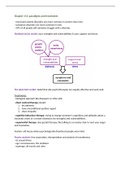
Diathesis-stress model: your strengths and vulnerabilities & your support and stress.
The dodo bird verdict: belief that alle psychotherapies are equally effective and work well.
Treatments:
- biological approach like diazepam or other pills
- client centred therapy should:
1. be authentic
2. have unconditional positive regard
3. show empathy
- cognitive behaviour therapy: trying to change someone’s cognitions and attitudes about a
traumatic event or a certain obsession (so strengths and vulnerabilities).
- experiential therapy: also gestalt therapy, like talking to an empty chair to vent your anger
and frustration.
Asylum: old house where psychologically disordered people were held.
Psycho analysis: free association, interpretation and analysis of transference
- id: sexual drives
- ego: consciousness; the mediator
- superego: all morals and rules
, Chapter 5: mood disorders
Moods: longer feeling not really directed at anything.
Emotions: state directed at something or someone, shorter than a mood.
In general, women are more prevalent to develop a mood disorder than in men.
Feeling theory of moods: moods are raw feelings, feeling sad already is a mood. These
simple feelings also make up the basic emotions, but then an extra idea about someone or
something is added.
Dispositional theory of moods: mood generates cognitions and mood-congruent appraisals.
- being in a sad mood appraising situation as uncontrollable.
- being in an angry mood appraising situation as threatening.
Major depressive disorder:
- sad mood
- loss of pleasure or interest (anhedonia)
- loss of energy
- sleeping problems
- psychomotor retardation
- different eating/weight system
5 or more symptoms every day or most of
the day for at least 2 weeks.
80% recovers within 1 year, treatment is effective
but there is a high relapse of 90% in 20 years.
Persistent depressive disorder:
When there is no recovery of MDD, you are diagnosed with dysthymia, also persistent
depressive disorder.
- depressed mood for at least 2 years
- at least 2 symptoms from MDD
Bio-psycho-social models: explaining origin and development of disorders
biological: genetic facts and heritable symptoms
37% of depression is explained by heritability
90% of bipolarity is explained by heritability
psychological: personal characteristics might hold back or accelerate developing a disorder,
for example if you are a really neurotic person, you develop OCD easier.
social: factors in your environment like your family and friends can change how you cope
with your problems.
- mood and anxiety disorders are more common in women than men.
- substance disorders are more common in men.
- 43% of all people will someday struggle with a disorder.
Diathesis-stress model: your strengths and vulnerabilities & your support and stress.
The dodo bird verdict: belief that alle psychotherapies are equally effective and work well.
Treatments:
- biological approach like diazepam or other pills
- client centred therapy should:
1. be authentic
2. have unconditional positive regard
3. show empathy
- cognitive behaviour therapy: trying to change someone’s cognitions and attitudes about a
traumatic event or a certain obsession (so strengths and vulnerabilities).
- experiential therapy: also gestalt therapy, like talking to an empty chair to vent your anger
and frustration.
Asylum: old house where psychologically disordered people were held.
Psycho analysis: free association, interpretation and analysis of transference
- id: sexual drives
- ego: consciousness; the mediator
- superego: all morals and rules
, Chapter 5: mood disorders
Moods: longer feeling not really directed at anything.
Emotions: state directed at something or someone, shorter than a mood.
In general, women are more prevalent to develop a mood disorder than in men.
Feeling theory of moods: moods are raw feelings, feeling sad already is a mood. These
simple feelings also make up the basic emotions, but then an extra idea about someone or
something is added.
Dispositional theory of moods: mood generates cognitions and mood-congruent appraisals.
- being in a sad mood appraising situation as uncontrollable.
- being in an angry mood appraising situation as threatening.
Major depressive disorder:
- sad mood
- loss of pleasure or interest (anhedonia)
- loss of energy
- sleeping problems
- psychomotor retardation
- different eating/weight system
5 or more symptoms every day or most of
the day for at least 2 weeks.
80% recovers within 1 year, treatment is effective
but there is a high relapse of 90% in 20 years.
Persistent depressive disorder:
When there is no recovery of MDD, you are diagnosed with dysthymia, also persistent
depressive disorder.
- depressed mood for at least 2 years
- at least 2 symptoms from MDD
Bio-psycho-social models: explaining origin and development of disorders
biological: genetic facts and heritable symptoms
37% of depression is explained by heritability
90% of bipolarity is explained by heritability
psychological: personal characteristics might hold back or accelerate developing a disorder,
for example if you are a really neurotic person, you develop OCD easier.
social: factors in your environment like your family and friends can change how you cope
with your problems.