
A Comprehensive
A Comprehensive
Review for Community
Review for
andCommunity
Public
PageHealth
1https://online2pdf.com/remove-pdf-header-footer
and Nursing
Public Health
Questions
Nursing
& Rationales.pdfhttps://online2pdf.com/remove-pdf-header-footer
Questions & Rationaleshttps://online2pdf.com/remove-pdf-header-footer
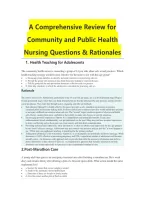
A Comprehensive Review for
Community and Public Health
Nursing Questions & Rationales
1. Health Teaching for Adolescents
The community health nurses is counseling a group of 14 year olds about safe sexual practices. Which
health teaching strategy would be most effective for the nurse to use with this age group?
a. Encourage group members to describe personal experiences in practicing safe sex
b. Provide the group with statistical data about behaviors leading to venereal diseases
c. Tell the group that for aids prevention abstinence is the best safe sex practice
D. Role play situations in which the adolescent is rewarded for practicing safe sex
Rationale
The correct answer is D. Adolescents, particularly in the 14-year-old age range, are in a developmental stage (Piaget's
formal operational stage) where they can think abstractly but are heavily influenced by peer pressure and the need for
social acceptance. They learn best through active, engaging, and relevant methods.
Role-playing (Option D) is highly effective because it provides a safe, simulated environment to practice
communication and decision-making skills. It allows adolescents to rehearse how they would handle peer pressure
or navigate a difficult conversation about safe sex. The "reward" aspect reinforces positive behavior and builds
self-efficacy, making them more confident in their ability to make safe choices in real-life situations.
Encouraging personal experiences (Option A) is inappropriate and potentially harmful. It can cause
embarrassment, breach confidentiality, and put individuals on the spot. Many may not have personal experiences
to share, and forcing such a discussion can create anxiety and shut down communication.
Providing statistical data (Option B), while informative, is often too abstract and impersonal for this age group to
be the *most* effective strategy. Adolescents may not connect with statistics and can feel that "it won't happen to
me." While data can supplement teaching, it should not be the primary method.
Telling them abstinence is the best practice (Option C) is an incomplete and potentially ineffective message. While
abstinence is 100% effective in preventing pregnancy and STIs, a significant number of adolescents will become
sexually active. An abstinence-only approach fails to provide them with the necessary information and skills to
protect themselves if they choose to have sex. A comprehensive approach that includes information on both
abstinence and contraception/safe sex practices is the recommended standard of care.
2.Post-Marathon Care
A young adult man goes to an emergency treatment area after finishing a marathon run. He is weak
dizzy and remains thirsty after drinking a pint of a flavored sports drink. What action should the nurse
implement first?
a. Instruct the runner that a urine sample is needed
b. Send for the automatic external defibrillator
c. Determine if there are friends or family nearby
d. Give the runner another pint of fluids to drink
Page 1 AofComprehensive
58
A Comprehensive
Review
Review
for Community
for Community
andand
Public
Public
Health
Health
Nursing
Nursing
Questions
Questions
& Rationaleshttps://online2pdf.com/remove-pdf-header-footer
& Rationales.pdfhttps://online2pdf.com/remove-pdf-header-footer
,A Comprehensive
A Comprehensive
Review for Community
Review for
andCommunity
Public
PageHealth
2https://online2pdf.com/remove-pdf-header-footer
and Nursing
Public Health
Questions
Nursing
& Rationales.pdfhttps://online2pdf.com/remove-pdf-header-footer
Questions & Rationaleshttps://online2pdf.com/remove-pdf-header-footer
Rationale
The correct answer is d. The client's symptoms—weakness, dizziness, and persistent thirst after a marathon—are
classic signs of significant fluid volume deficit (dehydration). The immediate priority is to address this physiological
imbalance.
Giving more fluids (Option D) is the most direct and immediate intervention to treat the underlying cause of his
symptoms. A single pint of fluid is often insufficient to correct the profound dehydration that can occur after a
marathon. Continuing oral rehydration is the first and most crucial step, assuming the client is conscious and able
to swallow.
Requesting a urine sample (Option A) is a useful assessment to evaluate hydration status (e.g., specific gravity)
and kidney function, but it is not the priority intervention. Rehydration must come first. The client may not even
be able to produce a urine sample until he is better hydrated.
Sending for an AED (Option B) is not indicated at this time. While severe electrolyte imbalances from
dehydration can lead to cardiac arrhythmias, the client is not described as being in cardiac arrest, pulseless, or
having chest pain. This would be an overreaction based on the current assessment findings.
Determining if friends or family are nearby (Option C) is part of a holistic assessment and can be helpful for
gathering more history or providing support, but it does not address the immediate physiological need. The
priority is medical stabilization.
3.Post-Arthroplasty Home Safety
An older adult male who fractured his right hip is discharged to home one week following an
arthroplasty. Which adjustment to the clients home environment is most important for the home health
nurse to implement?
a. Lower the temperature on the clients water heater
b. Encourage the client to wear rubber soled shoes
c. Ensure that an elevated toilet seat is installed
d. Leave motion activated light in the living room
Rationale
The correct answer is c. The most important priority for a client post-hip arthroplasty is to prevent hip dislocation by
adhering to hip precautions. These precautions typically include avoiding hip flexion greater than 90 degrees, avoiding
adduction (crossing the legs), and avoiding internal rotation.
Installing an elevated toilet seat (Option C) directly addresses the risk of excessive hip flexion. A standard-height
toilet requires a person to bend their hips well beyond 90 degrees to sit down, which could dislocate the new hip
prosthesis. An elevated seat reduces the amount of flexion needed, making toileting safer and is therefore the most
critical environmental modification.
Lowering the water heater temperature (Option A) is a general safety measure to prevent burns, particularly for
older adults who may have decreased sensation, but it is not specific to the risks associated with hip arthroplasty.
Wearing rubber-soled shoes (Option B) is a good fall prevention strategy, which is important, but it is secondary
to preventing the specific, high-risk complication of hip dislocation.
Using motion-activated lights (Option D) is also an excellent fall prevention strategy, especially for nighttime
mobility, but it does not address the biomechanical stress on the new hip joint during a routine and frequent
activity like toileting. Preventing dislocation is the paramount concern.
4.Risk for Pelvic Inflammatory Disease (PID)
The nurse is caring for four clients in a women's health clinic. Which client should the nurse assess for
risk for pelvic inflammatory disease?
a. A 30 year old with endometriosis
b. A 40 year old with leiomyoma
c. A 50 year old perimenopause
d. A 20 year old with gonorrhea
Page 2 AofComprehensive
58
A Comprehensive
Review
Review
for Community
for Community
andand
Public
Public
Health
Health
Nursing
Nursing
Questions
Questions
& Rationaleshttps://online2pdf.com/remove-pdf-header-footer
& Rationales.pdfhttps://online2pdf.com/remove-pdf-header-footer
,A Comprehensive
A Comprehensive
Review for Community
Review for
andCommunity
Public
PageHealth
3https://online2pdf.com/remove-pdf-header-footer
and Nursing
Public Health
Questions
Nursing
& Rationales.pdfhttps://online2pdf.com/remove-pdf-header-footer
Questions & Rationaleshttps://online2pdf.com/remove-pdf-header-footer
Rationale
The correct answer is d. Pelvic Inflammatory Disease (PID) is an infection of the female reproductive organs. It most
often occurs when sexually transmitted bacteria spread from the vagina to the uterus, fallopian tubes, or ovaries.
A 20-year-old with gonorrhea (Option D) is at the highest and most direct risk for developing PID. Gonorrhea and
chlamydia are the two most common bacterial infections that cause PID. The infection can ascend from the cervix
into the upper genital tract, causing inflammation and potential long-term complications like infertility and chronic
pelvic pain. Age is also a factor, as younger women (under 25) are more susceptible.
Endometriosis (Option A) is a condition where endometrial-like tissue grows outside the uterus. While it can cause
pelvic pain and infertility, it is not an infectious process and is not a direct cause of PID, although both can
coexist.
Leiomyoma (Option B), also known as uterine fibroids, are noncancerous growths of the uterus. They are not
caused by infection and do not directly increase the risk of PID.
A 50-year-old in perimenopause (Option C) is at a lower risk for PID compared to a younger, sexually active
woman with an STI. The incidence of PID decreases with age, and the hormonal changes of perimenopause do not
in themselves increase the risk.
5.Most Important Healthy Lifestyle Choice
The nurse is teaching a group of adults at a health fair about healthy life style choices. Which
information is most important for the nurse to emphasize?
a. Completely stop the use of cigarette and tobacco products
b. Eat a diet high in fruits vegetables and whole grains
c. Avoid the midday sun and use sunscreen
d. Perform monthly self examination of breasts and testes
Rationale
The correct answer is a. While all the options are healthy lifestyle choices, the single most important public health
message to emphasize for disease prevention and health promotion is the cessation of tobacco use. According to the
CDC and WHO, tobacco use is the leading cause of preventable death, disease, and disability in the world.
Stopping tobacco use (Option A) has the most significant and wide-ranging impact on health. It is a major risk
factor for numerous cancers (lung, throat, bladder, etc.), cardiovascular disease (heart attack, stroke), chronic
respiratory diseases (COPD), and many other health problems. No other single lifestyle modification offers a
greater potential for reducing morbidity and mortality.
Eating a healthy diet (Option B) is extremely important for preventing chronic diseases like heart disease,
diabetes, and some cancers. However, the negative impact of smoking is generally considered more potent and
immediate across a wider spectrum of diseases.
Avoiding sun exposure (Option C) is a key primary prevention strategy for skin cancer, but its overall impact on
mortality is less than that of smoking.
Performing self-examinations (Option D) is a form of secondary prevention (early detection). While once widely
promoted, the evidence for its effectiveness in reducing mortality for breast and testicular cancer is mixed, and it is
not considered as impactful as primary prevention strategies like smoking cessation.
6.MMR Vaccine Schedule
The school nurse who is reviewing immunization records of students who will start kindergarten
within the next month notes that most of the students have only received one does of the measles
mumps rubella vaccine. Which intervention should the nurse implement?
a. Note in the student records that the second dose of the mmr vaccine should be administered prior to entering
first grade
b. Send notices home with the children on the first day of class advising that mmr vaccine series must be
completed
c. Contact kindergarten parents to remind them that the second dose of mmr is due at eh start of the school year
d. Speak at the next parent teacher association meeting to teach parents the benefits of immunizing their childre
Page 3 AofComprehensive
58
A Comprehensive
Review
Review
for Community
for Community
andand
Public
Public
Health
Health
Nursing
Nursing
Questions
Questions
& Rationaleshttps://online2pdf.com/remove-pdf-header-footer
& Rationales.pdfhttps://online2pdf.com/remove-pdf-header-footer
, A Comprehensive
A Comprehensive
Review for Community
Review for
andCommunity
Public
PageHealth
4https://online2pdf.com/remove-pdf-header-footer
and Nursing
Public Health
Questions
Nursing
& Rationales.pdfhttps://online2pdf.com/remove-pdf-header-footer
Questions & Rationaleshttps://online2pdf.com/remove-pdf-header-footer
Rationale
The correct answer is b. The question asks for the intervention the nurse should implement. The standard immunization
schedule in the U.S. recommends two doses of the MMR vaccine: the first at 12-15 months of age and the second at 4-6
years of age, before starting school. The nurse has identified a gap in compliance.
Sending notices home (Option B) is a direct, actionable, and appropriate intervention. It officially informs parents
of the specific requirement that is missing for their child to be compliant with school entry regulations. This
creates a documented communication trail and clearly states the necessary action.
Noting it in the record for first grade (Option A) is incorrect and delays a necessary public health intervention. The
second dose is due before kindergarten, not first grade. Delaying it puts the child and the school community at risk
for an outbreak of preventable diseases.
Contacting parents individually (Option C) would be extremely time-consuming and inefficient, especially if
"most of the students" are non-compliant. A standardized notice is a more practical public health approach. While
individual follow-up may be needed later, it's not the first broad intervention.
Speaking at a PTA meeting (Option D) is a good health promotion activity but it is not a direct intervention to
address the immediate problem of specific children lacking a required vaccine for school entry in one month. It is
a long-term strategy, whereas the problem requires a more immediate and targeted solution.
7.Primary vs. Secondary Prevention
A middle aged male client presents for his annual health visit at a community clinic. He is 5 ft 10 in
tall weighs 250 pounds, and works as an accountant. He smokes at least one pack of cigarettes every
day for the last 15 years. Which secondary prevention measure should the nurse recommend the client
to follow?
a. Compliance with antihypertensive and lipid lowering agents.
b. Increase physical activity and diet low in saturated fat
c. Smoking cessation
d. Blood pressure and lipid screening
Rationale
The correct answer is d. This question requires understanding the different levels of prevention. Primary Prevention:
Aims to prevent disease before it occurs (e.g., vaccinations, lifestyle changes in healthy individuals). Secondary
Prevention: Aims to detect and treat disease in its earliest stages (e.g., screening tests). Tertiary Prevention: Aims to
manage an existing disease to prevent complications and improve quality of life (e.g., rehabilitation, medication
compliance).
Blood pressure and lipid screening (Option D) is the classic example of secondary prevention. The goal is to
screen for and identify asymptomatic conditions like hypertension and hyperlipidemia early, so that treatment can
be initiated to prevent long-term consequences like heart attack and stroke.
Compliance with medications (Option A) is an example of tertiary prevention. This applies to a client who has
already been diagnosed with hypertension and/or hyperlipidemia and is taking medication to manage the
condition.
Increasing physical activity, improving diet (Option B), and smoking cessation (Option C) are all examples of
primary prevention. These are lifestyle modifications recommended to all individuals to prevent the onset of
chronic diseases. While this client should absolutely do these things, they are not classified as secondary
prevention measures.
8.Assessment of an Underweight Adolescent
A male high school student is referred to the school nurse because he lost consciousness during
gymnastics class. His neurological vital signs are with normal limits, and his blood pressure is 100/62.
He is 6 ft 3 in tall wighs 135 pound and his body mass index is 16.9. which assessment data should the
nurse obtain first?
a. Serial bp reading every 30 minutes
b. Twenty-four hour diet recall
Page 4 AofComprehensive
58
A Comprehensive
Review
Review
for Community
for Community
andand
Public
Public
Health
Health
Nursing
Nursing
Questions
Questions
& Rationaleshttps://online2pdf.com/remove-pdf-header-footer
& Rationales.pdfhttps://online2pdf.com/remove-pdf-header-footer
A Comprehensive
Review for Community
Review for
andCommunity
Public
PageHealth
1https://online2pdf.com/remove-pdf-header-footer
and Nursing
Public Health
Questions
Nursing
& Rationales.pdfhttps://online2pdf.com/remove-pdf-header-footer
Questions & Rationaleshttps://online2pdf.com/remove-pdf-header-footer
A Comprehensive Review for
Community and Public Health
Nursing Questions & Rationales
1. Health Teaching for Adolescents
The community health nurses is counseling a group of 14 year olds about safe sexual practices. Which
health teaching strategy would be most effective for the nurse to use with this age group?
a. Encourage group members to describe personal experiences in practicing safe sex
b. Provide the group with statistical data about behaviors leading to venereal diseases
c. Tell the group that for aids prevention abstinence is the best safe sex practice
D. Role play situations in which the adolescent is rewarded for practicing safe sex
Rationale
The correct answer is D. Adolescents, particularly in the 14-year-old age range, are in a developmental stage (Piaget's
formal operational stage) where they can think abstractly but are heavily influenced by peer pressure and the need for
social acceptance. They learn best through active, engaging, and relevant methods.
Role-playing (Option D) is highly effective because it provides a safe, simulated environment to practice
communication and decision-making skills. It allows adolescents to rehearse how they would handle peer pressure
or navigate a difficult conversation about safe sex. The "reward" aspect reinforces positive behavior and builds
self-efficacy, making them more confident in their ability to make safe choices in real-life situations.
Encouraging personal experiences (Option A) is inappropriate and potentially harmful. It can cause
embarrassment, breach confidentiality, and put individuals on the spot. Many may not have personal experiences
to share, and forcing such a discussion can create anxiety and shut down communication.
Providing statistical data (Option B), while informative, is often too abstract and impersonal for this age group to
be the *most* effective strategy. Adolescents may not connect with statistics and can feel that "it won't happen to
me." While data can supplement teaching, it should not be the primary method.
Telling them abstinence is the best practice (Option C) is an incomplete and potentially ineffective message. While
abstinence is 100% effective in preventing pregnancy and STIs, a significant number of adolescents will become
sexually active. An abstinence-only approach fails to provide them with the necessary information and skills to
protect themselves if they choose to have sex. A comprehensive approach that includes information on both
abstinence and contraception/safe sex practices is the recommended standard of care.
2.Post-Marathon Care
A young adult man goes to an emergency treatment area after finishing a marathon run. He is weak
dizzy and remains thirsty after drinking a pint of a flavored sports drink. What action should the nurse
implement first?
a. Instruct the runner that a urine sample is needed
b. Send for the automatic external defibrillator
c. Determine if there are friends or family nearby
d. Give the runner another pint of fluids to drink
Page 1 AofComprehensive
58
A Comprehensive
Review
Review
for Community
for Community
andand
Public
Public
Health
Health
Nursing
Nursing
Questions
Questions
& Rationaleshttps://online2pdf.com/remove-pdf-header-footer
& Rationales.pdfhttps://online2pdf.com/remove-pdf-header-footer
,A Comprehensive
A Comprehensive
Review for Community
Review for
andCommunity
Public
PageHealth
2https://online2pdf.com/remove-pdf-header-footer
and Nursing
Public Health
Questions
Nursing
& Rationales.pdfhttps://online2pdf.com/remove-pdf-header-footer
Questions & Rationaleshttps://online2pdf.com/remove-pdf-header-footer
Rationale
The correct answer is d. The client's symptoms—weakness, dizziness, and persistent thirst after a marathon—are
classic signs of significant fluid volume deficit (dehydration). The immediate priority is to address this physiological
imbalance.
Giving more fluids (Option D) is the most direct and immediate intervention to treat the underlying cause of his
symptoms. A single pint of fluid is often insufficient to correct the profound dehydration that can occur after a
marathon. Continuing oral rehydration is the first and most crucial step, assuming the client is conscious and able
to swallow.
Requesting a urine sample (Option A) is a useful assessment to evaluate hydration status (e.g., specific gravity)
and kidney function, but it is not the priority intervention. Rehydration must come first. The client may not even
be able to produce a urine sample until he is better hydrated.
Sending for an AED (Option B) is not indicated at this time. While severe electrolyte imbalances from
dehydration can lead to cardiac arrhythmias, the client is not described as being in cardiac arrest, pulseless, or
having chest pain. This would be an overreaction based on the current assessment findings.
Determining if friends or family are nearby (Option C) is part of a holistic assessment and can be helpful for
gathering more history or providing support, but it does not address the immediate physiological need. The
priority is medical stabilization.
3.Post-Arthroplasty Home Safety
An older adult male who fractured his right hip is discharged to home one week following an
arthroplasty. Which adjustment to the clients home environment is most important for the home health
nurse to implement?
a. Lower the temperature on the clients water heater
b. Encourage the client to wear rubber soled shoes
c. Ensure that an elevated toilet seat is installed
d. Leave motion activated light in the living room
Rationale
The correct answer is c. The most important priority for a client post-hip arthroplasty is to prevent hip dislocation by
adhering to hip precautions. These precautions typically include avoiding hip flexion greater than 90 degrees, avoiding
adduction (crossing the legs), and avoiding internal rotation.
Installing an elevated toilet seat (Option C) directly addresses the risk of excessive hip flexion. A standard-height
toilet requires a person to bend their hips well beyond 90 degrees to sit down, which could dislocate the new hip
prosthesis. An elevated seat reduces the amount of flexion needed, making toileting safer and is therefore the most
critical environmental modification.
Lowering the water heater temperature (Option A) is a general safety measure to prevent burns, particularly for
older adults who may have decreased sensation, but it is not specific to the risks associated with hip arthroplasty.
Wearing rubber-soled shoes (Option B) is a good fall prevention strategy, which is important, but it is secondary
to preventing the specific, high-risk complication of hip dislocation.
Using motion-activated lights (Option D) is also an excellent fall prevention strategy, especially for nighttime
mobility, but it does not address the biomechanical stress on the new hip joint during a routine and frequent
activity like toileting. Preventing dislocation is the paramount concern.
4.Risk for Pelvic Inflammatory Disease (PID)
The nurse is caring for four clients in a women's health clinic. Which client should the nurse assess for
risk for pelvic inflammatory disease?
a. A 30 year old with endometriosis
b. A 40 year old with leiomyoma
c. A 50 year old perimenopause
d. A 20 year old with gonorrhea
Page 2 AofComprehensive
58
A Comprehensive
Review
Review
for Community
for Community
andand
Public
Public
Health
Health
Nursing
Nursing
Questions
Questions
& Rationaleshttps://online2pdf.com/remove-pdf-header-footer
& Rationales.pdfhttps://online2pdf.com/remove-pdf-header-footer
,A Comprehensive
A Comprehensive
Review for Community
Review for
andCommunity
Public
PageHealth
3https://online2pdf.com/remove-pdf-header-footer
and Nursing
Public Health
Questions
Nursing
& Rationales.pdfhttps://online2pdf.com/remove-pdf-header-footer
Questions & Rationaleshttps://online2pdf.com/remove-pdf-header-footer
Rationale
The correct answer is d. Pelvic Inflammatory Disease (PID) is an infection of the female reproductive organs. It most
often occurs when sexually transmitted bacteria spread from the vagina to the uterus, fallopian tubes, or ovaries.
A 20-year-old with gonorrhea (Option D) is at the highest and most direct risk for developing PID. Gonorrhea and
chlamydia are the two most common bacterial infections that cause PID. The infection can ascend from the cervix
into the upper genital tract, causing inflammation and potential long-term complications like infertility and chronic
pelvic pain. Age is also a factor, as younger women (under 25) are more susceptible.
Endometriosis (Option A) is a condition where endometrial-like tissue grows outside the uterus. While it can cause
pelvic pain and infertility, it is not an infectious process and is not a direct cause of PID, although both can
coexist.
Leiomyoma (Option B), also known as uterine fibroids, are noncancerous growths of the uterus. They are not
caused by infection and do not directly increase the risk of PID.
A 50-year-old in perimenopause (Option C) is at a lower risk for PID compared to a younger, sexually active
woman with an STI. The incidence of PID decreases with age, and the hormonal changes of perimenopause do not
in themselves increase the risk.
5.Most Important Healthy Lifestyle Choice
The nurse is teaching a group of adults at a health fair about healthy life style choices. Which
information is most important for the nurse to emphasize?
a. Completely stop the use of cigarette and tobacco products
b. Eat a diet high in fruits vegetables and whole grains
c. Avoid the midday sun and use sunscreen
d. Perform monthly self examination of breasts and testes
Rationale
The correct answer is a. While all the options are healthy lifestyle choices, the single most important public health
message to emphasize for disease prevention and health promotion is the cessation of tobacco use. According to the
CDC and WHO, tobacco use is the leading cause of preventable death, disease, and disability in the world.
Stopping tobacco use (Option A) has the most significant and wide-ranging impact on health. It is a major risk
factor for numerous cancers (lung, throat, bladder, etc.), cardiovascular disease (heart attack, stroke), chronic
respiratory diseases (COPD), and many other health problems. No other single lifestyle modification offers a
greater potential for reducing morbidity and mortality.
Eating a healthy diet (Option B) is extremely important for preventing chronic diseases like heart disease,
diabetes, and some cancers. However, the negative impact of smoking is generally considered more potent and
immediate across a wider spectrum of diseases.
Avoiding sun exposure (Option C) is a key primary prevention strategy for skin cancer, but its overall impact on
mortality is less than that of smoking.
Performing self-examinations (Option D) is a form of secondary prevention (early detection). While once widely
promoted, the evidence for its effectiveness in reducing mortality for breast and testicular cancer is mixed, and it is
not considered as impactful as primary prevention strategies like smoking cessation.
6.MMR Vaccine Schedule
The school nurse who is reviewing immunization records of students who will start kindergarten
within the next month notes that most of the students have only received one does of the measles
mumps rubella vaccine. Which intervention should the nurse implement?
a. Note in the student records that the second dose of the mmr vaccine should be administered prior to entering
first grade
b. Send notices home with the children on the first day of class advising that mmr vaccine series must be
completed
c. Contact kindergarten parents to remind them that the second dose of mmr is due at eh start of the school year
d. Speak at the next parent teacher association meeting to teach parents the benefits of immunizing their childre
Page 3 AofComprehensive
58
A Comprehensive
Review
Review
for Community
for Community
andand
Public
Public
Health
Health
Nursing
Nursing
Questions
Questions
& Rationaleshttps://online2pdf.com/remove-pdf-header-footer
& Rationales.pdfhttps://online2pdf.com/remove-pdf-header-footer
, A Comprehensive
A Comprehensive
Review for Community
Review for
andCommunity
Public
PageHealth
4https://online2pdf.com/remove-pdf-header-footer
and Nursing
Public Health
Questions
Nursing
& Rationales.pdfhttps://online2pdf.com/remove-pdf-header-footer
Questions & Rationaleshttps://online2pdf.com/remove-pdf-header-footer
Rationale
The correct answer is b. The question asks for the intervention the nurse should implement. The standard immunization
schedule in the U.S. recommends two doses of the MMR vaccine: the first at 12-15 months of age and the second at 4-6
years of age, before starting school. The nurse has identified a gap in compliance.
Sending notices home (Option B) is a direct, actionable, and appropriate intervention. It officially informs parents
of the specific requirement that is missing for their child to be compliant with school entry regulations. This
creates a documented communication trail and clearly states the necessary action.
Noting it in the record for first grade (Option A) is incorrect and delays a necessary public health intervention. The
second dose is due before kindergarten, not first grade. Delaying it puts the child and the school community at risk
for an outbreak of preventable diseases.
Contacting parents individually (Option C) would be extremely time-consuming and inefficient, especially if
"most of the students" are non-compliant. A standardized notice is a more practical public health approach. While
individual follow-up may be needed later, it's not the first broad intervention.
Speaking at a PTA meeting (Option D) is a good health promotion activity but it is not a direct intervention to
address the immediate problem of specific children lacking a required vaccine for school entry in one month. It is
a long-term strategy, whereas the problem requires a more immediate and targeted solution.
7.Primary vs. Secondary Prevention
A middle aged male client presents for his annual health visit at a community clinic. He is 5 ft 10 in
tall weighs 250 pounds, and works as an accountant. He smokes at least one pack of cigarettes every
day for the last 15 years. Which secondary prevention measure should the nurse recommend the client
to follow?
a. Compliance with antihypertensive and lipid lowering agents.
b. Increase physical activity and diet low in saturated fat
c. Smoking cessation
d. Blood pressure and lipid screening
Rationale
The correct answer is d. This question requires understanding the different levels of prevention. Primary Prevention:
Aims to prevent disease before it occurs (e.g., vaccinations, lifestyle changes in healthy individuals). Secondary
Prevention: Aims to detect and treat disease in its earliest stages (e.g., screening tests). Tertiary Prevention: Aims to
manage an existing disease to prevent complications and improve quality of life (e.g., rehabilitation, medication
compliance).
Blood pressure and lipid screening (Option D) is the classic example of secondary prevention. The goal is to
screen for and identify asymptomatic conditions like hypertension and hyperlipidemia early, so that treatment can
be initiated to prevent long-term consequences like heart attack and stroke.
Compliance with medications (Option A) is an example of tertiary prevention. This applies to a client who has
already been diagnosed with hypertension and/or hyperlipidemia and is taking medication to manage the
condition.
Increasing physical activity, improving diet (Option B), and smoking cessation (Option C) are all examples of
primary prevention. These are lifestyle modifications recommended to all individuals to prevent the onset of
chronic diseases. While this client should absolutely do these things, they are not classified as secondary
prevention measures.
8.Assessment of an Underweight Adolescent
A male high school student is referred to the school nurse because he lost consciousness during
gymnastics class. His neurological vital signs are with normal limits, and his blood pressure is 100/62.
He is 6 ft 3 in tall wighs 135 pound and his body mass index is 16.9. which assessment data should the
nurse obtain first?
a. Serial bp reading every 30 minutes
b. Twenty-four hour diet recall
Page 4 AofComprehensive
58
A Comprehensive
Review
Review
for Community
for Community
andand
Public
Public
Health
Health
Nursing
Nursing
Questions
Questions
& Rationaleshttps://online2pdf.com/remove-pdf-header-footer
& Rationales.pdfhttps://online2pdf.com/remove-pdf-header-footer

