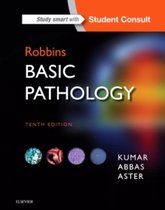
Robbins Basic Pathology
10th Edition
Author(s)Vinay Kumar; MBBS; MD;
FRCPath; Abul K. Abbas; MBBS and
Jon C. Aster; MD; PhD
Print ISBN: 9780323353175
,Question 1
A researcher studies a patient with a congenital disorder caused by a
pathogenic variant that alters the amino acid sequence of a structural
protein. Which level of cellular organization is directly altered by the
mutation?
A. Genome
B. Golgi apparatus
C. Extracellular matrix
D. Plasma membrane
,Correct Answer: A. Genome
Rationale: The genome contains the hereditary information encoded in
DNA, and a pathogenic DNA sequence variant can alter the resulting
protein. The Golgi apparatus modifies and sorts proteins, the
extracellular matrix provides structural support outside cells, and the
plasma membrane regulates cellular interactions and transport. The
primary defect in this scenario is therefore at the genomic level.
Question 2
A cell is preparing to divide and duplicates its nuclear DNA before
mitosis. Which process is occurring?
A. DNA replication
B. Protein degradation
C. RNA splicing
D. Glycolysis
Correct Answer: A. DNA replication
Rationale: DNA replication produces a duplicate copy of the cell's
genetic material so that daughter cells can receive equivalent genomes.
Protein degradation involves disposal of proteins, RNA splicing modifies
primary RNA transcripts, and glycolysis breaks down glucose for energy.
DNA duplication specifically represents genome replication.
Question 3
A mutation prevents a transcription factor from binding appropriately to
a promoter region. Which cellular process is most directly impaired?
A. Initiation of gene transcription
B. Mitochondrial ATP synthesis
, C. Protein folding in the endoplasmic reticulum
D. Lysosomal digestion
Correct Answer: A. Initiation of gene transcription
Rationale: Transcription factors regulate gene expression by interacting
with regulatory DNA sequences and influencing transcription. Impaired
promoter binding can reduce or prevent transcription of the associated
gene. ATP synthesis, protein folding, and lysosomal digestion occur
through different cellular mechanisms and are not the process directly
affected by promoter recognition.
Question 4
A hepatocyte synthesizes a secreted plasma protein that must undergo
folding and initial processing before transport to the Golgi apparatus.
Which organelle is primarily responsible for this early stage of protein
production?
A. Smooth endoplasmic reticulum
B. Rough endoplasmic reticulum
C. Lysosome
D. Peroxisome
Correct Answer: B. Rough endoplasmic reticulum
Rationale: Ribosomes attached to rough endoplasmic reticulum
synthesize proteins destined for secretion or for insertion into cellular
membranes. The rough endoplasmic reticulum also provides an
environment for protein folding and initial processing. Smooth
endoplasmic reticulum is more closely associated with lipid synthesis
and detoxification, whereas lysosomes digest cellular material and
peroxisomes participate in oxidative reactions.