
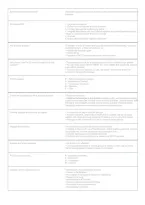
Define: Evidence-based practice Systematic approach to rational decision making that facilitates achievement of best
practices
Six steps to EBP 1. Ask a clinical question
2. Collect the most relevant and best evidence
3. Critically appraise the evidence you gather
4. Integrate all evidence with one's clinical expertise and patient preferences and
values in making a practice decision or change
5. Evaluate
6. Share outcomes of EBP changes with others
Ask a clinical question • A problem or area of interest that could be performed more efficiently, consumes
healthcare dollars, or does not make sense
• A knowledge focused trigger
• Clinical trends
• Utilization of PICOT format to state your clinical question
Why should I use PICOT format to state my clinical • The questions you ask will eventually lead you to the evidence for an answer
question? • You want to be able to read the BEST four-to-six articles that specifically address
your practice question
• The more focused a question you ask, the easier it becomes to search for
evidence in the scientific literature
PICOT question P = Patient population of interest
I = Intervention of interest
C = Comparison of interest
O = Outcome
T = Time
Collect the best evidence- what kind and includes • Search for evidence!
• Evidence includes but is not limited to: agency policy and procedure manuals,
quality improvement data, existing clinical practice guidelines, agency experts, staff
educators, risk managers, infection control nurses, and peer reviewed articles
(specifically within the most recent 5 years from the present date)
Critically appraise the evidence you gather • The most difficult step in the EBP process
• Involves evaluation, determining if information is valuable and can be easily
applied, and if there is enough evidence for making a nursing practice change
• Thorough review of elements included in evidence-based articles
Integrate the evidence • How will you incorporate the evidence into practice?
• Integrate evidence with use of teaching tools, clinical practice guidelines, policies
and procedures, and new assessment documentation tools
• Consider staff support and available resources
• Conduct a pilot study and attempt to answer your PICOT question
Evaluate and share outcomes • Did it work? Is it effective?
• Communicate the results to various groups of nurses or other care providers
(facility nursing practice council or research committee)
PICO four-step process P - population of interest
I - intervention
C - comparison
O - outcome
Utilization of the research process • Identification of a researchable problem
• Review of the literature
• Formulation of the research question or hypothesis
• Design of the study
• Implementation of the study
• Drawing conclusions based on findings
• Discussion of clinical implications
• Dissemination of findings
, Identification of a researchable problem • Sources:
* clinical situations
* the literature
* theories
• Repeat the study or design a similar one
• Test theoretical models
Review of the literature • Comprehensive and covers all relevant research
• Essential to locate similar or related studies that have already been completed and
on which a new study can build
• Answer the question "what have other researchers and theorists written about this
problem?"
Two major categories in designing study experimental (require quantitative methodology)
nonexperimental (can be quantitative or qualitative methodology)
Implementation of the study involves two main task: Data collection (collected by those familiar with the study)
Data analysis (arrange information into meaningful patterns
Drawing conclusions based on findings, Answer the "What do these findings mean?"
question:
Discussion of clinical implications • Suggest actions that can be taken as a result of the research findings in the future
• Other questions to answer: Will the procedure be effective with patients who have
a different diagnosis? • Will age make a difference? What else do we need to know
to improve the care of patients?
• Also known as the rigor (potential threats to the validity and reliability of the study)
Dissemination of findings two major vehicles: • Articles published in professional journals
• Presentations given at conferences
Nursing student role in research Learning about research: doing honors projects or assisting in labs
BSN role in research Identifies problems that can be studied; may do data collection for research studies
MSN role in research Replicates earlier research; beginning independent research
Doctorate role in research Generate and test theory; establish independent research career
Academician role in research Independent research with external funding (e.g., NIH, foundation grants)
After formulation of the research question or hypothesis, C. Design the study protocol
the next step in the research process is to: After formulation of the research question or hypothesis, the next step in the
A. Select the population research process is to design the study. The study design will influence the data
B. Review the literature collection process. Selecting the population is a component of this phase of the
C. Design the study protocol research process. Obtaining necessary approvals is part of conducting the study,
D. Discussion and/or clinical implications which follows the design phase in the research process. Identification of the
instrument to use for data analysis occurs during the process of designing the study
protocol. This step would occur during the study design phase of the research
process after the problem identification and literature review has taken place.
practices
Six steps to EBP 1. Ask a clinical question
2. Collect the most relevant and best evidence
3. Critically appraise the evidence you gather
4. Integrate all evidence with one's clinical expertise and patient preferences and
values in making a practice decision or change
5. Evaluate
6. Share outcomes of EBP changes with others
Ask a clinical question • A problem or area of interest that could be performed more efficiently, consumes
healthcare dollars, or does not make sense
• A knowledge focused trigger
• Clinical trends
• Utilization of PICOT format to state your clinical question
Why should I use PICOT format to state my clinical • The questions you ask will eventually lead you to the evidence for an answer
question? • You want to be able to read the BEST four-to-six articles that specifically address
your practice question
• The more focused a question you ask, the easier it becomes to search for
evidence in the scientific literature
PICOT question P = Patient population of interest
I = Intervention of interest
C = Comparison of interest
O = Outcome
T = Time
Collect the best evidence- what kind and includes • Search for evidence!
• Evidence includes but is not limited to: agency policy and procedure manuals,
quality improvement data, existing clinical practice guidelines, agency experts, staff
educators, risk managers, infection control nurses, and peer reviewed articles
(specifically within the most recent 5 years from the present date)
Critically appraise the evidence you gather • The most difficult step in the EBP process
• Involves evaluation, determining if information is valuable and can be easily
applied, and if there is enough evidence for making a nursing practice change
• Thorough review of elements included in evidence-based articles
Integrate the evidence • How will you incorporate the evidence into practice?
• Integrate evidence with use of teaching tools, clinical practice guidelines, policies
and procedures, and new assessment documentation tools
• Consider staff support and available resources
• Conduct a pilot study and attempt to answer your PICOT question
Evaluate and share outcomes • Did it work? Is it effective?
• Communicate the results to various groups of nurses or other care providers
(facility nursing practice council or research committee)
PICO four-step process P - population of interest
I - intervention
C - comparison
O - outcome
Utilization of the research process • Identification of a researchable problem
• Review of the literature
• Formulation of the research question or hypothesis
• Design of the study
• Implementation of the study
• Drawing conclusions based on findings
• Discussion of clinical implications
• Dissemination of findings
, Identification of a researchable problem • Sources:
* clinical situations
* the literature
* theories
• Repeat the study or design a similar one
• Test theoretical models
Review of the literature • Comprehensive and covers all relevant research
• Essential to locate similar or related studies that have already been completed and
on which a new study can build
• Answer the question "what have other researchers and theorists written about this
problem?"
Two major categories in designing study experimental (require quantitative methodology)
nonexperimental (can be quantitative or qualitative methodology)
Implementation of the study involves two main task: Data collection (collected by those familiar with the study)
Data analysis (arrange information into meaningful patterns
Drawing conclusions based on findings, Answer the "What do these findings mean?"
question:
Discussion of clinical implications • Suggest actions that can be taken as a result of the research findings in the future
• Other questions to answer: Will the procedure be effective with patients who have
a different diagnosis? • Will age make a difference? What else do we need to know
to improve the care of patients?
• Also known as the rigor (potential threats to the validity and reliability of the study)
Dissemination of findings two major vehicles: • Articles published in professional journals
• Presentations given at conferences
Nursing student role in research Learning about research: doing honors projects or assisting in labs
BSN role in research Identifies problems that can be studied; may do data collection for research studies
MSN role in research Replicates earlier research; beginning independent research
Doctorate role in research Generate and test theory; establish independent research career
Academician role in research Independent research with external funding (e.g., NIH, foundation grants)
After formulation of the research question or hypothesis, C. Design the study protocol
the next step in the research process is to: After formulation of the research question or hypothesis, the next step in the
A. Select the population research process is to design the study. The study design will influence the data
B. Review the literature collection process. Selecting the population is a component of this phase of the
C. Design the study protocol research process. Obtaining necessary approvals is part of conducting the study,
D. Discussion and/or clinical implications which follows the design phase in the research process. Identification of the
instrument to use for data analysis occurs during the process of designing the study
protocol. This step would occur during the study design phase of the research
process after the problem identification and literature review has taken place.

