
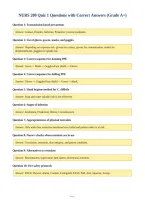
NURS 200 Quiz 1 Questions with Correct Answers (Grade A+)
Question 1: Transmission-based precautions
Answer: Contact, Droplet, Airborne, Protective (reverse) isolation.
Question 2: Use of gloves, gowns, masks, and goggles
Answer: Depending on exposure risk: gloves for contact, gowns for contamination, masks for
droplet/airborne, goggles for splash risk.
Question 3: Correct sequence for donning PPE
Answer: Gown -> Mask -> Goggles/Face shield -> Gloves.
Question 4: Correct sequence for doffing PPE
Answer: Gloves -> Goggles/Face shield -> Gown -> Mask.
Question 5: Hand hygiene method for C. difficile
Answer: Soap and water (alcohol rub is not effective).
Question 6: Stages of infection
Answer: Incubation, Prodromal, Illness, Convalescence.
Question 7: Appropriateness of physical restraints
Answer: Only when less restrictive measures have failed and patient safety is at risk.
Question 8: Nurse's checks when restraints are in use
Answer: Circulation, sensation, skin integrity, and patient condition.
Question 9: Alternatives to restraints
Answer: Reorientation, supervision, bed alarms, diversional activities.
Question 10: Fire safety protocols
Answer: RACE: Rescue, Alarm, Contain, Extinguish; PASS: Pull, Aim, Squeeze, Sweep.
Page 1
,Question 11: Purpose of the Code of Ethics for Nurses
Answer: Guides practice with principles of safety, dignity, respect, advocacy, and professional integrity.
Question 12: Autonomy in ethics
Answer: Right of patients to make their own decisions.
Question 13: Nurse's role in informed consent
Answer: Verify patient understanding, ensure voluntary consent, witness signature if required.
Question 14: Examples of therapeutic communication
Answer: Active listening, empathy, validation, clarification.
Question 15: Five steps of the nursing process
Answer: Assessment, Diagnosis, Planning, Implementation, Evaluation (ADPIE).
Question 16: Levels of prevention
Answer: Primary (immunizations), Secondary (screenings), Tertiary (rehab).
Question 17: Ways to maintain nursing competency
Answer: Continuing education, certifications, professional development.
Question 18: Strategies for conflict resolution among nurses
Answer: Open communication, respect, collaboration, addressing issues directly.
Question 19: Roles of interdisciplinary care team members
Answer: OT: ADL skills; PT: mobility; Social worker: resources/support.
Question 20: Positive professional behaviors
Answer: Accountability, respect, perseverance, leadership, growth mindset.
Question 21: Most effective infection control measure
Answer: Hand hygiene.
Page 2
, Question 22: PPE required for droplet precautions
Answer: Mask (surgical), gloves, gown if necessary.
Question 23: What breaks sterile field
Answer: Touching non-sterile items, turning back, items below waist, prolonged exposure.
Question 24: Risk factors for HAIs
Answer: Invasive devices, poor hand hygiene, immunocompromised patients.
Question 25: Principle in resource allocation
Answer: Justice - fairness in distribution of care/resources.
Question 26: Precautions needed for VRE
Answer: Contact precautions: gown & gloves.
Question 27: Biohazard waste disposal
Answer: In red, labeled biohazard containers.
Question 28: Example of tertiary care
Answer: Rehabilitation, palliative care, hospice.
Question 29: What to do before giving medication
Answer: Verify patient ID with two identifiers (name, DOB).
Question 30: Purpose of protective isolation
Answer: Protecting immunocompromised patients (e.g., chemotherapy).
Question 31: Nurse's role when witnessing consent
Answer: Ensure correct patient, voluntary signature, and document process.
Question 32: Motivational commitment statements
Answer: Personal affirmations for responsibility, growth, perseverance.
Page 3
Question 1: Transmission-based precautions
Answer: Contact, Droplet, Airborne, Protective (reverse) isolation.
Question 2: Use of gloves, gowns, masks, and goggles
Answer: Depending on exposure risk: gloves for contact, gowns for contamination, masks for
droplet/airborne, goggles for splash risk.
Question 3: Correct sequence for donning PPE
Answer: Gown -> Mask -> Goggles/Face shield -> Gloves.
Question 4: Correct sequence for doffing PPE
Answer: Gloves -> Goggles/Face shield -> Gown -> Mask.
Question 5: Hand hygiene method for C. difficile
Answer: Soap and water (alcohol rub is not effective).
Question 6: Stages of infection
Answer: Incubation, Prodromal, Illness, Convalescence.
Question 7: Appropriateness of physical restraints
Answer: Only when less restrictive measures have failed and patient safety is at risk.
Question 8: Nurse's checks when restraints are in use
Answer: Circulation, sensation, skin integrity, and patient condition.
Question 9: Alternatives to restraints
Answer: Reorientation, supervision, bed alarms, diversional activities.
Question 10: Fire safety protocols
Answer: RACE: Rescue, Alarm, Contain, Extinguish; PASS: Pull, Aim, Squeeze, Sweep.
Page 1
,Question 11: Purpose of the Code of Ethics for Nurses
Answer: Guides practice with principles of safety, dignity, respect, advocacy, and professional integrity.
Question 12: Autonomy in ethics
Answer: Right of patients to make their own decisions.
Question 13: Nurse's role in informed consent
Answer: Verify patient understanding, ensure voluntary consent, witness signature if required.
Question 14: Examples of therapeutic communication
Answer: Active listening, empathy, validation, clarification.
Question 15: Five steps of the nursing process
Answer: Assessment, Diagnosis, Planning, Implementation, Evaluation (ADPIE).
Question 16: Levels of prevention
Answer: Primary (immunizations), Secondary (screenings), Tertiary (rehab).
Question 17: Ways to maintain nursing competency
Answer: Continuing education, certifications, professional development.
Question 18: Strategies for conflict resolution among nurses
Answer: Open communication, respect, collaboration, addressing issues directly.
Question 19: Roles of interdisciplinary care team members
Answer: OT: ADL skills; PT: mobility; Social worker: resources/support.
Question 20: Positive professional behaviors
Answer: Accountability, respect, perseverance, leadership, growth mindset.
Question 21: Most effective infection control measure
Answer: Hand hygiene.
Page 2
, Question 22: PPE required for droplet precautions
Answer: Mask (surgical), gloves, gown if necessary.
Question 23: What breaks sterile field
Answer: Touching non-sterile items, turning back, items below waist, prolonged exposure.
Question 24: Risk factors for HAIs
Answer: Invasive devices, poor hand hygiene, immunocompromised patients.
Question 25: Principle in resource allocation
Answer: Justice - fairness in distribution of care/resources.
Question 26: Precautions needed for VRE
Answer: Contact precautions: gown & gloves.
Question 27: Biohazard waste disposal
Answer: In red, labeled biohazard containers.
Question 28: Example of tertiary care
Answer: Rehabilitation, palliative care, hospice.
Question 29: What to do before giving medication
Answer: Verify patient ID with two identifiers (name, DOB).
Question 30: Purpose of protective isolation
Answer: Protecting immunocompromised patients (e.g., chemotherapy).
Question 31: Nurse's role when witnessing consent
Answer: Ensure correct patient, voluntary signature, and document process.
Question 32: Motivational commitment statements
Answer: Personal affirmations for responsibility, growth, perseverance.
Page 3

