
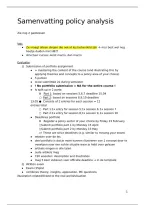
Samenvatting policy analysis
Zie nog 2 gastlessen
Vak:
● Ze vraagt alleen dingen die ook id les behandeld zijn mss best wel nog
beetje duiden met HB??
● structuur cursus: eerst macro, dan macro
Evaluatie
1) Submission of portfolio assignment
● = mastering the content of the course (and illustrating this by
applying theories and concepts to a policy area of your choice)
● 5 punten
● to be submitted 2x during semester
● ! No portfolio submission = NA for the entire course !
● Is split up in 2 parts:
0 Part 1: based on sessions 5,6,7 deadline 15.04
○ Part 2: based on sessions 8,9,10 deadline
13.05 ● Consists of 2 entries for each session = 12
entries total
○ Part 1:1x entry for session 5;1x session 6; 1x session 7
○ Part 2:1x entry for session 8;1x session 9, 1x session 10
● Deadlines portfolio
0 Register a policy sector of your choice by Friday 23 February
○Submit portfolio part 1 by Monday 15 April
○Submit portfolio part 2 by Monday 13 May
○! These are strict deadlines (e.g. similar to missing your exam)
● teksten over de les
● doel portfolio is dat je moet kunnen illustreren van 1 concept door te
verwijzen naar een echte situatie waar je hebt over gelezen
● artikels mogen in alle talen
● oude artikels mag
● 150 woorden: description and illustration
● mag 5 keer indienen voor officiële deadline → in de template
2) Written exam
● Exam (15pts)
● combines theory, insights, application, MC questions
illustration related/linked to the real world/situation
1
,Inhoud
Session 1: intro to policy analysis, actors, cycle model..........................................4
Definitions op policy............................................................................................ 5
Actors & institutions............................................................................................ 6
The policy cycle model........................................................................................ 7
Stages of the policy cycle................................................................................. 7
Session 2: theoretical approaches to public policy analysis...................................8
Theories as lenses............................................................................................... 8
Public choice (1).................................................................................................. 9
What?............................................................................................................... 9
Problems.......................................................................................................... 9
Welfare economics (2)....................................................................................... 10
Market failures – need for government action................................................10
Avoid government failure............................................................................... 10
Cost-benefit analysis & Pareto optimum........................................................11
Social structure and class theory (3).................................................................12
What?............................................................................................................. 12
Problems?....................................................................................................... 12
Pluralism and Neo-corporatism (4)....................................................................13
Neo-institutionalism (5)..................................................................................... 13
Statism (6)......................................................................................................... 14
Session 3: Policy context, actors and institutions.................................................15
Actors & Institutions in the policy process.........................................................16
Governmental and administrative power distribution in political systems........16
Politieke uitvoerende macht, government.........................................................17
Wetgevende macht, parliament........................................................................17
Administrative officials, the bureacracy............................................................18
Political parties.................................................................................................. 18
Research institutes/ policy experts....................................................................19
Societal interest groups/ pressure groups.........................................................19
‘Business’....................................................................................................... 20
‘Labour’.......................................................................................................... 20
Organisation of society...................................................................................... 20
Organisation of the international system..........................................................21
Globalisation as a policy factor..........................................................................21
Actors & roles in the policy process...................................................................22
Session 4: Policy instruments & nudging (GL?).....................................................23
2
, Intro................................................................................................................... 23
Policy instruments: definition.........................................................................23
Studying policy instruments...........................................................................23
Traditional policy instruments........................................................................... 24
Types of policy instruments............................................................................25
Policy instrument choice: criteria...................................................................28
Behavioural insights & nudging!!......................................................................30
Bridging the gaps........................................................................................... 30
1; The human psyche..................................................................................... 31
2; The nudge narrative................................................................................... 32
3; The behavioral turn niet gezien in les.......................................................34
Session 5: Agenda-setting.................................................................................... 36
Intro:.................................................................................................................. 36
What is agenda-setting.................................................................................. 36
Two theoretical lenses.................................................................................... 37
Agenda-setting and the origin of policy problems..........................................38
Problem definition............................................................................................. 39
Narratives & problem definition & competition..............................................39
The narrative structure of problem definition.................................................39
Media and problem definition.........................................................................41
From problem definition to agenda setting........................................................42
From problems to solutions............................................................................ 42
From problems/ solutions to agenda setting..................................................42
Agenda-setting theories.................................................................................... 42
Kingdon’s agenda-setting theory...................................................................43
Actors & institutions in the subsystem...........................................................46
Session 6: policy formulation................................................................................ 46
Characteristics (Jones, 1984).........................................................................47
Actors in policy formulation............................................................................48
Link with policy analysis/ policy advice.............................................................50
Policy (analytical) capacity............................................................................. 51
PAC investigated in Belgium...........................................................................52
Session 7: Decision-making.................................................................................. 53
Decision-making stage...................................................................................... 53
Who decides?................................................................................................. 53
Evidence and decision-making..........................................................................54
Types of decisions............................................................................................. 55
3
, Decision-making models................................................................................ 55
Session 8: Implementation................................................................................... 59
Implementation................................................................................................. 59
Two contrasting perspectives............................................................................ 60
Top-down perspective.................................................................................... 60
Bottom-up perspective................................................................................... 62
Implementation in theory and practice..........................................................64
Synthesizing approaches................................................................................ 64
Session 9&10: Evaluation & Feedback and Learning............................................65
What is evaluation?........................................................................................... 65
Broad VS narrow definition............................................................................. 66
Forms of evaluation (belangrijk vr examen en portfolio!!!)............................66
Rational or administrative evaluation: forms and techniques (don’t study in
detail)................................................................................................................ 67
Evaluation techniques.................................................................................... 67
AFTER evaluation: Feedback and learning.........................................................68
Policy cycle: the post-evaluation stage..........................................................68
Ideal types of policy change.............................................................................. 68
Policy change on a continuum........................................................................69
Policy termination.......................................................................................... 70
Learning and policy: definitions......................................................................72
Social learning (Hall): First, second, and third order change..........................73
Session 1: intro to policy analysis, actors,
cycle model
Governments make Public policy ≠ politics; polity
Beïnvloeden elkaar wel
Public: policies made by government
Studying public policy (zaken die aan bod komen)
- Why are certain decisions taken at certain times and not others?
- How do policy decisions add up into policy regimes or mixes? Are those
decisions in contrast incompatible or contradictory?
- Do decisions result in recognizable patterns, or can we merely discern
(quasi)random accumulations of multiple decisions in the past?
- What actors are involved in public policies, what do these policy actors do, why
and what difference do they make?
bv ministers met eigen portefeuille, ambtenaren, experten,
internationale org, maatsch middenveld, think tank, academici
2 manieren:
4

