
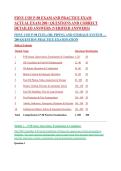
FDNY COF P-98 EXAM AND PRACTICE EXAM
ACTUAL EXAM 200+ QUESTIONS AND CORRECT
DETAILED ANSWERS (VERIFIED ANSWERS)
FDNY COF P-98 FUEL-OIL PIPING AND STORAGE SYSTEM —
200-QUESTION PRACTICE EXAMINATION
Table of Contents
Module Topic Questions Distribution
1 P-98 Scope, Supervision, Examination & Compliance 1–20 20
2 Oil Circulation & Fuel-Oil Fundamentals 21–40 20
3 Oil Burner Operation & Combustion 41–60 20
4 Burner Controls & Improper Operation 61–80 20
5 Fuel-Oil Piping, Tanks, Inspection & Storage 81–100 20
6 Pumps, Venting, Pressure & Automatic Valves 101–120 20
7 Fuel-Oil Handling, Flow & Loop Systems 121–140 20
8 Fire Protection & Fire Extinguishers 141–160 20
9 Alarms, Indicators, Emergency Response & Records 161–180 20
10 Lithium-Ion Battery Safety & Integrated Scenarios 181–200 20
Total Comprehensive P-98 Practice Examination 1–200 200
Module 1 — P-98 Scope, Supervision, Examination & Compliance
The FDNY identifies P-98 as the Certificate of Fitness for supervision of fuel-oil transfer in
buildings. The study material distinguishes general supervision from personal supervision and
specifies inspection, testing, examination, and documentation requirements.
Question 1
,A building has a stationary fuel-oil storage tank on its lowest floor that supplies fuel through
piping to a stationary tank on an upper floor. Which certificate is generally required to supervise
this transfer operation?
A. C-92
B. P-98
C. F-01
D. W-96
Correct Answer: B
Rationale: The P-98 Certificate of Fitness covers supervision of fuel-oil transfer from a tank on
the lowest floor to tanks or equipment located above that floor. C-92 addresses a different fuel-
oil supervision circumstance, while F-01 and W-96 concern other fire-safety functions.
Question 2
What type of supervision applies to a stationary fuel-oil storage tank and related piping
transferring fuel from the lowest floor to equipment above that floor?
A. No supervision
B. General supervision
C. Personal supervision at all times
D. Supervision only during emergencies
Correct Answer: B
Rationale: The P-98 holder provides general supervision of the stationary fuel-oil tank and
related piping. Periodic inspection and testing of the system are conducted under the holder's
personal supervision.
Question 3
Which activity requires personal supervision by the P-98 Certificate of Fitness holder?
A. Periodic inspection and testing of applicable tanks and piping
B. Every delivery made by a fuel supplier
C. All construction work in the building
D. Every electrical repair in the premises
Correct Answer: A
Rationale: FDNY specifically states that periodic inspection and testing of the applicable fuel-
oil tanks and piping must be conducted under personal supervision of the P-98 holder. The other
activities are not identified as P-98 personal-supervision duties in the study material.
Question 4
,The P-98 Certificate of Fitness is described by FDNY as:
A. Citywide and transferable between holders
B. Premise-related
C. Valid only for one type of fuel
D. Valid only during emergency conditions
Correct Answer: B
Rationale: The P-98 Certificate of Fitness is premise-related, meaning its authorization is tied to
the applicable premises. It is not described as a freely transferable citywide credential.
Question 5
How frequently must applicable fuel-oil storage tanks and piping systems be inspected for
evidence of leaks?
A. Daily only
B. Monthly
C. At least weekly
D. Annually
Correct Answer: C
Rationale: The study material requires applicable fuel-oil storage tanks and piping systems to be
inspected at least once each week for evidence of leaks. Monthly and annual inspections do not
satisfy this specific weekly requirement.
Question 6
How frequently must applicable stationary tank float switches be tested?
A. Once per shift
B. At least weekly
C. Every six months
D. Only after a repair
Correct Answer: B
Rationale: Float switches must be tested at least weekly to ensure they remain in good working
order. Testing only after a repair would not satisfy the recurring inspection requirement.
Question 7
Before oil-burning equipment may be operated, which combination of requirements is identified
by the P-98 study material?
, A. DOB certificate of compliance, DEP air-pollution requirements, and FDNY fuel-oil permit
B. Only a manufacturer's warranty
C. Only a P-98 card
D. Only an annual fire-extinguisher inspection
Correct Answer: A
Rationale: FDNY states that oil-burning equipment may not be operated until the required DOB
certificate of compliance has been issued, DEP air-pollution requirements have been met, and an
FDNY permit for storage and use of fuel-oil has been issued. A P-98 credential alone does not
replace these requirements.
Question 8
Which statement correctly distinguishes “shall” from “should” in the study material?
A. “Should” always means a criminal penalty applies
B. “Shall” generally refers to a Fire Code or FDNY requirement
C. Both terms have exactly the same legal meaning
D. “Shall” refers only to optional best practices
Correct Answer: B
Rationale: The booklet explains that “shall” generally refers to a requirement of the Fire Code or
FDNY, while “should” generally describes policies, procedures, or recommended best practices.
This distinction is important when interpreting the study material.
Question 9
According to the current study material, how many questions are on the P-98 examination?
A. 25
B. 30
C. 35
D. 50
Correct Answer: C
Rationale: FDNY states that the P-98 examination consists of 35 multiple-choice questions. This
200-question document is therefore a supplemental practice bank rather than a representation of
the actual exam length.
Question 10
What minimum score is required to pass the P-98 examination?
A. 60%
B. 65%
ACTUAL EXAM 200+ QUESTIONS AND CORRECT
DETAILED ANSWERS (VERIFIED ANSWERS)
FDNY COF P-98 FUEL-OIL PIPING AND STORAGE SYSTEM —
200-QUESTION PRACTICE EXAMINATION
Table of Contents
Module Topic Questions Distribution
1 P-98 Scope, Supervision, Examination & Compliance 1–20 20
2 Oil Circulation & Fuel-Oil Fundamentals 21–40 20
3 Oil Burner Operation & Combustion 41–60 20
4 Burner Controls & Improper Operation 61–80 20
5 Fuel-Oil Piping, Tanks, Inspection & Storage 81–100 20
6 Pumps, Venting, Pressure & Automatic Valves 101–120 20
7 Fuel-Oil Handling, Flow & Loop Systems 121–140 20
8 Fire Protection & Fire Extinguishers 141–160 20
9 Alarms, Indicators, Emergency Response & Records 161–180 20
10 Lithium-Ion Battery Safety & Integrated Scenarios 181–200 20
Total Comprehensive P-98 Practice Examination 1–200 200
Module 1 — P-98 Scope, Supervision, Examination & Compliance
The FDNY identifies P-98 as the Certificate of Fitness for supervision of fuel-oil transfer in
buildings. The study material distinguishes general supervision from personal supervision and
specifies inspection, testing, examination, and documentation requirements.
Question 1
,A building has a stationary fuel-oil storage tank on its lowest floor that supplies fuel through
piping to a stationary tank on an upper floor. Which certificate is generally required to supervise
this transfer operation?
A. C-92
B. P-98
C. F-01
D. W-96
Correct Answer: B
Rationale: The P-98 Certificate of Fitness covers supervision of fuel-oil transfer from a tank on
the lowest floor to tanks or equipment located above that floor. C-92 addresses a different fuel-
oil supervision circumstance, while F-01 and W-96 concern other fire-safety functions.
Question 2
What type of supervision applies to a stationary fuel-oil storage tank and related piping
transferring fuel from the lowest floor to equipment above that floor?
A. No supervision
B. General supervision
C. Personal supervision at all times
D. Supervision only during emergencies
Correct Answer: B
Rationale: The P-98 holder provides general supervision of the stationary fuel-oil tank and
related piping. Periodic inspection and testing of the system are conducted under the holder's
personal supervision.
Question 3
Which activity requires personal supervision by the P-98 Certificate of Fitness holder?
A. Periodic inspection and testing of applicable tanks and piping
B. Every delivery made by a fuel supplier
C. All construction work in the building
D. Every electrical repair in the premises
Correct Answer: A
Rationale: FDNY specifically states that periodic inspection and testing of the applicable fuel-
oil tanks and piping must be conducted under personal supervision of the P-98 holder. The other
activities are not identified as P-98 personal-supervision duties in the study material.
Question 4
,The P-98 Certificate of Fitness is described by FDNY as:
A. Citywide and transferable between holders
B. Premise-related
C. Valid only for one type of fuel
D. Valid only during emergency conditions
Correct Answer: B
Rationale: The P-98 Certificate of Fitness is premise-related, meaning its authorization is tied to
the applicable premises. It is not described as a freely transferable citywide credential.
Question 5
How frequently must applicable fuel-oil storage tanks and piping systems be inspected for
evidence of leaks?
A. Daily only
B. Monthly
C. At least weekly
D. Annually
Correct Answer: C
Rationale: The study material requires applicable fuel-oil storage tanks and piping systems to be
inspected at least once each week for evidence of leaks. Monthly and annual inspections do not
satisfy this specific weekly requirement.
Question 6
How frequently must applicable stationary tank float switches be tested?
A. Once per shift
B. At least weekly
C. Every six months
D. Only after a repair
Correct Answer: B
Rationale: Float switches must be tested at least weekly to ensure they remain in good working
order. Testing only after a repair would not satisfy the recurring inspection requirement.
Question 7
Before oil-burning equipment may be operated, which combination of requirements is identified
by the P-98 study material?
, A. DOB certificate of compliance, DEP air-pollution requirements, and FDNY fuel-oil permit
B. Only a manufacturer's warranty
C. Only a P-98 card
D. Only an annual fire-extinguisher inspection
Correct Answer: A
Rationale: FDNY states that oil-burning equipment may not be operated until the required DOB
certificate of compliance has been issued, DEP air-pollution requirements have been met, and an
FDNY permit for storage and use of fuel-oil has been issued. A P-98 credential alone does not
replace these requirements.
Question 8
Which statement correctly distinguishes “shall” from “should” in the study material?
A. “Should” always means a criminal penalty applies
B. “Shall” generally refers to a Fire Code or FDNY requirement
C. Both terms have exactly the same legal meaning
D. “Shall” refers only to optional best practices
Correct Answer: B
Rationale: The booklet explains that “shall” generally refers to a requirement of the Fire Code or
FDNY, while “should” generally describes policies, procedures, or recommended best practices.
This distinction is important when interpreting the study material.
Question 9
According to the current study material, how many questions are on the P-98 examination?
A. 25
B. 30
C. 35
D. 50
Correct Answer: C
Rationale: FDNY states that the P-98 examination consists of 35 multiple-choice questions. This
200-question document is therefore a supplemental practice bank rather than a representation of
the actual exam length.
Question 10
What minimum score is required to pass the P-98 examination?
A. 60%
B. 65%

