
Mapping of Functions
As we know that
Graph:
Note:
Let A & B are two non empty set having m & n elements respectively and each elements of set A associate with B by
Then total number of function
, [A]. One-one mapping (Injective):
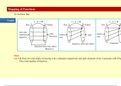
A function is said to be one-one mapping or injective if different elements of A having different image in B. Thu
elements of set A can have same image.
if condition for one-one function
If But a and b not equal then it is said to be many one function.
Graph:
How to decide whether mapping is one-one or many one:
(a) Theoretically/Analytically: take two arbitrary elements in the domain of (in set )
Operate: condition for one one function.
(b) Graphically: draw graph of function in domain, condition & draw horizontal line. If horizontal line cuts the
most one point then function is one-one else many one.
, (c) By calculus method: find if or then is one-one
may also occurred but it should not for interval. If its is for finite point then function is one-one.
Graph:
As we know that
Graph:
Note:
Let A & B are two non empty set having m & n elements respectively and each elements of set A associate with B by
Then total number of function
, [A]. One-one mapping (Injective):
A function is said to be one-one mapping or injective if different elements of A having different image in B. Thu
elements of set A can have same image.
if condition for one-one function
If But a and b not equal then it is said to be many one function.
Graph:
How to decide whether mapping is one-one or many one:
(a) Theoretically/Analytically: take two arbitrary elements in the domain of (in set )
Operate: condition for one one function.
(b) Graphically: draw graph of function in domain, condition & draw horizontal line. If horizontal line cuts the
most one point then function is one-one else many one.
, (c) By calculus method: find if or then is one-one
may also occurred but it should not for interval. If its is for finite point then function is one-one.
Graph:



