
Liane Marie Barretto Ong
AB Psychology 3P
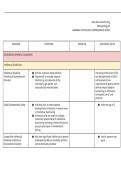
ABNORMAL PSYCHOLOGY COMPREHENSIVE NOTES
DISORDER SYMPTOMS SPECIFIER ADDITIONAL NOTES
NEURODEVELOPMENTAL DISORDERS
Intellectual Disabilities
Intellectual Disability ● Deficits in general mental abilities The taking of the IQ test (>70)
(Intellectual Developmental ● Impairment in everyday adaptive was deemphasized in DSM-5
Disorder) functioning in comparison to the and focused on how
individual’s age, gender, and impairments of general mental
socioculturally matched peers abilities impact adaptive
functioning in 3 domains:
conceptual, social, and
practical.
Global Developmental Delay ● individual fails to meet expected ● Under the age of 5
developmental milestones in several areas
of intellectual functioning
● Individuals who are unable to undergo
systematic assessments of intellectual
functioning, including children who are too
young to participate in standardized
testing
Unspecified Intellectual ● Who have significant intellectual or general ● Used in persons over
Disability (Intellectual developmental delay or disability and who age 5
Development Disorder) cannot be reliably assessed
,Communication Disorders
Language Disorder Language Disorder is a child’s delay in using ● Symptoms onset is in
spoken and written language which is the early developmental
characterized by small vocabulary, grammatically period
incorrect and trouble in comprehension.
_______________________________
● A persistent disturbance in the acquisition
and use of spoken language, written
language, or sign language that is due to
deficits in comprehension or production
○ Reduced vocabulary
○ Limited sentence structure
○ Impairments in discourse
● Language abilities are substantially and
quantifiably below those expected for age,
significantly interfering with socialization,
effective communication, academic
achievement, or occupational performance
Speech Sound Disorder ● Difficulties in speech production ● This disorder often
● causes limitations in effective coexists with language
communication that interfere with social disorder, intellectual
participation disability, and
● Difficulties are not attributable to neurological condition
congenital or acquired conditions such as landau-kleffner
● Child has persistent difficulty in saying syndrome
words or sounds correctly.
Childhood-Onset Fluency ● Stuttering
Disorder ● Disturbances in the normal fluency and
time patterning of speech that are
inappropriate for the individual’s age and
, language skills
Social (Pragmatic) ● Deficits in using communication for social
Communication Disorder purposes, such as greeting and sharing
information, in a manner that is
appropriate for the social context
● Impairment of the ability to change
communication to match context
● Difficulties following rules for conversation
and storytelling
● Difficulties understanding what is not
explicitly stated
Unspecified Communication
Disorder
Autism Spectrum Disorder
Autism Spectrum Disorder ● persistent deficits in reciprocal social ● With or without Major characteristics of
communication, in nonverbal accompanying autism spectrum disorder:
communicative behaviors used for social intellectual impairment social deficiency and the
interaction, and in developing, managing, ● With or without
3 R's:
and understanding relationships accompanying
○ Deficits in social-emotional language impairment 1. Rigid
reciprocity ● Associated with a 2. Restrictive
○ Deficits in nonverbal known medical or 3. Repetitive
communicative behaviors used for genetic condition or
social interactions environmental factor Rett’s Disorder
○ Deficits in developing, maintaining, ● Associated with ● More seen in females
and understanding relationships another ● More complex form of
● Restricted, repetitive patterns of behaviors, neurodevelopmental, autism spectrum
interests, or activities mental, or behavioral disorder
○ Stereotype or repetitive motor disorder Childhood disintegrative
movements, use of objects or ● With catatonia disorder (Heller’s Syndrome)
speech ● Symptoms of asd when
, ○ Insistence on sameness, inflexible child is older than 3
adherence to routines, or ritualized ● Late onset of ASD
patterns of verbal or nonverbal Asperger’s
behavior ● High functioning ASD
○ Highly restricted, fixated interests ● Don’t have severe
that are abnormal in intensity or symptoms but still
focus have other symptoms
○ Hyper-or hypo reactivity to sensory
or unusual interest in sensory
aspects of the environment
Attention-Deficit/Hyperactivity Disorder
Attention-Deficit/Hyperactivity ● 2 categories of the symptoms of ADHD,
Disorder inattention, hyperactivity and impulsivity
○ Inattention - may be manifested as
wandering off task, lacking
persistence, having difficulty
sustaining focus, and being
disorganized and is it due to
deficiency or lack of comprehension
○ Hyperactivity - excessive motor
activity when it is not appropriate,
or excessive fidgeting, tapping, or
talkativeness. In adults,
hyperactivity may manifest as
extreme restlessness or wearing
others out with their activity
○ Impulsivity - hasty actions that
occur in the moment without
forethought and that have high
potential for harm to the individual.
It may reflect a desire for immediate
rewards or an inability to delay
gratification
AB Psychology 3P
ABNORMAL PSYCHOLOGY COMPREHENSIVE NOTES
DISORDER SYMPTOMS SPECIFIER ADDITIONAL NOTES
NEURODEVELOPMENTAL DISORDERS
Intellectual Disabilities
Intellectual Disability ● Deficits in general mental abilities The taking of the IQ test (>70)
(Intellectual Developmental ● Impairment in everyday adaptive was deemphasized in DSM-5
Disorder) functioning in comparison to the and focused on how
individual’s age, gender, and impairments of general mental
socioculturally matched peers abilities impact adaptive
functioning in 3 domains:
conceptual, social, and
practical.
Global Developmental Delay ● individual fails to meet expected ● Under the age of 5
developmental milestones in several areas
of intellectual functioning
● Individuals who are unable to undergo
systematic assessments of intellectual
functioning, including children who are too
young to participate in standardized
testing
Unspecified Intellectual ● Who have significant intellectual or general ● Used in persons over
Disability (Intellectual developmental delay or disability and who age 5
Development Disorder) cannot be reliably assessed
,Communication Disorders
Language Disorder Language Disorder is a child’s delay in using ● Symptoms onset is in
spoken and written language which is the early developmental
characterized by small vocabulary, grammatically period
incorrect and trouble in comprehension.
_______________________________
● A persistent disturbance in the acquisition
and use of spoken language, written
language, or sign language that is due to
deficits in comprehension or production
○ Reduced vocabulary
○ Limited sentence structure
○ Impairments in discourse
● Language abilities are substantially and
quantifiably below those expected for age,
significantly interfering with socialization,
effective communication, academic
achievement, or occupational performance
Speech Sound Disorder ● Difficulties in speech production ● This disorder often
● causes limitations in effective coexists with language
communication that interfere with social disorder, intellectual
participation disability, and
● Difficulties are not attributable to neurological condition
congenital or acquired conditions such as landau-kleffner
● Child has persistent difficulty in saying syndrome
words or sounds correctly.
Childhood-Onset Fluency ● Stuttering
Disorder ● Disturbances in the normal fluency and
time patterning of speech that are
inappropriate for the individual’s age and
, language skills
Social (Pragmatic) ● Deficits in using communication for social
Communication Disorder purposes, such as greeting and sharing
information, in a manner that is
appropriate for the social context
● Impairment of the ability to change
communication to match context
● Difficulties following rules for conversation
and storytelling
● Difficulties understanding what is not
explicitly stated
Unspecified Communication
Disorder
Autism Spectrum Disorder
Autism Spectrum Disorder ● persistent deficits in reciprocal social ● With or without Major characteristics of
communication, in nonverbal accompanying autism spectrum disorder:
communicative behaviors used for social intellectual impairment social deficiency and the
interaction, and in developing, managing, ● With or without
3 R's:
and understanding relationships accompanying
○ Deficits in social-emotional language impairment 1. Rigid
reciprocity ● Associated with a 2. Restrictive
○ Deficits in nonverbal known medical or 3. Repetitive
communicative behaviors used for genetic condition or
social interactions environmental factor Rett’s Disorder
○ Deficits in developing, maintaining, ● Associated with ● More seen in females
and understanding relationships another ● More complex form of
● Restricted, repetitive patterns of behaviors, neurodevelopmental, autism spectrum
interests, or activities mental, or behavioral disorder
○ Stereotype or repetitive motor disorder Childhood disintegrative
movements, use of objects or ● With catatonia disorder (Heller’s Syndrome)
speech ● Symptoms of asd when
, ○ Insistence on sameness, inflexible child is older than 3
adherence to routines, or ritualized ● Late onset of ASD
patterns of verbal or nonverbal Asperger’s
behavior ● High functioning ASD
○ Highly restricted, fixated interests ● Don’t have severe
that are abnormal in intensity or symptoms but still
focus have other symptoms
○ Hyper-or hypo reactivity to sensory
or unusual interest in sensory
aspects of the environment
Attention-Deficit/Hyperactivity Disorder
Attention-Deficit/Hyperactivity ● 2 categories of the symptoms of ADHD,
Disorder inattention, hyperactivity and impulsivity
○ Inattention - may be manifested as
wandering off task, lacking
persistence, having difficulty
sustaining focus, and being
disorganized and is it due to
deficiency or lack of comprehension
○ Hyperactivity - excessive motor
activity when it is not appropriate,
or excessive fidgeting, tapping, or
talkativeness. In adults,
hyperactivity may manifest as
extreme restlessness or wearing
others out with their activity
○ Impulsivity - hasty actions that
occur in the moment without
forethought and that have high
potential for harm to the individual.
It may reflect a desire for immediate
rewards or an inability to delay
gratification


