
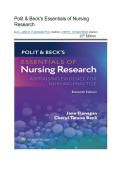
Polit & Beck's Essentials of Nursing
Research
by Dr. JANE M. FLANAGAN Ph.D. (Author), CHERYL TATANO BECK (Author)
11th Edition
,TABLE OF CONTENTS
Part 1 Overview of Nursing Research and Its Role in Evidence-Based Practice
Chapter 1: Introducing Nursing Research for Evidence-Based Practice
Chapter 2: Understanding Key Concepts and Steps in Quantitative and Qualitative Research
Chapter 3: Reading and Critical Appraising Research Articles
Chapter 4: Attending to Ethics in Research
Part 2 Preliminary Steps in Quantitative and Qualitative Research
Chapter 5: Identifying Research Problems, Research Questions, and Hypotheses
Chapter 6: Finding and Reviewing Research Evidence in the Literature
Chapter 7: Understanding Theoretical and Conceptual Frameworks
Part 3 Designs and Methods for Quantitative and Qualitative Nursing Research
Chapter 8: Appraising Quantitative Research Design
Chapter 9: Appraising Sampling and Data Collection in Quantitative Studies
Chapter 10: Appraising Qualitative Designs and Approaches
Chapter 11: Appraising Sampling and Data Collection in Qualitative Studies
Chapter 12: Understanding Mixed Methods Research, Quality Improvement, and Other Special Types of
Research
Part 4 Analysis, Interpretation, and Application of Nursing Research
Chapter 13: Understanding Statistical Analysis of Quantitative Data
Chapter 14: Interpreting Quantitative Findings and Evaluating Clinical Significance
Chapter 15: Understanding the Analysis of Qualitative Data
Chapter 16: Appraising Trustworthiness and Integrity in Qualitative Research
Chapter 17: Learning from Systematic Reviews
Chapter 18 Putting Research Evidence into Practice: Evidence-Based Practice and Practice-Based
Evidence
,Test Bank: Polit & Beck's Essentials of Nursing Research, 11th
Edition
Chapters 1–18
CHAPTER 1: Introduction to Nursing Research in an Evidence-
Based Practice Environment
Multiple Choice Questions
1. Which of the following best defines nursing research?
A) The application of common sense to clinical nursing problems
B) Systematic inquiry designed to develop trustworthy evidence about issues of importance to the
nursing profession
C) A process of reviewing published literature on nursing topics
D) Clinical expertise gained through years of nursing practice
Answer: B
Rationale: Nursing research is defined as systematic inquiry designed to develop trustworthy evidence
about issues important to nursing. It is not merely a literature review, clinical experience, or common
sense application.
2. Evidence-based practice (EBP) in nursing is best described as:
A) Practice based solely on randomized controlled trials
B) The use of the best available research evidence integrated with clinical expertise and patient
preferences
C) Following physician orders without questioning
D) Practicing nursing based on tradition and institutional policies
Answer: B
Rationale: EBP integrates best research evidence with clinical expertise, patient preferences, and values.
It does not rely solely on RCTs or tradition.
3. Which of the following is a characteristic of the positivist paradigm?
A) There are multiple interpretations of reality
B) The researcher is objective and independent from those being researched
, C) Findings are created through the interaction of the researcher and participants
D) Subjectivity is valued over objectivity
Answer: B
Rationale: Positivism assumes an objective reality that can be studied independently. Multiple realities,
subjective interaction, and valuing subjectivity are characteristics of the constructivist (naturalistic)
paradigm.
4. A nurse researcher who believes that reality is multiply constructed and subjective is operating
from which paradigm?
A) Positivist paradigm
B) Constructivist (naturalistic) paradigm
C) Pragmatist paradigm
D) Critical paradigm
Answer: B
Rationale: The constructivist/naturalistic paradigm holds that reality is not fixed but is constructed by
individuals and that there are multiple interpretations of reality.
5. Which historical event is credited with establishing the importance of research in nursing?
A) The publication of the American Journal of Nursing in 1900
B) Florence Nightingale's collection of data during the Crimean War
C) The establishment of the National Institute of Nursing Research (NINR) in 1993
D) The creation of the first doctoral program in nursing
Answer: B
Rationale: Florence Nightingale is considered the first nurse researcher. Her systematic data collection
during the Crimean War demonstrated the importance of research in improving patient outcomes.
6. The National Institute of Nursing Research (NINR) was established in:
A) 1952
B) 1970
C) 1986 (initially as NCNR), redesignated in 1993
D) 2000
Answer: C
Rationale: The National Center for Nursing Research (NCNR) was established in 1986 at the National
Institutes of Health and was redesignated as the National Institute of Nursing Research (NINR) in 1993.
7. The purpose of basic (or fundamental) research is to:
A) Solve an immediate clinical problem
B) Extend the knowledge base without focus on immediate application
Research
by Dr. JANE M. FLANAGAN Ph.D. (Author), CHERYL TATANO BECK (Author)
11th Edition
,TABLE OF CONTENTS
Part 1 Overview of Nursing Research and Its Role in Evidence-Based Practice
Chapter 1: Introducing Nursing Research for Evidence-Based Practice
Chapter 2: Understanding Key Concepts and Steps in Quantitative and Qualitative Research
Chapter 3: Reading and Critical Appraising Research Articles
Chapter 4: Attending to Ethics in Research
Part 2 Preliminary Steps in Quantitative and Qualitative Research
Chapter 5: Identifying Research Problems, Research Questions, and Hypotheses
Chapter 6: Finding and Reviewing Research Evidence in the Literature
Chapter 7: Understanding Theoretical and Conceptual Frameworks
Part 3 Designs and Methods for Quantitative and Qualitative Nursing Research
Chapter 8: Appraising Quantitative Research Design
Chapter 9: Appraising Sampling and Data Collection in Quantitative Studies
Chapter 10: Appraising Qualitative Designs and Approaches
Chapter 11: Appraising Sampling and Data Collection in Qualitative Studies
Chapter 12: Understanding Mixed Methods Research, Quality Improvement, and Other Special Types of
Research
Part 4 Analysis, Interpretation, and Application of Nursing Research
Chapter 13: Understanding Statistical Analysis of Quantitative Data
Chapter 14: Interpreting Quantitative Findings and Evaluating Clinical Significance
Chapter 15: Understanding the Analysis of Qualitative Data
Chapter 16: Appraising Trustworthiness and Integrity in Qualitative Research
Chapter 17: Learning from Systematic Reviews
Chapter 18 Putting Research Evidence into Practice: Evidence-Based Practice and Practice-Based
Evidence
,Test Bank: Polit & Beck's Essentials of Nursing Research, 11th
Edition
Chapters 1–18
CHAPTER 1: Introduction to Nursing Research in an Evidence-
Based Practice Environment
Multiple Choice Questions
1. Which of the following best defines nursing research?
A) The application of common sense to clinical nursing problems
B) Systematic inquiry designed to develop trustworthy evidence about issues of importance to the
nursing profession
C) A process of reviewing published literature on nursing topics
D) Clinical expertise gained through years of nursing practice
Answer: B
Rationale: Nursing research is defined as systematic inquiry designed to develop trustworthy evidence
about issues important to nursing. It is not merely a literature review, clinical experience, or common
sense application.
2. Evidence-based practice (EBP) in nursing is best described as:
A) Practice based solely on randomized controlled trials
B) The use of the best available research evidence integrated with clinical expertise and patient
preferences
C) Following physician orders without questioning
D) Practicing nursing based on tradition and institutional policies
Answer: B
Rationale: EBP integrates best research evidence with clinical expertise, patient preferences, and values.
It does not rely solely on RCTs or tradition.
3. Which of the following is a characteristic of the positivist paradigm?
A) There are multiple interpretations of reality
B) The researcher is objective and independent from those being researched
, C) Findings are created through the interaction of the researcher and participants
D) Subjectivity is valued over objectivity
Answer: B
Rationale: Positivism assumes an objective reality that can be studied independently. Multiple realities,
subjective interaction, and valuing subjectivity are characteristics of the constructivist (naturalistic)
paradigm.
4. A nurse researcher who believes that reality is multiply constructed and subjective is operating
from which paradigm?
A) Positivist paradigm
B) Constructivist (naturalistic) paradigm
C) Pragmatist paradigm
D) Critical paradigm
Answer: B
Rationale: The constructivist/naturalistic paradigm holds that reality is not fixed but is constructed by
individuals and that there are multiple interpretations of reality.
5. Which historical event is credited with establishing the importance of research in nursing?
A) The publication of the American Journal of Nursing in 1900
B) Florence Nightingale's collection of data during the Crimean War
C) The establishment of the National Institute of Nursing Research (NINR) in 1993
D) The creation of the first doctoral program in nursing
Answer: B
Rationale: Florence Nightingale is considered the first nurse researcher. Her systematic data collection
during the Crimean War demonstrated the importance of research in improving patient outcomes.
6. The National Institute of Nursing Research (NINR) was established in:
A) 1952
B) 1970
C) 1986 (initially as NCNR), redesignated in 1993
D) 2000
Answer: C
Rationale: The National Center for Nursing Research (NCNR) was established in 1986 at the National
Institutes of Health and was redesignated as the National Institute of Nursing Research (NINR) in 1993.
7. The purpose of basic (or fundamental) research is to:
A) Solve an immediate clinical problem
B) Extend the knowledge base without focus on immediate application

