OPTOM 261
http://subjectguides.uwaterloo.ca/optometry
http://www.epocrates.com/
http:///www.collegeoptom.on.ca/
http://www.optom.on.ca
Review
- Development of drugs
o Modifying an existing agent
o Synthesizing new molecular entities
o Solubility of the molecule, physiochemical properties, stability, sterility
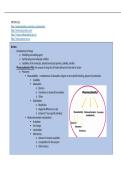
- Pharmacokinetics (PK): the amount of drug that is finally delivered to the site of action
o Processes
Bioavailability – completeness of absorption, degree of non-specific binding, degree of inactivation
Solubility
Absorption
o Barriers
o Variations in chemical formulation
o Other
Distribution
o Blood flow
o Regional differences in pH
o Extend of “non-specific binding”
Biotransformation (metabolism)
Activation
No change
Inactivation
Affected by
o Amount of enzyme available
o Competition for the enzyme
o Other factors
, Excretion
o For appropriate dosing, therapeutic margin (free dose available at the site of action)
o Drug dosing regimen
Frequency of administration
Amount of drug to administer
Concentration of drug
Duration of administration
- Pharmacodynamics (PD): the effect of the drug has on the body
o Mode of action -> effect
Drug receptor interaction
Signal transduction
o Factors affecting PD
Sensitivity of tissues
Efficacy of the drug
o Agonists (eg. Melanin): can be full or partial
Have both AFFINITY + EFFICACY
Potency -> EC50 or ED50
o Antagonists
AFFINITY but NO EFFICACY
o Dose-response curve (concentration-effect)
ED50: dose level producing a RESPONSE that is 50% of maximum (potency)
LD50: dose that produce a TOXIC or lethal effect in 50% of individuals
Therapeutic index = LD50/ ED50 (safety profile)
Steeper slope = smaller therapeutic margin
- Side effects
o Receptors widely distributed in the body
o Receptor involved in diverse function on many cell types
o Reduce by
Designing receptor subtype selective drugs
Administering drug locally
,Pharmacology specific to ocular therapies
- Blood-ocular barriers
o Blood-aqueous barrier (ciliary body)
o Blood-retinal barriers (limits drugs to POSTERIOR segment from circulation)
o * Can be reduced by trauma, infection, admin of certain drugs…
- Drug distribution
o Aqueous drug => primary movement of fluid => filtration angle =>
mostly to TM and leave via canal of Schlemm
o Or some through posterior fibres to TM (between CB and sclera)
o Most drugs penetrate scleral tissue BUT some drugs access to CB
o More tearing => increased systemic absorption, decreased ocular
adsorption
BAD! We want less systemic absorption
o We want to minimize
Conjunctival vessels
Overflow via tear
Lacrimal passage
Swallowing
o Corneal epithelium + melanin => most common reservoirs for non-
specific binding
More drug required to achieve the same effect
Bound drug is released more slowly = prolong effect
- Metabolism
o Prodrugs
o Inactivation
o Not much of a concern topically
Ciliary body -> major ocular source of drug metabolizing enzymes
Corneal epithelium -> many esterases
* Some drugs aren’t biotransformed in the eye, but are removed via ocular circulation and transported to the
liver
- Advances in ocular drug delivery
, o Precorneal tear film
Lipid, mucus, glycocalyx
o Direct route of penetration due to clarity + avascularity, 20% only to
conjunctiva/sclera to iris/CB
* Prostanoids, sulfonamides penetrate the sclera well
o Cornea
Cornea: FAT WATER FAT
Bowman and Descemet membranes => not significant barriers
Structures
Epithelium (FAT)
o MAIN barrier (90% to hydrophilic drugs, 10% to
hydrophobic drugs)
o Tight junctions – reduced barrier once disrupted
o Storage depot – mostly lipophilic drugs
o AChE + ChE => delivery of esterified prodrugs
Stroma (WATER)
o Mainly hydrated collagen
o Not a significant barrier
Exception: corneal edema
Endothelium (FAT)
o Tight junction – but not as important as epithelium
o Allow lipophilic drugs to be absorbed, so drug needs to be BIPOLAR
Dual solubility
Dissociated and undissociated forms
Different solubility of two forms allows the drug to penetrate the cornea – tendency for equilibrium
o Penetration of a weak base
o Pre-corneal solution drainage (contact time)
Single most important factor