[STUDY GUIDE] • HIGH-YIELD PRACTICE & REVIEW EDITION
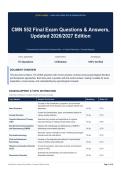
CMN 552 Final Exam Questions & Answers,
Updated 2026/2027 Edition
Comprehensive Examination Question Bank • In-Depth Rationales • Concept Mapping
TOTAL QUESTIONS EXAM TOPICS RATIONALES
173 Questions 12 Modules 100% Verified
DOCUMENT OVERVIEW
This document contains 173 verified questions with correct answers covering various psychological disorders
and therapeutic approaches. Each item pairs a question with the correct answer, making it suitable for exam
preparation, course review, and understanding key psychological concepts.
EXAM BLUEPRINT & TOPIC DISTRIBUTION
Systematic breakdown of subject domains and exam coverage.
Topic Module Scope & Core Focus Questions Share (%)
Focuses on the classification, symptoms, and risk factors
associated with mood disorders such as bipolar disorder and
Mood Disorders depression. 15 Qs 8.7%
Covers the characteristics, types, and treatment options for
Anxiety Disorders various anxiety disorders. 15 Qs 8.7%
Cognitive Behavioral Therapy Examines the principles and applications of cognitive
(CBT) behavioral therapy in treating mental health issues. 15 Qs 8.7%
Eye Movement Desensitization Explores the methodology and effectiveness of EMDR in
and Reprocessing (EMDR) addressing trauma-related disorders. 15 Qs 8.7%
Discusses various medications used in treating psychological
Psychopharmacology disorders and their side effects. 15 Qs 8.7%
Child and Adolescent Focuses on the diagnosis and treatment of psychological
Psychology issues in children and adolescents. 14 Qs 8.1%
Obsessive-Compulsive Disorder Covers the symptoms, brain areas involved, and treatment
(OCD) options for OCD. 14 Qs 8.1%
Examines the characteristics and clinical features of
Dissociative Disorders dissociative disorders. 14 Qs 8.1%
Confidential • Student Study Edition • Practice & Review Guide Page 1 of 35
,STUDENT STUDY & MASTERY EDITION PRACTICE & REVIEW GUIDE
Explores the definition, symptoms, and types of personality
Personality Disorders disorders. 14 Qs 8.1%
Focuses on the symptoms, diagnoses, and treatment
Psychotic Disorders considerations for psychotic disorders. 14 Qs 8.1%
Cultural Competence in Discusses the impact of cultural norms and identities on
Psychology psychological practice. 14 Qs 8.1%
Trauma and Stressor-Related Covers the effects of trauma and stressors on individuals and
Disorders their psychological responses. 14 Qs 8.1%
Total Exam Coverage 12 Integrated Topic Modules 173 Qs 100.0%
Confidential • Student Study Edition • Practice & Review Guide Page 2 of 35
,STUDENT STUDY & MASTERY EDITION PRACTICE & REVIEW GUIDE
TOPIC 1: MOOD DISORDERS
15 Questions • 8.7% of Exam • Focuses on the classification, symptoms, and risk factors associated with mood disorders such as
bipolar disorder and depression.
QUESTION 1
Risk Factors for development of bipolar disorder
Correct Answer: Childhood adversity, cannabis and other substance use, previously married, genetic
processes.
QUESTION 2
Differentiate depressive episodes in bipolar 1 disorder vs bipolar II disorder
Correct Answer: Past episodes of mania, bipolar 1 accompanied by manic episodes bipolar II no manic just
hypomanic.
QUESTION 3
Symptoms of depression in children
Correct Answer: 2 Week duration of depressed or irritable mood and/or loss of interest or pleasure usually
irritable rather than depressed weight or appetite change sleep disturbance psychomotor retardation or
agitation fatigue or loss of energy feelings of worthlessness or guilt diminished concentration suicidal
ideations, intent, or plan IMPAIRMENT in child's functioning critical to diagnosis in youth.
QUESTION 4
Severe recurrent temper outbursts manifested verbally (verbal rages) and/or
behaviorally (physical aggression toward people or property) that are grossly out of
proportion in intensity or duration to the situation or provocation
Correct Answer: Disruptive mood dysregulation disorder.
Confidential • Student Study Edition • Practice & Review Guide Page 3 of 35
, STUDENT STUDY & MASTERY EDITION PRACTICE & REVIEW GUIDE
QUESTION 5
Depressed mood for most of the day, for most days than not, as indicated by either
subjective account or observation by others, for at least 2 years
Correct Answer: Persistent depressive disorder.
QUESTION 6
Potential functional consequences of disruptive mood dysregulation disorder include
Correct Answer: Chronic severe irritability, marked disruption in child's family and peer relationships, school
performance, friendships, dangerous behavior, suicidal ideations or attempts, severe aggression, psychiatric
hospitalization.
QUESTION 7
Lifetime rate of childhood and adolescent separation anxiety disorder is at least?
Correct Answer: 4%.
QUESTION 8
4 levels of anxiety?
Correct Answer: Mild, moderate, severe, panic.
QUESTION 9
Indications for use of clonazepam?
Correct Answer: Panic disorder, seizure disorder, abnormal movements associated with tardive dyskinesia,
social phobia, catatonia, myoclonus, restless legs syndrome, Tourette's syndrome, neuralgic pain, rapid eye
movement sleep behavior disorder.
QUESTION 10
Continuous amnesia
Correct Answer: Failure to recall successive events as they occur.
Confidential • Student Study Edition • Practice & Review Guide Page 4 of 35
CMN 552 Final Exam Questions & Answers,
Updated 2026/2027 Edition
Comprehensive Examination Question Bank • In-Depth Rationales • Concept Mapping
TOTAL QUESTIONS EXAM TOPICS RATIONALES
173 Questions 12 Modules 100% Verified
DOCUMENT OVERVIEW
This document contains 173 verified questions with correct answers covering various psychological disorders
and therapeutic approaches. Each item pairs a question with the correct answer, making it suitable for exam
preparation, course review, and understanding key psychological concepts.
EXAM BLUEPRINT & TOPIC DISTRIBUTION
Systematic breakdown of subject domains and exam coverage.
Topic Module Scope & Core Focus Questions Share (%)
Focuses on the classification, symptoms, and risk factors
associated with mood disorders such as bipolar disorder and
Mood Disorders depression. 15 Qs 8.7%
Covers the characteristics, types, and treatment options for
Anxiety Disorders various anxiety disorders. 15 Qs 8.7%
Cognitive Behavioral Therapy Examines the principles and applications of cognitive
(CBT) behavioral therapy in treating mental health issues. 15 Qs 8.7%
Eye Movement Desensitization Explores the methodology and effectiveness of EMDR in
and Reprocessing (EMDR) addressing trauma-related disorders. 15 Qs 8.7%
Discusses various medications used in treating psychological
Psychopharmacology disorders and their side effects. 15 Qs 8.7%
Child and Adolescent Focuses on the diagnosis and treatment of psychological
Psychology issues in children and adolescents. 14 Qs 8.1%
Obsessive-Compulsive Disorder Covers the symptoms, brain areas involved, and treatment
(OCD) options for OCD. 14 Qs 8.1%
Examines the characteristics and clinical features of
Dissociative Disorders dissociative disorders. 14 Qs 8.1%
Confidential • Student Study Edition • Practice & Review Guide Page 1 of 35
,STUDENT STUDY & MASTERY EDITION PRACTICE & REVIEW GUIDE
Explores the definition, symptoms, and types of personality
Personality Disorders disorders. 14 Qs 8.1%
Focuses on the symptoms, diagnoses, and treatment
Psychotic Disorders considerations for psychotic disorders. 14 Qs 8.1%
Cultural Competence in Discusses the impact of cultural norms and identities on
Psychology psychological practice. 14 Qs 8.1%
Trauma and Stressor-Related Covers the effects of trauma and stressors on individuals and
Disorders their psychological responses. 14 Qs 8.1%
Total Exam Coverage 12 Integrated Topic Modules 173 Qs 100.0%
Confidential • Student Study Edition • Practice & Review Guide Page 2 of 35
,STUDENT STUDY & MASTERY EDITION PRACTICE & REVIEW GUIDE
TOPIC 1: MOOD DISORDERS
15 Questions • 8.7% of Exam • Focuses on the classification, symptoms, and risk factors associated with mood disorders such as
bipolar disorder and depression.
QUESTION 1
Risk Factors for development of bipolar disorder
Correct Answer: Childhood adversity, cannabis and other substance use, previously married, genetic
processes.
QUESTION 2
Differentiate depressive episodes in bipolar 1 disorder vs bipolar II disorder
Correct Answer: Past episodes of mania, bipolar 1 accompanied by manic episodes bipolar II no manic just
hypomanic.
QUESTION 3
Symptoms of depression in children
Correct Answer: 2 Week duration of depressed or irritable mood and/or loss of interest or pleasure usually
irritable rather than depressed weight or appetite change sleep disturbance psychomotor retardation or
agitation fatigue or loss of energy feelings of worthlessness or guilt diminished concentration suicidal
ideations, intent, or plan IMPAIRMENT in child's functioning critical to diagnosis in youth.
QUESTION 4
Severe recurrent temper outbursts manifested verbally (verbal rages) and/or
behaviorally (physical aggression toward people or property) that are grossly out of
proportion in intensity or duration to the situation or provocation
Correct Answer: Disruptive mood dysregulation disorder.
Confidential • Student Study Edition • Practice & Review Guide Page 3 of 35
, STUDENT STUDY & MASTERY EDITION PRACTICE & REVIEW GUIDE
QUESTION 5
Depressed mood for most of the day, for most days than not, as indicated by either
subjective account or observation by others, for at least 2 years
Correct Answer: Persistent depressive disorder.
QUESTION 6
Potential functional consequences of disruptive mood dysregulation disorder include
Correct Answer: Chronic severe irritability, marked disruption in child's family and peer relationships, school
performance, friendships, dangerous behavior, suicidal ideations or attempts, severe aggression, psychiatric
hospitalization.
QUESTION 7
Lifetime rate of childhood and adolescent separation anxiety disorder is at least?
Correct Answer: 4%.
QUESTION 8
4 levels of anxiety?
Correct Answer: Mild, moderate, severe, panic.
QUESTION 9
Indications for use of clonazepam?
Correct Answer: Panic disorder, seizure disorder, abnormal movements associated with tardive dyskinesia,
social phobia, catatonia, myoclonus, restless legs syndrome, Tourette's syndrome, neuralgic pain, rapid eye
movement sleep behavior disorder.
QUESTION 10
Continuous amnesia
Correct Answer: Failure to recall successive events as they occur.
Confidential • Student Study Edition • Practice & Review Guide Page 4 of 35