
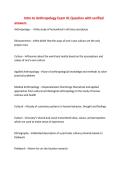
Intro to Anthropology Exam #1 Question with verified
answers
Anthropology - - √√the study of humankind in all times and places
Ethnocentrism - √√the belief that the ways of one's own culture are the only
proper ones
Culture - √√theories about the world and reality based on the assumptions and
values of one's own culture
Applied Anthropology - √√use of anthropological knowledge and methods to solve
practical problems
Medical Anthropology - √√specialization that brings theoretical and applied
approaches from cultural and biological anthropology to the study of human
sickness and health
Cultural - √√study of customary patterns in human behavior, thought and feelings
Culture - √√society's shared and social transmitted ideas, values, and perceptions
which are used to make sense of experience
Ethnography - √√detailed description of a particular culture primarily based on
fieldwork
Fieldwork - √√term for on site location research
, Participant observation - √√learning the culture through social participation and
personal observation
Ethnology - √√study of analysis of different cultures from a comparative or
historical POV explain similarities and differences
Linguistic - √√study of human languages
Discourse - √√an extended communication on a particular subject
Archaeology - √√study of human cultures through the recovery and analysis of
material remains and environment data
Bioarchaeology - √√archaeological study of human remains
Cultural resource management - √√concerned with survey and or excavation of
archaeological and historical remains
Physical anthropology - √√systematic study of humans as biological organisms
Molecular - study of genes and genetic relationship
Paleoanthropology - √√study of biological changes through time to understand
the origins and predecessors of the present human species
Biocultural - √√an approach the focuses on the interaction of biology and culture
answers
Anthropology - - √√the study of humankind in all times and places
Ethnocentrism - √√the belief that the ways of one's own culture are the only
proper ones
Culture - √√theories about the world and reality based on the assumptions and
values of one's own culture
Applied Anthropology - √√use of anthropological knowledge and methods to solve
practical problems
Medical Anthropology - √√specialization that brings theoretical and applied
approaches from cultural and biological anthropology to the study of human
sickness and health
Cultural - √√study of customary patterns in human behavior, thought and feelings
Culture - √√society's shared and social transmitted ideas, values, and perceptions
which are used to make sense of experience
Ethnography - √√detailed description of a particular culture primarily based on
fieldwork
Fieldwork - √√term for on site location research
, Participant observation - √√learning the culture through social participation and
personal observation
Ethnology - √√study of analysis of different cultures from a comparative or
historical POV explain similarities and differences
Linguistic - √√study of human languages
Discourse - √√an extended communication on a particular subject
Archaeology - √√study of human cultures through the recovery and analysis of
material remains and environment data
Bioarchaeology - √√archaeological study of human remains
Cultural resource management - √√concerned with survey and or excavation of
archaeological and historical remains
Physical anthropology - √√systematic study of humans as biological organisms
Molecular - study of genes and genetic relationship
Paleoanthropology - √√study of biological changes through time to understand
the origins and predecessors of the present human species
Biocultural - √√an approach the focuses on the interaction of biology and culture

