

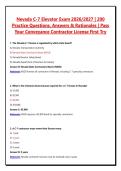
Nevada C-7 Elevator Exam 2026/2027 | 200
Practice Questions, Answers & Rationales | Pass
Your Conveyance Contractor License First Try
1. The Nevada C-7 license is regulated by which state board?
A) Nevada Transportation Authority
B) Nevada State Contractors Board (NSCB)
C) Nevada Elevator Safety Board
D) Nevada Department of Business & Industry
Answer B: Nevada State Contractors Board (NSCB)
Rationale: NSCB licenses all contractors in Nevada, including C-7 specialty contractors .
2. What is the minimum bond amount required for a C-7 license in Nevada?
A) $1,000
B) $2,500
C) $5,000
D) $10,000
Answer C: $5,000
Rationale: NSCB requires a $5,000 bond for specialty contractors .
3. A C-7 contractor must renew their license every:
A) 1 year
B) 2 years
C) 3 years
D) 5 years
Answer B: 2 years
Rationale: Nevada contractor licenses must be renewed every 2 years .
,4. What license class is the C-7 Elevation & Conveyance license?
A) Class A – General Engineering
B) Class B – General Building
C) Class C – Specialty Contractor
D) Class D – Residential
Answer C: Class C – Specialty Contractor
Rationale: Nevada issues licenses in three classes: A (General Engineering), B (General Building), and C
(Specialty Contractor); C-7 is a Class C specialty .
5. A C-7 contractor may perform work on all EXCEPT:
A) Passenger elevators
B) Freight elevators
C) Residential stair lifts
D) Fire sprinkler systems
Answer D: Fire sprinkler systems
Rationale: Fire sprinklers are a separate trade (C-16). C-7 is limited to conveyances .
6. Which Nevada Administrative Code chapter defines the C-7 classification?
A) NAC 624.250
B) NAC 455B.200
C) NAC 624.100
D) NAC 455C.500
Answer A: NAC 624.250
Rationale: NAC 624.250 defines the C-7 classification and its scope of work .
7. What are the four subclassifications under the C-7 license?
,A) C-7a (Elevator & Dumbwaiter), C-7b (Escalator & Conveyor), C-7c (Pneumatic Tube), C-7d (Moving
Walkway)
B) C-7a (Traction), C-7b (Hydraulic), C-7c (Pneumatic), C-7d (Moving Walkway)
C) C-7a (Passenger), C-7b (Freight), C-7c (Residential), C-7d (Commercial)
D) C-7a (New Install), C-7b (Repair), C-7c (Maintenance), C-7d (Modernization)
Answer A: C-7a (Elevator & Dumbwaiter), C-7b (Escalator & Conveyor), C-7c (Pneumatic Tube), C-
7d (Moving Walkway)
Rationale: NAC 624.250(2) specifies these four subclassifications for the C-7 license .
8. Which C-7 subclassification authorizes fabrication and installation of escalators?
A) C-7a – Elevator and Dumbwaiter
B) C-7b – Escalator and Conveyor
C) C-7c – Pneumatic Tube
D) C-7d – Moving Walkway
Answer B: C-7b – Escalator and Conveyor
Rationale: NAC 624.250(2)(b) designates subclassification C-7b for escalators and conveyors .
9. Which C-7 subclassification covers pneumatic conveying systems?
A) C-7a – Elevator and Dumbwaiter
B) C-7b – Escalator and Conveyor
C) C-7c – Pneumatic Tube
D) C-7d – Moving Walkway
Answer C: C-7c – Pneumatic Tube
Rationale: Subclassification C-7c covers pneumatic conveying systems, including equipment, tubing,
supports, and supplemental materials .
10. A C-7 contractor performs work without a permit. The penalty can include:
A) Fine only
, B) Stop work order and possible license suspension
C) No penalty if work is safe
D) Only a warning
Answer B: Stop work order and possible license suspension
Rationale: NSCB enforces permit requirements; unpermitted work can result in stop-work orders and
license suspension .
11. Which is NOT required to be included in a C-7 contract for a residential elevator?
A) Total contract price
B) Start and completion dates
C) A detailed list of all materials
D) A marketing brochure
Answer D: A marketing brochure
Rationale: Contracts must include price, timeline, scope of work, and warranty – not marketing materials
.
12. The C-7 license covers which type of work?
A) Only elevators
B) Elevators, escalators, moving walks, and dumbwaiters
C) Elevators and escalators only
D) Only dumbwaiters and conveyors
Answer B: Elevators, escalators, moving walks, and dumbwaiters
Rationale: The C-7 classification covers elevators, escalators, moving walks, dumbwaiters, conveyors, and
pneumatic tube systems .
13. Which Nevada Revised Statutes (NRS) chapter covers elevator safety laws?
A) NRS 455B
B) NRS 624
Practice Questions, Answers & Rationales | Pass
Your Conveyance Contractor License First Try
1. The Nevada C-7 license is regulated by which state board?
A) Nevada Transportation Authority
B) Nevada State Contractors Board (NSCB)
C) Nevada Elevator Safety Board
D) Nevada Department of Business & Industry
Answer B: Nevada State Contractors Board (NSCB)
Rationale: NSCB licenses all contractors in Nevada, including C-7 specialty contractors .
2. What is the minimum bond amount required for a C-7 license in Nevada?
A) $1,000
B) $2,500
C) $5,000
D) $10,000
Answer C: $5,000
Rationale: NSCB requires a $5,000 bond for specialty contractors .
3. A C-7 contractor must renew their license every:
A) 1 year
B) 2 years
C) 3 years
D) 5 years
Answer B: 2 years
Rationale: Nevada contractor licenses must be renewed every 2 years .
,4. What license class is the C-7 Elevation & Conveyance license?
A) Class A – General Engineering
B) Class B – General Building
C) Class C – Specialty Contractor
D) Class D – Residential
Answer C: Class C – Specialty Contractor
Rationale: Nevada issues licenses in three classes: A (General Engineering), B (General Building), and C
(Specialty Contractor); C-7 is a Class C specialty .
5. A C-7 contractor may perform work on all EXCEPT:
A) Passenger elevators
B) Freight elevators
C) Residential stair lifts
D) Fire sprinkler systems
Answer D: Fire sprinkler systems
Rationale: Fire sprinklers are a separate trade (C-16). C-7 is limited to conveyances .
6. Which Nevada Administrative Code chapter defines the C-7 classification?
A) NAC 624.250
B) NAC 455B.200
C) NAC 624.100
D) NAC 455C.500
Answer A: NAC 624.250
Rationale: NAC 624.250 defines the C-7 classification and its scope of work .
7. What are the four subclassifications under the C-7 license?
,A) C-7a (Elevator & Dumbwaiter), C-7b (Escalator & Conveyor), C-7c (Pneumatic Tube), C-7d (Moving
Walkway)
B) C-7a (Traction), C-7b (Hydraulic), C-7c (Pneumatic), C-7d (Moving Walkway)
C) C-7a (Passenger), C-7b (Freight), C-7c (Residential), C-7d (Commercial)
D) C-7a (New Install), C-7b (Repair), C-7c (Maintenance), C-7d (Modernization)
Answer A: C-7a (Elevator & Dumbwaiter), C-7b (Escalator & Conveyor), C-7c (Pneumatic Tube), C-
7d (Moving Walkway)
Rationale: NAC 624.250(2) specifies these four subclassifications for the C-7 license .
8. Which C-7 subclassification authorizes fabrication and installation of escalators?
A) C-7a – Elevator and Dumbwaiter
B) C-7b – Escalator and Conveyor
C) C-7c – Pneumatic Tube
D) C-7d – Moving Walkway
Answer B: C-7b – Escalator and Conveyor
Rationale: NAC 624.250(2)(b) designates subclassification C-7b for escalators and conveyors .
9. Which C-7 subclassification covers pneumatic conveying systems?
A) C-7a – Elevator and Dumbwaiter
B) C-7b – Escalator and Conveyor
C) C-7c – Pneumatic Tube
D) C-7d – Moving Walkway
Answer C: C-7c – Pneumatic Tube
Rationale: Subclassification C-7c covers pneumatic conveying systems, including equipment, tubing,
supports, and supplemental materials .
10. A C-7 contractor performs work without a permit. The penalty can include:
A) Fine only
, B) Stop work order and possible license suspension
C) No penalty if work is safe
D) Only a warning
Answer B: Stop work order and possible license suspension
Rationale: NSCB enforces permit requirements; unpermitted work can result in stop-work orders and
license suspension .
11. Which is NOT required to be included in a C-7 contract for a residential elevator?
A) Total contract price
B) Start and completion dates
C) A detailed list of all materials
D) A marketing brochure
Answer D: A marketing brochure
Rationale: Contracts must include price, timeline, scope of work, and warranty – not marketing materials
.
12. The C-7 license covers which type of work?
A) Only elevators
B) Elevators, escalators, moving walks, and dumbwaiters
C) Elevators and escalators only
D) Only dumbwaiters and conveyors
Answer B: Elevators, escalators, moving walks, and dumbwaiters
Rationale: The C-7 classification covers elevators, escalators, moving walks, dumbwaiters, conveyors, and
pneumatic tube systems .
13. Which Nevada Revised Statutes (NRS) chapter covers elevator safety laws?
A) NRS 455B
B) NRS 624

