
• ¿Documento equivocado? Cámbialo gratis
  • Escrito por estudiantes que aprobaron
  • Inmediatamente disponible después del pago
  • Leer en línea o como PDF
Vender
¿Dónde estudias?
Tu idioma
Document preview thumbnail
Vista previa 2 fuera de 5 páginas
Examen

Ship Fire Fighting Exam Questions Answers Fixed Fire Systems SOLAS Fire Extinguishers Emergency Drills Fire Pumps EEBD ISC Latest Updated 2026/2027

Document preview thumbnail
Vista previa 2 fuera de 5 páginas

Ship Fire Fighting Exam Questions with Complete A+ Graded Answers — Latest Updated 2026/2027 Prepare for shipboard firefighting, maritime fire safety, marine engineering, and fire prevention assessments with this comprehensive question-and-answer study resource covering essential firefighting systems, emergency procedures, portable equipment, fire classifications, fire pumps, fire detection, fixed fire suppression systems, means of escape, and shipboard emergency signals. The material is designed for efficient revision of important maritime firefighting terminology and operational concepts, including water mist systems, CO2 systems, foam systems, inert gas systems, fire detection and alarm systems, fire dampers, fire doors, emergency fire pumps, EEBD, International Shore Connection, fire control plans, extinguishers, and emergency drills. KEY TOPICS COVERED: • Shipboard firefighting fundamentals • Marine fire safety • Fixed firefighting systems • Water sprinkler systems • Water mist systems • CO2 fixed firefighting systems • Foam firefighting systems • Fire detection and alarm systems • Fire retardant bulkheads • Fire doors • Fire dampers • Remote shut valves • Remote stop systems • Inert gas systems • Cargo space fire protection • Fire pumps • Emergency fire pumps • Fire hydrants • Fire guns • Bilge water systems • Cargo ship firefighting requirements • Firefighting system arrangements • Fire alarm systems • Fire detection systems • Machinery-space fire protection • Cargo-area fire protection • Accommodation-area fire protection • Deck fire protection • Means of escape • Emergency escape procedures • Portable firefighting equipment • Fire hoses and nozzles • Portable fire extinguishers • Firefighter's outfit • Fire control plan • International Shore Connection (ISC) • Emergency Escape Breathing Device (EEBD) • Fire hose length requirements • Class A fires • Class B fires • Class C fires • Class D fires • Class E fires • Water extinguishers • Foam extinguishers • CO2 extinguishers • Dry powder extinguishers • Soda acid extinguishers • General emergency drill • Fire drill signals • Man overboard signals • Ship whistle signals • Emergency response procedures FIXED FIREFIGHTING SYSTEMS: Review major fixed fire protection arrangements found aboard ships, including water sprinkler systems, water mist systems, CO2 systems, foam systems, fire detection and alarm systems, fire doors, fire dampers, fire retardant bulkheads, remote shutdown systems, and inert gas systems. WATER MIST AND SPRINKLER SYSTEMS: Study the advantages and applications of water and mist-based suppression systems, including reduced water usage, cooling effects, rapid response, and applications where evacuation before system release may differ from gaseous suppression systems. CO2 FIRE SUPPRESSION: Review common applications of CO2 systems and their use in areas such as purifier rooms, paint lockers, and chemical sample lockers. Understand the importance of fixed gaseous fire suppression systems in protecting machinery and other designated spaces. FOAM FIREFIGHTING SYSTEMS: Understand the main components of fixed foam systems, including foam tanks, foam dosing pumps, monitors, and foam guns. INERT GAS SYSTEM: Review the purpose and applications of inert gas systems aboard applicable vessels and their role in reducing fire hazards in protected cargo spaces. FIRE PUMPS AND FIRE MAIN SYSTEMS: Study fire pumps, emergency fire pumps, fire hydrants, fire guns, independent driving arrangements, and shipboard firefighting water supply systems. FIRE DETECTION AND ALARM: Review locations and functions of fire detection and alarm systems across cargo areas, accommodation spaces, deck areas, and machinery spaces. REMOTE STOP SYSTEMS: Understand how remote stop systems can be used to shut down machinery and equipment such as fuel pumps, purifiers, ventilation fans, boilers, and related systems during fire emergencies. PORTABLE FIREFIGHTING EQUIPMENT: Review fire hoses, nozzles, portable extinguishers, firefighter outfits, fire control plans, International Shore Connections, and EEBD equipment. FIRE EXTINGUISHER CLASSIFICATIONS: Study Class A, B, C, D, and E fire classifications and the appropriate types of extinguishing agents identified in the supplied material, including water, foam, CO2, dry powder, and dry chemical extinguishing agents. EMERGENCY DRILLS AND SIGNALS: Review general emergency alarm signals, fire drill signals, man-overboard signals, ship whistle signals, and essential emergency response actions. INITIAL FIRE RESPONSE: Review the sequence of initial shipboard fire actions, including raising the alarm, notifying the bridge, investigating and tackling the fire when practicable, rescuing injured persons, closing ventilation, securing fire and watertight doors, and continuing firefighting operations until additional emergency personnel arrive. WHY THIS RESOURCE IS USEFUL: Comprehensive ship fire fighting review Marine firefighting question-and-answer format Covers fixed and portable firefighting systems Includes fire pumps and emergency fire pumps Covers fire extinguishers and fire classifications Includes EEBD and International Shore Connection Reviews emergency drills and shipboard signals Covers fire detection, alarms, doors, dampers, and bulkheads Useful for maritime fire safety and firefighting revision A+ graded answer-focused study material Latest Updated 2026/2027 Instant Download Use this resource to reinforce key shipboard firefighting concepts, review important marine fire safety terminology, strengthen emergency-response knowledge, and prepare systematically for relevant maritime firefighting assessments.

Vista previa del contenido

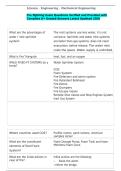
Science Engineering Mechanical Engineering

Fire fighting Exam Questions Verified and Provided with
Complete A+ Graded Answers Latest Updated 2026


What are the advantages of The mist systems use less water, it is not
water / mist sprinkler corrosive. Sprinkler and water mist systems
system are faster than gas systems, does not need
evacuation, before release. The water mist
cools the space. Water supply is unlimited.

What is Fire Triangular heat, fuel, and an oxygen

Which FIXED FF SYSTEMS do y Water Sprinkler System
know?
CO2
Foam System
Fire Detectors and alarm system
Fire Retardant Bulkhead
Fire Doors
Fire Dumpers
Fire Escape means
Remote Shut Valves and Stop Engines System
Inert Gas System


Where could be used CO2? Purifier rooms, paint lockers, chemical
samples locker
What are the constituent Foam Dosage Pump, Foam Tank and foam
elements of fixed Foam Monitors/ foam Guns.
System?

What are the initial actions in Initial actions are the following:
case of fire? 1. Raise the alarm.
2. Inform the bridge.

, 3. Investigate and tackle the fire immediately, if
practicable.
4. Rescue injured persons as soon as

practicable.
5. Close down all ventilation.

6. Close all watertight and fire doors as soon as

possible.
7. Continue to fight the fire until the
emergency party arrives at the scene , etc.
What are the elements of Bilge Fire pumps, fire hydrants, fire guns.
Water system?
How many fire pumps must be At least two fire pump should be installed with
installed on cargo ships of an independent driving arrangement
more than 1000GT?

How many fire pumps must be The number of fire pumps to be installed will
installed on cargo ships which be decided by the administration
are less than 1000GT?

How many emergency fire At least two fire pump should be installed with
pumps must be installed on an independent driving arrangement
cargo ships of more than
1000GT?

How many emergency fire pumps must be installed on The number of
fire pumps to be installed will be decided by the administration cargo ships
which are less than 1000GT?

What are the main applications of Fire Retardant
Restrict the spread of
fire in sensitive areas. Bulkhead ?


What is the function of Fire To block out excessive oxygen supply to the
Damper? fire.

Información del documento

Subido en
8 de septiembre de 2026
Número de páginas
5
Escrito en
2026/2027
Tipo
Examen
Contiene
Preguntas y respuestas
$15.98

¿Documento equivocado? Cámbialo gratis Dentro de los 14 días posteriores a la compra y antes de descargarlo, puedes elegir otro documento. Puedes gastar el importe de nuevo.
Escrito por estudiantes que aprobaron
Inmediatamente disponible después del pago
Leer en línea o como PDF

Seller avatar
Los indicadores de reputación están sujetos a la cantidad de artículos vendidos por una tarifa y las reseñas que ha recibido por esos documentos. Hay tres niveles: Bronce, Plata y Oro. Cuanto mayor reputación, más podrás confiar en la calidad del trabajo del vendedor.
LectDan
4.0
(48)
Vendido
221
Seguidores
157
Artículos
8505
Última venta
5 meses hace


Por qué los estudiantes eligen Stuvia

Creado por compañeros estudiantes, verificado por reseñas

Calidad en la que puedes confiar: escrito por estudiantes que aprobaron y evaluado por otros que han usado estos resúmenes.

¿No estás satisfecho? Elige otro documento

¡No te preocupes! Puedes elegir directamente otro documento que se ajuste mejor a lo que buscas.

Paga como quieras, empieza a estudiar al instante

Sin suscripción, sin compromisos. Paga como estés acostumbrado con tarjeta de crédito y descarga tu documento PDF inmediatamente.

Student with book image

“Comprado, descargado y aprobado. Así de fácil puede ser.”

Alisha Student

Preguntas frecuentes
