

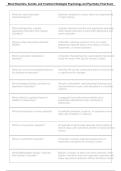
Mood Disorders, Suicide, and Treatment Strategies Psychology and Psychiatry Final Exam
What are mood disorders Extreme variations in mood, either low (depression)
characterized by? or high (mania).
What distinguishes unipolar Unipolar disorders involve only depressive episodes,
depressive disorders from bipolar while bipolar disorders involve both depressive and
disorders? manic episodes.
What is major depressive disorder A disorder requiring a person to be in a major
(MDD)? depressive episode without any history of manic,
hypomanic, or mixed episodes.
What is persistent depressive A disorder characterized by a persistently depressed
disorder? mood for most of the day for at least 2 years.
What are common precipitating factors Stressful life events, particularly those involving loss
for depressive episodes? or significant life changes.
What biological factors contribute to Genetic vulnerability, neurochemical disturbances,
depressive disorders? neuroendocrine issues, and disruptions in circadian
rhythms.
What is Beck's cognitive theory in It suggests that dysfunctional beliefs and a
relation to depression? pessimistic attributional style contribute to
depression.
What characterizes a manic episode? A markedly elevated, euphoric, or expansive mood,
often with irritability or violence.
What is a hypomanic episode? An episode of abnormally elevated mood lasting at
least 4 days, with symptoms similar to mania but less
severe.
What is cyclothymic disorder? A disorder involving repeated experiences of
hypomanic symptoms for at least 2 years.
What differentiates bipolar I disorder Bipolar I includes at least one manic episode, while
from bipolar II disorder? bipolar II involves clear-cut hypomanic episodes and
major depressive episodes without full-blown mania.
,Mood Disorders, Suicide, and Treatment Strategies Psychology and Psychiatry Final Exam
What role do genetic factors play in They are among the strongest contributors to major
bipolar disorders? psychiatric disorders, influencing the likelihood of
developing bipolar disorder.
How do cultural factors influence They affect the rates, stigma, stressors, and
mood disorders? symptom manifestations of mood disorders across
different populations.
What are common treatments for Biologically based treatments like medications or
severe mood disorders? electroconvulsive therapy, alongside psychosocial
treatments like cognitive therapy.
What is the prevalence of major Lifetime prevalence rates are nearly 17%, with 12-
depressive disorder in the population? month rates around 7%, and higher rates in women.
What is the relationship between Psychological disorders, especially mood and bipolar
mood disorders and suicide risk? disorders, are strong risk factors for suicidal thoughts
and behaviors.
What percentage of adults report Nearly 10% of adults.
having seriously considered suicide?
What is the efficacy of suicide While crisis intervention programs can avert some
prevention programs? suicide attempts, the long-term efficacy for high-risk
individuals is less clear.
What is the difference in prevalence of Mood disorders occur less frequently among Black
mood disorders among racial groups? Americans compared to White Americans and
Hispanics, with Native Americans having elevated
rates.
What is the significance of early Early losses and the quality of parent-child
experiences in unipolar depression? relationships can predispose individuals to
depression.
What is a mixed episode in bipolar An episode characterized by symptoms of both full-
disorder? blown manic and major depressive episodes for at
least 1 week.
What is the role of personality Traits like neuroticism may serve as diatheses,
variables in depression? increasing vulnerability to depression.
, Mood Disorders, Suicide, and Treatment Strategies Psychology and Psychiatry Final Exam
What are the symptoms of a Markedly depressed mood or loss of interest in
depressive episode? pleasurable activities for at least 2 weeks, along with
changes in sleep, appetite, or feelings of
worthlessness.
What is the prevalence of bipolar Bipolar disorder is much less common than unipolar
disorder compared to unipolar major depression.
disorders?
What are the two key moods involved Depression and mania.
in mood disorders?
How do mood disorder rates among Mood disorders occur less frequently among Black
Black Americans compare to White Americans than among White Americans and
Americans and Hispanics? Hispanics.
What is the relationship between Rates of unipolar depression are inversely related to
socioeconomic status (SES) and rates socioeconomic status (SES).
of unipolar depression?
What is a notable trend regarding There are elevated rates of mood disorders in
mood disorders in individuals with high individuals who have high levels of accomplishment
artistic accomplishment? in the arts.
What are the diagnostic criteria for A person must be in a major depressive episode and
Major Depressive Disorder (MDD)? never have had a manic, hypomanic, or mixed
episode.
What is the difference between Relapse refers to the return of symptoms within a
relapse and recurrence in depression? short period, while recurrence refers to the onset of a
new episode of depression.
What is the typical onset age range for The onset most often occurs during late adolescence
unipolar depressive disorders? up to middle adulthood.
What percentage of adolescents 15 to 20 percent of adolescents experience major
experience major depressive disorder depressive disorder.
at some point?
What are specifiers in the context of Specifiers are different patterns of symptoms or
Major Depressive Episodes? features associated with major depressive episodes.
What are mood disorders Extreme variations in mood, either low (depression)
characterized by? or high (mania).
What distinguishes unipolar Unipolar disorders involve only depressive episodes,
depressive disorders from bipolar while bipolar disorders involve both depressive and
disorders? manic episodes.
What is major depressive disorder A disorder requiring a person to be in a major
(MDD)? depressive episode without any history of manic,
hypomanic, or mixed episodes.
What is persistent depressive A disorder characterized by a persistently depressed
disorder? mood for most of the day for at least 2 years.
What are common precipitating factors Stressful life events, particularly those involving loss
for depressive episodes? or significant life changes.
What biological factors contribute to Genetic vulnerability, neurochemical disturbances,
depressive disorders? neuroendocrine issues, and disruptions in circadian
rhythms.
What is Beck's cognitive theory in It suggests that dysfunctional beliefs and a
relation to depression? pessimistic attributional style contribute to
depression.
What characterizes a manic episode? A markedly elevated, euphoric, or expansive mood,
often with irritability or violence.
What is a hypomanic episode? An episode of abnormally elevated mood lasting at
least 4 days, with symptoms similar to mania but less
severe.
What is cyclothymic disorder? A disorder involving repeated experiences of
hypomanic symptoms for at least 2 years.
What differentiates bipolar I disorder Bipolar I includes at least one manic episode, while
from bipolar II disorder? bipolar II involves clear-cut hypomanic episodes and
major depressive episodes without full-blown mania.
,Mood Disorders, Suicide, and Treatment Strategies Psychology and Psychiatry Final Exam
What role do genetic factors play in They are among the strongest contributors to major
bipolar disorders? psychiatric disorders, influencing the likelihood of
developing bipolar disorder.
How do cultural factors influence They affect the rates, stigma, stressors, and
mood disorders? symptom manifestations of mood disorders across
different populations.
What are common treatments for Biologically based treatments like medications or
severe mood disorders? electroconvulsive therapy, alongside psychosocial
treatments like cognitive therapy.
What is the prevalence of major Lifetime prevalence rates are nearly 17%, with 12-
depressive disorder in the population? month rates around 7%, and higher rates in women.
What is the relationship between Psychological disorders, especially mood and bipolar
mood disorders and suicide risk? disorders, are strong risk factors for suicidal thoughts
and behaviors.
What percentage of adults report Nearly 10% of adults.
having seriously considered suicide?
What is the efficacy of suicide While crisis intervention programs can avert some
prevention programs? suicide attempts, the long-term efficacy for high-risk
individuals is less clear.
What is the difference in prevalence of Mood disorders occur less frequently among Black
mood disorders among racial groups? Americans compared to White Americans and
Hispanics, with Native Americans having elevated
rates.
What is the significance of early Early losses and the quality of parent-child
experiences in unipolar depression? relationships can predispose individuals to
depression.
What is a mixed episode in bipolar An episode characterized by symptoms of both full-
disorder? blown manic and major depressive episodes for at
least 1 week.
What is the role of personality Traits like neuroticism may serve as diatheses,
variables in depression? increasing vulnerability to depression.
, Mood Disorders, Suicide, and Treatment Strategies Psychology and Psychiatry Final Exam
What are the symptoms of a Markedly depressed mood or loss of interest in
depressive episode? pleasurable activities for at least 2 weeks, along with
changes in sleep, appetite, or feelings of
worthlessness.
What is the prevalence of bipolar Bipolar disorder is much less common than unipolar
disorder compared to unipolar major depression.
disorders?
What are the two key moods involved Depression and mania.
in mood disorders?
How do mood disorder rates among Mood disorders occur less frequently among Black
Black Americans compare to White Americans than among White Americans and
Americans and Hispanics? Hispanics.
What is the relationship between Rates of unipolar depression are inversely related to
socioeconomic status (SES) and rates socioeconomic status (SES).
of unipolar depression?
What is a notable trend regarding There are elevated rates of mood disorders in
mood disorders in individuals with high individuals who have high levels of accomplishment
artistic accomplishment? in the arts.
What are the diagnostic criteria for A person must be in a major depressive episode and
Major Depressive Disorder (MDD)? never have had a manic, hypomanic, or mixed
episode.
What is the difference between Relapse refers to the return of symptoms within a
relapse and recurrence in depression? short period, while recurrence refers to the onset of a
new episode of depression.
What is the typical onset age range for The onset most often occurs during late adolescence
unipolar depressive disorders? up to middle adulthood.
What percentage of adolescents 15 to 20 percent of adolescents experience major
experience major depressive disorder depressive disorder.
at some point?
What are specifiers in the context of Specifiers are different patterns of symptoms or
Major Depressive Episodes? features associated with major depressive episodes.

