

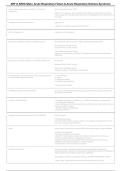
ARF & ARDS Q&A | Acute Respiratory Failure & Acute Respiratory Distress Syndrome
occurs when oxygenation, ventilation, or both are acute respiratory failure (ARF)
inadequate
*ARF is not a disease. It is a symptom that reflects insufficient lung function.
*Not enough O2 is transferred to the blood, or inadequate CO2 is removed from
the lungs
insufficient CO2 removal results in hypercapnia
*results in increased in arterial CO2 (PaCO2)
ARF is classified as hypoxemic or hypercapnic
hypoxemic respiratory failure is a PaO2 less than 60 mmHg with either normal or slightly subnormal PaCO2 levels
Normal PaO2: 80-100 mmHg
Normal PaCO2: 35-45 mmHg
*also called oxygenation failure
*there is an inadequate exchange of O2 between the alveoli and pulmonary
capillaries
hypercapnic respiratory failure is a PaCO2 greater than 50 mm Hg
Normal PaCO2: 35-45 mmHg
*also called ventilatory failure
*primary problem is insufficient CO2 removal
four physiologic mechanisms that may cause hypoxemia 1. V/Q mismatch*
and hypoxemic respiratory failure 2. shunt*
3. diffusion limitation
4. alveolar hypoventilation
*most common causes
ventilation-perfusion (V/Q) mismatch the volume of blood perfusing the lungs and the amount of gas reaching the
alveoli are mismatched
causes of V/Q mismatch - increased secretions in airways (e.g., COPD) or alveoli (e.g., pneumonia)
- bronchospasm (asthma)
- pain (interferes with chest and abdominal wall movement. pain also increases
baseline metabolic state)
- alveolar collapse (atelectasis)
- pulmonary emboli
treatment for hypoxemia caused by V/Q mismatch treat the cause
*O2 therapy first step
*Frequent ABG analysis, pulse oximetry, and continuous assessment of LOC,
RR, and response to O2 important
shunt occurs when blood exits the heart without having taken part in gas exchange
*extreme V/Q mismatch
*two types: anatomic and capillary
*anatomic: blood passes through an anatomic channel in the heart (e.g.,
ventricular septal defect) and bypasses the lungs
*capillary shunt occurs in conditions where the alveoli fill with fluid (e.g.,
pneumonia) and gas exchange is severely impaired
*patients often need mechanical ventilation
diffusion impairment occurs when gas exchange across the alveolar-capillary membrane is
compromised by a process that damages or destroys the alveolar membrane or
affects blood flow through the pulmonary capillaries
*associated conditions: pulmonary fibrosis, interstitial lung disease, ARDS
*classic sign: hypoxemia that worsens with exercise but not at rest
, ARF & ARDS Q&A | Acute Respiratory Failure & Acute Respiratory Distress Syndrome
alveolar hypoventilation decrease in ventilation that increases the PaCO2
*common causes: CNS problems, chest wall dysfunction, acute asthma, or
restrictive lung disease
hypoxia a decrease in O2 supply at the cellular level
*occurs when the PaO2 falls enough to cause s/s of inadequate oxygenation
hypoxemia → hypoxia → anerobic metabolism → lactic acid → metabolic
acidosis → cell death
common manifestations of hypoxemia Respiratory
Accessory muscle use
Dyspnea
Intercostal muscle retraction
Nasal flaring
Paradoxical chest or abdominal wall movement with respiratory cycle (late)
Prolonged expiration
↓ SpO2 (<90%)
Tachypnea
Cyanosis (late)
Cardiovascular
↑ BP (early), ↓ BP (late)
Dysrhythmias (late)
↑ HR
Skin cool, clammy, and diaphoretic
CNS
Agitation
Confusion
Disorientation
↓ Level of consciousness
Restless, combative behavior
Coma (late)
Other
Fatigue
Inability to speak in complete sentences without pausing to breathe
common manifestations of hypercapnia Respiratory
Dyspnea
Limited chest wall movement
Pursed-lip breathing
Tripod position
↓ Respiratory rate or rapid rate with shallow respirations
↓ Tidal volume
↓ Minute ventilation
Cardiovascular
↑ BP
Dysrhythmias
↑ HR
CNS
Agitation
Confusion, disorientation
Morning headache
Progressive somnolence
↑ ICP
Coma (late)
Neuromuscular
↓ Deep tendon reflexes
Muscle weakness
Tremors, seizures (late)
ARF diagnostic studies Chest x-ray
ABG analysis
CBC
Serum electrolytes
Urinalysis
12-lead ECG
Blood & sputum cultures
CT scan
V/Q scan
Clinical problems for the patient with ARF may include: • Impaired respiratory system function
• Inadequate tissue perfusion
• Acid-base imbalance
occurs when oxygenation, ventilation, or both are acute respiratory failure (ARF)
inadequate
*ARF is not a disease. It is a symptom that reflects insufficient lung function.
*Not enough O2 is transferred to the blood, or inadequate CO2 is removed from
the lungs
insufficient CO2 removal results in hypercapnia
*results in increased in arterial CO2 (PaCO2)
ARF is classified as hypoxemic or hypercapnic
hypoxemic respiratory failure is a PaO2 less than 60 mmHg with either normal or slightly subnormal PaCO2 levels
Normal PaO2: 80-100 mmHg
Normal PaCO2: 35-45 mmHg
*also called oxygenation failure
*there is an inadequate exchange of O2 between the alveoli and pulmonary
capillaries
hypercapnic respiratory failure is a PaCO2 greater than 50 mm Hg
Normal PaCO2: 35-45 mmHg
*also called ventilatory failure
*primary problem is insufficient CO2 removal
four physiologic mechanisms that may cause hypoxemia 1. V/Q mismatch*
and hypoxemic respiratory failure 2. shunt*
3. diffusion limitation
4. alveolar hypoventilation
*most common causes
ventilation-perfusion (V/Q) mismatch the volume of blood perfusing the lungs and the amount of gas reaching the
alveoli are mismatched
causes of V/Q mismatch - increased secretions in airways (e.g., COPD) or alveoli (e.g., pneumonia)
- bronchospasm (asthma)
- pain (interferes with chest and abdominal wall movement. pain also increases
baseline metabolic state)
- alveolar collapse (atelectasis)
- pulmonary emboli
treatment for hypoxemia caused by V/Q mismatch treat the cause
*O2 therapy first step
*Frequent ABG analysis, pulse oximetry, and continuous assessment of LOC,
RR, and response to O2 important
shunt occurs when blood exits the heart without having taken part in gas exchange
*extreme V/Q mismatch
*two types: anatomic and capillary
*anatomic: blood passes through an anatomic channel in the heart (e.g.,
ventricular septal defect) and bypasses the lungs
*capillary shunt occurs in conditions where the alveoli fill with fluid (e.g.,
pneumonia) and gas exchange is severely impaired
*patients often need mechanical ventilation
diffusion impairment occurs when gas exchange across the alveolar-capillary membrane is
compromised by a process that damages or destroys the alveolar membrane or
affects blood flow through the pulmonary capillaries
*associated conditions: pulmonary fibrosis, interstitial lung disease, ARDS
*classic sign: hypoxemia that worsens with exercise but not at rest
, ARF & ARDS Q&A | Acute Respiratory Failure & Acute Respiratory Distress Syndrome
alveolar hypoventilation decrease in ventilation that increases the PaCO2
*common causes: CNS problems, chest wall dysfunction, acute asthma, or
restrictive lung disease
hypoxia a decrease in O2 supply at the cellular level
*occurs when the PaO2 falls enough to cause s/s of inadequate oxygenation
hypoxemia → hypoxia → anerobic metabolism → lactic acid → metabolic
acidosis → cell death
common manifestations of hypoxemia Respiratory
Accessory muscle use
Dyspnea
Intercostal muscle retraction
Nasal flaring
Paradoxical chest or abdominal wall movement with respiratory cycle (late)
Prolonged expiration
↓ SpO2 (<90%)
Tachypnea
Cyanosis (late)
Cardiovascular
↑ BP (early), ↓ BP (late)
Dysrhythmias (late)
↑ HR
Skin cool, clammy, and diaphoretic
CNS
Agitation
Confusion
Disorientation
↓ Level of consciousness
Restless, combative behavior
Coma (late)
Other
Fatigue
Inability to speak in complete sentences without pausing to breathe
common manifestations of hypercapnia Respiratory
Dyspnea
Limited chest wall movement
Pursed-lip breathing
Tripod position
↓ Respiratory rate or rapid rate with shallow respirations
↓ Tidal volume
↓ Minute ventilation
Cardiovascular
↑ BP
Dysrhythmias
↑ HR
CNS
Agitation
Confusion, disorientation
Morning headache
Progressive somnolence
↑ ICP
Coma (late)
Neuromuscular
↓ Deep tendon reflexes
Muscle weakness
Tremors, seizures (late)
ARF diagnostic studies Chest x-ray
ABG analysis
CBC
Serum electrolytes
Urinalysis
12-lead ECG
Blood & sputum cultures
CT scan
V/Q scan
Clinical problems for the patient with ARF may include: • Impaired respiratory system function
• Inadequate tissue perfusion
• Acid-base imbalance

