
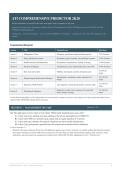
ATI COMPREHENSIVE PREDICTOR 2K20
All the information you need for the near exam quick read to guarantee a top score
Comprehensive Quick-Review Examination | Aligned with the ATI Comprehensive Predictor 2020 Blueprint and the NCLEX-RN Test Plan
(2026/2027 Updated Standards)
180 Questions · 8 Client-Need Sections · Answers marked [CORRECT] with rationales · Cognitive mix: 20% recall / 50% application / 30%
analysis
Examination Blueprint
Section Title Content Focus Questions
Section 1 Management of Care Delegation, prioritization, legal and ethical practice 1-20 (20 items)
Section 2 Safety and Infection Control Precautions, asepsis, restraints, fire and disaster response 21-40 (20 items)
Section 3 Health Promotion and Maintenance Development, immunizations, teaching, screening 41-60 (20 items)
Section 4 Psychosocial Integrity Communication, grief, mental health, abuse, end-of-life 61-80 (20 items)
81-100 (20
Section 5 Basic Care and Comfort Mobility, skin integrity, nutrition, elimination, pain
items)
Administration, calculations, insulin, transfusion, IV 101-120 (20
Section 6 Pharmacological and Parenteral Therapies
therapy items)
121-140 (20
Section 7 Reduction of Risk Potential Labs, diagnostics, fluids and electrolytes, acid-base, tubes
items)
Respiratory, cardiac, neuro, endocrine, GI, renal, MS, 141-180 (40
Section 8 Physiological Adaptation
heme, immune, oncology items)
Use this bank in timed blocks of 20 to 40 questions. Cover the rationale, commit to an answer, then compare your choice against the marked correct
option and the ATI/NCLEX rationale before moving on.
SECTION 1 · MANAGEMENT OF CARE Questions 1-20
Q1. The night nurse receives report on four clients. Which client should the nurse assess first?
A. A client with newly admitted chest pain radiating to the left arm and diaphoresis [CORRECT]
B. A client with COPD on 2 L/minute nasal cannula with an oxygen saturation of 91 percent
C. A client with type 2 diabetes who requests a breakfast tray before insulin administration
D. A client 2 days postoperative appendectomy who requests pain medication before ambulation
Correct Answer: A
Rationale: Chest pain radiating to the left arm with diaphoresis suggests acute coronary syndrome, an unstable condition that threatens perfusion
and requires immediate assessment (ABC priority framework). The other clients are stable with predictable findings; stable vital signs, routine
medications, and meal requests are managed after unstable clients. NCLEX-RN Test Plan: Management of Care - Prioritize Care.
NCLEX-RN Readiness | Answers and Rationales Included 1
,ATI Comprehensive Predictor 2K20 | NCLEX-RN Quick Review Examination
Q2. Which task is appropriate for the nurse to delegate to the unlicensed assistive personnel (UAP) on a medical-surgical unit?
A. Evaluating a client's response to the first dose of a new antihypertensive medication
B. Obtaining vital signs on stable clients who are 2 days postoperative [CORRECT]
C. Teaching a client how to perform incentive spirometry before surgery
D. Assessing a client who reports sudden shortness of breath
Correct Answer: B
Rationale: UAPs may obtain routine vital signs on stable clients with predictable outcomes; this requires no nursing judgment. Assessment,
evaluation, and teaching are within the RN scope of practice and may never be delegated (NCSBN Five Rights of Delegation, ATI Leadership).
The distractors all require nursing assessment or judgment.
Q3. A client scheduled for a colon resection tells the nurse, 'I do not understand what the surgeon plans to do.' The consent form
is signed. Which action should the nurse take first?
A. Explain the surgical procedure in detail so the client can keep the consent signature
B. Document that the client received adequate informed consent before signing
C. Contact the surgeon to return and explain the procedure before surgery proceeds [CORRECT]
D. Reinforce the surgeon's explanation using the hospital teaching pamphlet
Correct Answer: C
Rationale: The provider performing the procedure is legally responsible for obtaining informed consent; when the client has unresolved
questions, the nurse must notify the provider rather than fill in details. The nurse may reinforce teaching but may not explain the procedure
itself, and surgery must not proceed without informed consent. ATI Fundamentals: Legal Responsibilities.
Q4. The charge nurse is making assignments for the oncoming shift. Which client is appropriate to assign to the licensed
practical nurse (LPN)?
A. A client newly admitted in diabetic ketoacidosis requiring IV insulin titration
B. A client 1 hour after cardiac catheterization who requires frequent site assessment
C. A client with a new tracheostomy who needs the first sterile suctioning and teaching
D. A stable client 3 days postoperative who needs oral analgesics and a routine dressing change [CORRECT]
Correct Answer: D
Rationale: The LPN scope of practice includes administering oral medications and performing routine, stable care such as uncomplicated
dressing changes. Clients who are unstable, newly admitted with complex titrations, or require initial assessment and teaching must be assigned to
the RN. NCLEX-RN Test Plan: Management of Care - Assignment, Delegation and Supervision.
Q5. A client with newly diagnosed breast cancer tells the nurse, 'I have decided to refuse chemotherapy.' Which response by the
nurse best demonstrates client advocacy?
A. Acknowledge the client's right to refuse, verify that the refusal is informed, and notify the provider [CORRECT]
B. Ask the family to persuade the client to change the decision because the family is distressed
C. Tell the client that the hospital policy does not allow refusal of recommended treatment
D. Remind the client that chemotherapy offers the best chance of survival and delay notifying anyone
Correct Answer: A
Rationale: A competent adult has the legal and ethical right to refuse treatment; the nurse advocates by ensuring the client understands the
consequences of refusal and by communicating the decision to the provider. Coercion by family or staff violates autonomy, and the nurse must
never deny a client's right to refuse. ATI Fundamentals: Client Rights and Advocacy.
Q6. A medical-surgical nurse is floated to a postpartum unit for the shift. Which client should the charge nurse assign to the
float nurse?
A. A client with postpartum hemorrhage receiving a blood transfusion
B. A stable client whose discharge is scheduled for later today after routine teaching is completed [CORRECT]
C. A client whose newborn requires the initial latch-on assessment by the lactation team
D. A client 2 hours after cesarean birth who requires frequent fundal checks
Correct Answer: B
Rationale: Float nurses should receive the most stable client with a predictable outcome and minimal need for specialty assessment skills. Fresh
postoperative, hemorrhaging, or newborn-specialty clients require maternal-newborn assessment competencies the float nurse cannot safely
provide. ATI Leadership and Management: Assignment Making.
NCLEX-RN Readiness | Answers and Rationales Included 2
,ATI Comprehensive Predictor 2K20 | NCLEX-RN Quick Review Examination
Q7. A client is found lying on the floor beside the bed. After assessing the client and notifying the provider, which action should
the nurse take?
A. Delay the incident report until the risk manager determines whether injury occurred
B. Enter in the chart that the client 'fell due to unsafe staffing' to support the internal review
C. Complete an incident report and document objective findings in the medical record without mentioning the report
[CORRECT]
D. Document in the nurses' notes that an incident report was completed for this event
Correct Answer: C
Rationale: Incident (variance) reports are confidential risk-management documents that are never referenced in the medical record; the chart
contains only objective, factual findings of the event and assessment. Blame-oriented or speculative charting is prohibited, and incident reports
are completed immediately regardless of apparent injury. NCLEX-RN Test Plan: Management of Care - Incident Reporting.
Q8. Which client is it safe for the nurse to delegate to the UAP for mealtime assistance and feeding?
A. A client with advanced Parkinson disease who has increased drooling and slow swallow reflexes
B. A client recovering from esophageal surgery whose diet order is NPO pending evaluation
C. A client with a new stroke who coughs when swallowing thin liquids
D. A client with left-sided weakness from a past stroke whose swallowing evaluation shows no aspiration risk [CORRECT]
Correct Answer: D
Rationale: Feeding assistance may be delegated when the client has an intact swallow, no aspiration precautions, and a stable condition. Clients
with coughing, diminished swallow reflexes, or NPO status require nursing assessment and swallow-safety management, which are nondelegable
nursing responsibilities. ATI Fundamentals: Delegation and Supervision.
Q9. During the 0900 medication pass, a client who is 1 day postoperative reports chest tightness rated 7 on a scale of 0 to 10.
What should the nurse do first?
A. Assess the client's pain characteristics, vital signs, and oxygen saturation immediately [CORRECT]
B. Administer the scheduled analgesic and return after the medication pass is complete
C. Document the report and notify the provider after all medications are administered
D. Finish the medication pass so the other clients receive scheduled medications on time
Correct Answer: A
Rationale: Assessment always precedes intervention; new postoperative chest tightness may indicate hemorrhage, embolism, or myocardial injury
and requires immediate data collection. Completing the medication pass or documenting first delays recognition of a potentially life-threatening
change. NCLEX-RN Test Plan: Management of Care - Establishing Priorities.
Q10. A client received an opioid premedication 20 minutes ago and now asks to sign the consent form for a scheduled
procedure. Which action should the nurse take?
A. Ask the circulating nurse to witness the signature in the preoperative holding area
B. Delay obtaining the consent until the effects of the premedication have worn off [CORRECT]
C. Have the client's spouse sign the consent form instead of the client
D. Allow the client to sign the consent form because the client is alert and talking
Correct Answer: B
Rationale: A client who has received sedating premedication is not legally competent to provide informed consent; consent must be obtained
before sedation or delayed until the client is alert and oriented. Signatures by staff proxies or family members without legal authority are
invalid. ATI Fundamentals: Legal Responsibilities - Informed Consent.
NCLEX-RN Readiness | Answers and Rationales Included 3
, ATI Comprehensive Predictor 2K20 | NCLEX-RN Quick Review Examination
Q11. A terminally ill client has a DNR (do not resuscitate) prescription in the medical record. The client's adult children tell the
nurse to 'do everything possible' and demand that resuscitation be performed. Which action should the nurse take?
A. Tell the family that their request cannot be honored because they are not the decision makers
B. Document the family's request and begin resuscitation if the client arrests
C. Honor the client's documented advance directive and notify the provider of the family's concerns [CORRECT]
D. Suspend the DNR prescription until the family and provider reach a mutual agreement
Correct Answer: C
Rationale: An advance directive expresses the competent client's legally binding wishes; the nurse honors the DNR while facilitating
communication with the provider and offering family support. Suspending the directive or initiating resuscitation against the client's wishes
violates client self-determination. NCLEX-RN Test Plan: Management of Care - Advance Directives.
Q12. A nurse is discussing the discharge process with a new graduate. When should discharge planning begin for a hospitalized
client?
A. When the client has been cleared by physical therapy for home activity
B. During the final shift before the client leaves the unit
C. On the day the provider writes the discharge prescription
D. At the time of admission to the facility [CORRECT]
Correct Answer: D
Rationale: Discharge planning is a continuous, collaborative process that begins at admission, when needs, resources, and potential barriers are
first identified. Delaying discharge planning compresses teaching time and increases readmission risk (ATI Fundamentals: Continuity of Care;
Case Management).
Q13. The unit's rate of catheter-associated urinary tract infections has increased for 3 consecutive months. Using
evidence-based practice, what is the nurse's best first action?
A. Review current evidence-based guidelines for catheter care and compare them with unit practice [CORRECT]
B. Ask staff nurses to submit written opinions about the most likely cause of the increase
C. Recommend that all urinary catheters be changed daily until the rate decreases
D. Submit the increase to the risk manager as a reportable sentinel event
Correct Answer: A
Rationale: Evidence-based practice begins with searching the best available evidence, such as current CAUTI prevention bundles, and comparing
it with actual unit practice before changing interventions. Peer opinions are not evidence, daily catheter changes increase infection risk, and a
rising infection rate is a quality indicator rather than a sentinel event. NCLEX-RN Test Plan: Management of Care - Quality Improvement and
Evidence-Based Practice.
Q14. Which activity is appropriate for the RN to delegate to the LPN?
A. Developing the nursing plan of care for a client admitted with heart failure
B. Reinforcing low-sodium diet teaching for a stable client with hypertension [CORRECT]
C. Evaluating whether a client achieved the expected outcomes of a teaching plan
D. Initiating the initial teaching plan for a client newly diagnosed with type 1 diabetes
Correct Answer: B
Rationale: The LPN may reinforce teaching that has already been planned and initiated by the RN for stable clients. Assessment, planning,
initiating teaching plans, and outcome evaluation remain RN responsibilities because they require nursing judgment (NCSBN Delegation Decision
Tree, ATI Leadership).
NCLEX-RN Readiness | Answers and Rationales Included 4
All the information you need for the near exam quick read to guarantee a top score
Comprehensive Quick-Review Examination | Aligned with the ATI Comprehensive Predictor 2020 Blueprint and the NCLEX-RN Test Plan
(2026/2027 Updated Standards)
180 Questions · 8 Client-Need Sections · Answers marked [CORRECT] with rationales · Cognitive mix: 20% recall / 50% application / 30%
analysis
Examination Blueprint
Section Title Content Focus Questions
Section 1 Management of Care Delegation, prioritization, legal and ethical practice 1-20 (20 items)
Section 2 Safety and Infection Control Precautions, asepsis, restraints, fire and disaster response 21-40 (20 items)
Section 3 Health Promotion and Maintenance Development, immunizations, teaching, screening 41-60 (20 items)
Section 4 Psychosocial Integrity Communication, grief, mental health, abuse, end-of-life 61-80 (20 items)
81-100 (20
Section 5 Basic Care and Comfort Mobility, skin integrity, nutrition, elimination, pain
items)
Administration, calculations, insulin, transfusion, IV 101-120 (20
Section 6 Pharmacological and Parenteral Therapies
therapy items)
121-140 (20
Section 7 Reduction of Risk Potential Labs, diagnostics, fluids and electrolytes, acid-base, tubes
items)
Respiratory, cardiac, neuro, endocrine, GI, renal, MS, 141-180 (40
Section 8 Physiological Adaptation
heme, immune, oncology items)
Use this bank in timed blocks of 20 to 40 questions. Cover the rationale, commit to an answer, then compare your choice against the marked correct
option and the ATI/NCLEX rationale before moving on.
SECTION 1 · MANAGEMENT OF CARE Questions 1-20
Q1. The night nurse receives report on four clients. Which client should the nurse assess first?
A. A client with newly admitted chest pain radiating to the left arm and diaphoresis [CORRECT]
B. A client with COPD on 2 L/minute nasal cannula with an oxygen saturation of 91 percent
C. A client with type 2 diabetes who requests a breakfast tray before insulin administration
D. A client 2 days postoperative appendectomy who requests pain medication before ambulation
Correct Answer: A
Rationale: Chest pain radiating to the left arm with diaphoresis suggests acute coronary syndrome, an unstable condition that threatens perfusion
and requires immediate assessment (ABC priority framework). The other clients are stable with predictable findings; stable vital signs, routine
medications, and meal requests are managed after unstable clients. NCLEX-RN Test Plan: Management of Care - Prioritize Care.
NCLEX-RN Readiness | Answers and Rationales Included 1
,ATI Comprehensive Predictor 2K20 | NCLEX-RN Quick Review Examination
Q2. Which task is appropriate for the nurse to delegate to the unlicensed assistive personnel (UAP) on a medical-surgical unit?
A. Evaluating a client's response to the first dose of a new antihypertensive medication
B. Obtaining vital signs on stable clients who are 2 days postoperative [CORRECT]
C. Teaching a client how to perform incentive spirometry before surgery
D. Assessing a client who reports sudden shortness of breath
Correct Answer: B
Rationale: UAPs may obtain routine vital signs on stable clients with predictable outcomes; this requires no nursing judgment. Assessment,
evaluation, and teaching are within the RN scope of practice and may never be delegated (NCSBN Five Rights of Delegation, ATI Leadership).
The distractors all require nursing assessment or judgment.
Q3. A client scheduled for a colon resection tells the nurse, 'I do not understand what the surgeon plans to do.' The consent form
is signed. Which action should the nurse take first?
A. Explain the surgical procedure in detail so the client can keep the consent signature
B. Document that the client received adequate informed consent before signing
C. Contact the surgeon to return and explain the procedure before surgery proceeds [CORRECT]
D. Reinforce the surgeon's explanation using the hospital teaching pamphlet
Correct Answer: C
Rationale: The provider performing the procedure is legally responsible for obtaining informed consent; when the client has unresolved
questions, the nurse must notify the provider rather than fill in details. The nurse may reinforce teaching but may not explain the procedure
itself, and surgery must not proceed without informed consent. ATI Fundamentals: Legal Responsibilities.
Q4. The charge nurse is making assignments for the oncoming shift. Which client is appropriate to assign to the licensed
practical nurse (LPN)?
A. A client newly admitted in diabetic ketoacidosis requiring IV insulin titration
B. A client 1 hour after cardiac catheterization who requires frequent site assessment
C. A client with a new tracheostomy who needs the first sterile suctioning and teaching
D. A stable client 3 days postoperative who needs oral analgesics and a routine dressing change [CORRECT]
Correct Answer: D
Rationale: The LPN scope of practice includes administering oral medications and performing routine, stable care such as uncomplicated
dressing changes. Clients who are unstable, newly admitted with complex titrations, or require initial assessment and teaching must be assigned to
the RN. NCLEX-RN Test Plan: Management of Care - Assignment, Delegation and Supervision.
Q5. A client with newly diagnosed breast cancer tells the nurse, 'I have decided to refuse chemotherapy.' Which response by the
nurse best demonstrates client advocacy?
A. Acknowledge the client's right to refuse, verify that the refusal is informed, and notify the provider [CORRECT]
B. Ask the family to persuade the client to change the decision because the family is distressed
C. Tell the client that the hospital policy does not allow refusal of recommended treatment
D. Remind the client that chemotherapy offers the best chance of survival and delay notifying anyone
Correct Answer: A
Rationale: A competent adult has the legal and ethical right to refuse treatment; the nurse advocates by ensuring the client understands the
consequences of refusal and by communicating the decision to the provider. Coercion by family or staff violates autonomy, and the nurse must
never deny a client's right to refuse. ATI Fundamentals: Client Rights and Advocacy.
Q6. A medical-surgical nurse is floated to a postpartum unit for the shift. Which client should the charge nurse assign to the
float nurse?
A. A client with postpartum hemorrhage receiving a blood transfusion
B. A stable client whose discharge is scheduled for later today after routine teaching is completed [CORRECT]
C. A client whose newborn requires the initial latch-on assessment by the lactation team
D. A client 2 hours after cesarean birth who requires frequent fundal checks
Correct Answer: B
Rationale: Float nurses should receive the most stable client with a predictable outcome and minimal need for specialty assessment skills. Fresh
postoperative, hemorrhaging, or newborn-specialty clients require maternal-newborn assessment competencies the float nurse cannot safely
provide. ATI Leadership and Management: Assignment Making.
NCLEX-RN Readiness | Answers and Rationales Included 2
,ATI Comprehensive Predictor 2K20 | NCLEX-RN Quick Review Examination
Q7. A client is found lying on the floor beside the bed. After assessing the client and notifying the provider, which action should
the nurse take?
A. Delay the incident report until the risk manager determines whether injury occurred
B. Enter in the chart that the client 'fell due to unsafe staffing' to support the internal review
C. Complete an incident report and document objective findings in the medical record without mentioning the report
[CORRECT]
D. Document in the nurses' notes that an incident report was completed for this event
Correct Answer: C
Rationale: Incident (variance) reports are confidential risk-management documents that are never referenced in the medical record; the chart
contains only objective, factual findings of the event and assessment. Blame-oriented or speculative charting is prohibited, and incident reports
are completed immediately regardless of apparent injury. NCLEX-RN Test Plan: Management of Care - Incident Reporting.
Q8. Which client is it safe for the nurse to delegate to the UAP for mealtime assistance and feeding?
A. A client with advanced Parkinson disease who has increased drooling and slow swallow reflexes
B. A client recovering from esophageal surgery whose diet order is NPO pending evaluation
C. A client with a new stroke who coughs when swallowing thin liquids
D. A client with left-sided weakness from a past stroke whose swallowing evaluation shows no aspiration risk [CORRECT]
Correct Answer: D
Rationale: Feeding assistance may be delegated when the client has an intact swallow, no aspiration precautions, and a stable condition. Clients
with coughing, diminished swallow reflexes, or NPO status require nursing assessment and swallow-safety management, which are nondelegable
nursing responsibilities. ATI Fundamentals: Delegation and Supervision.
Q9. During the 0900 medication pass, a client who is 1 day postoperative reports chest tightness rated 7 on a scale of 0 to 10.
What should the nurse do first?
A. Assess the client's pain characteristics, vital signs, and oxygen saturation immediately [CORRECT]
B. Administer the scheduled analgesic and return after the medication pass is complete
C. Document the report and notify the provider after all medications are administered
D. Finish the medication pass so the other clients receive scheduled medications on time
Correct Answer: A
Rationale: Assessment always precedes intervention; new postoperative chest tightness may indicate hemorrhage, embolism, or myocardial injury
and requires immediate data collection. Completing the medication pass or documenting first delays recognition of a potentially life-threatening
change. NCLEX-RN Test Plan: Management of Care - Establishing Priorities.
Q10. A client received an opioid premedication 20 minutes ago and now asks to sign the consent form for a scheduled
procedure. Which action should the nurse take?
A. Ask the circulating nurse to witness the signature in the preoperative holding area
B. Delay obtaining the consent until the effects of the premedication have worn off [CORRECT]
C. Have the client's spouse sign the consent form instead of the client
D. Allow the client to sign the consent form because the client is alert and talking
Correct Answer: B
Rationale: A client who has received sedating premedication is not legally competent to provide informed consent; consent must be obtained
before sedation or delayed until the client is alert and oriented. Signatures by staff proxies or family members without legal authority are
invalid. ATI Fundamentals: Legal Responsibilities - Informed Consent.
NCLEX-RN Readiness | Answers and Rationales Included 3
, ATI Comprehensive Predictor 2K20 | NCLEX-RN Quick Review Examination
Q11. A terminally ill client has a DNR (do not resuscitate) prescription in the medical record. The client's adult children tell the
nurse to 'do everything possible' and demand that resuscitation be performed. Which action should the nurse take?
A. Tell the family that their request cannot be honored because they are not the decision makers
B. Document the family's request and begin resuscitation if the client arrests
C. Honor the client's documented advance directive and notify the provider of the family's concerns [CORRECT]
D. Suspend the DNR prescription until the family and provider reach a mutual agreement
Correct Answer: C
Rationale: An advance directive expresses the competent client's legally binding wishes; the nurse honors the DNR while facilitating
communication with the provider and offering family support. Suspending the directive or initiating resuscitation against the client's wishes
violates client self-determination. NCLEX-RN Test Plan: Management of Care - Advance Directives.
Q12. A nurse is discussing the discharge process with a new graduate. When should discharge planning begin for a hospitalized
client?
A. When the client has been cleared by physical therapy for home activity
B. During the final shift before the client leaves the unit
C. On the day the provider writes the discharge prescription
D. At the time of admission to the facility [CORRECT]
Correct Answer: D
Rationale: Discharge planning is a continuous, collaborative process that begins at admission, when needs, resources, and potential barriers are
first identified. Delaying discharge planning compresses teaching time and increases readmission risk (ATI Fundamentals: Continuity of Care;
Case Management).
Q13. The unit's rate of catheter-associated urinary tract infections has increased for 3 consecutive months. Using
evidence-based practice, what is the nurse's best first action?
A. Review current evidence-based guidelines for catheter care and compare them with unit practice [CORRECT]
B. Ask staff nurses to submit written opinions about the most likely cause of the increase
C. Recommend that all urinary catheters be changed daily until the rate decreases
D. Submit the increase to the risk manager as a reportable sentinel event
Correct Answer: A
Rationale: Evidence-based practice begins with searching the best available evidence, such as current CAUTI prevention bundles, and comparing
it with actual unit practice before changing interventions. Peer opinions are not evidence, daily catheter changes increase infection risk, and a
rising infection rate is a quality indicator rather than a sentinel event. NCLEX-RN Test Plan: Management of Care - Quality Improvement and
Evidence-Based Practice.
Q14. Which activity is appropriate for the RN to delegate to the LPN?
A. Developing the nursing plan of care for a client admitted with heart failure
B. Reinforcing low-sodium diet teaching for a stable client with hypertension [CORRECT]
C. Evaluating whether a client achieved the expected outcomes of a teaching plan
D. Initiating the initial teaching plan for a client newly diagnosed with type 1 diabetes
Correct Answer: B
Rationale: The LPN may reinforce teaching that has already been planned and initiated by the RN for stable clients. Assessment, planning,
initiating teaching plans, and outcome evaluation remain RN responsibilities because they require nursing judgment (NCSBN Delegation Decision
Tree, ATI Leadership).
NCLEX-RN Readiness | Answers and Rationales Included 4

